
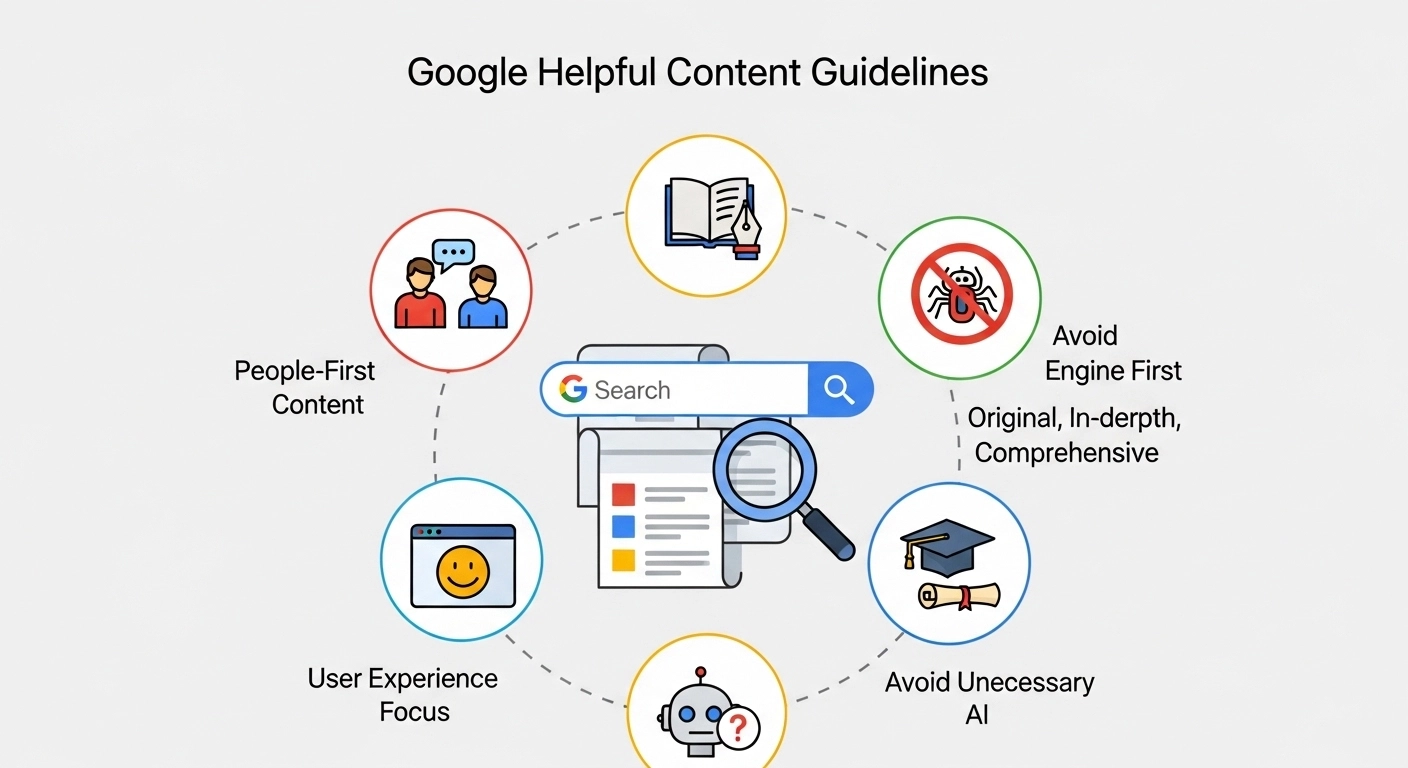
If your content isn’t ranking like it used to, there’s a good chance it’s not aligned with the Google helpful content guidelines. Introduced by Google, this system rewards content created for people first—not search engines.
In this guide, you’ll learn what these guidelines mean, how they affect SEO, and how to create content that actually performs.
What Are Google Helpful Content Guidelines?
Google’s helpful content system is designed to identify content that is:
- Written for real users
- Demonstrates expertise and experience
- Provides clear value and answers
- Avoids manipulation just to rank
In simple terms: if your content exists only to rank, it won’t rank for long.
Why These Guidelines Matter for SEO
The helpful content update changed how rankings work:
- Sites with low-quality or unhelpful content may lose visibility
- High-quality, user-focused pages get rewarded
- Even strong pages can suffer if your site has too much weak content
👉 This means SEO is no longer just about keywords—it’s about usefulness, trust, and relevance.
People-First Content vs Search Engine-First Content
People-First Content (What Google Wants)
- Answers real questions clearly
- Shows firsthand experience
- Keeps readers engaged
- Solves problems quickly
Example:
A blog post explaining how to fix a 404 error with real steps, screenshots, and tips.
Search Engine-First Content (What to Avoid)
- Keyword stuffing
- Rewriting existing content without adding value
- Writing on topics just because they’re trending
- Using AI or automation without human editing
Example:
A generic article repeating “SEO tips” without actionable advice.
Key Principles of Helpful Content
1. Write for Your Audience First
Know who you’re writing for and what they need.
Tip: Create content based on real user intent (informational, transactional, navigational).
2. Show Experience and Expertise
Google favors content that reflects real knowledge.
How to do it:
- Share personal insights
- Add case studies or examples
- Include data or results
3. Provide Complete Answers
Don’t leave users searching elsewhere.
Bad: Short, vague answers
Good: Step-by-step guidance with examples
4. Avoid Clickbait Titles
Your content should match what your headline promises.
5. Focus on One Clear Topic
Avoid covering too many unrelated topics in one post.
How to Optimize Content for Helpful Content Guidelines
✔ Improve Existing Content
- Update outdated information
- Add depth and clarity
- Remove fluff
✔ Build Topical Authority
Create clusters of related content around one niche.
Example:
- SEO basics
- On-page SEO
- Technical SEO
- Keyword research
✔ Use Clear Structure
- Short paragraphs
- Strong headings
- Bullet points
- Simple language
✔ Add Real Value
Ask yourself:
👉 Would someone bookmark or share this content?
If not, improve it.
Common Mistakes to Avoid
- Writing content just to target keywords
- Publishing large volumes of low-quality posts
- Copying competitors without adding new insights
- Ignoring user intent
- Overusing automation tools without editing
Practical Example
Weak Content:
“SEO is important for websites. It helps rankings. Use keywords properly.”
Helpful Content:
“SEO improves visibility by helping your pages appear in search results. For example, optimizing your title tag with a clear keyword can increase click-through rates by 20% or more.”
👉 Notice the difference: specific, useful, and actionable.
How to Audit Your Content
Ask these questions:
- Does this content solve a real problem?
- Is it written by someone with knowledge or experience?
- Would users trust this information?
- Does it provide unique insights?
If the answer is “no,” it needs improvement.
FAQ: Google Helpful Content Guidelines
What is the helpful content update?
It’s a ranking system by Google that prioritizes content created for users rather than search engines.
Does AI content violate these guidelines?
Not necessarily. AI content is fine if it’s helpful, accurate, and human-edited.
How long does it take to recover from a hit?
Recovery can take weeks or months after improving content quality across your site.
Is keyword optimization still important?
Yes—but it must feel natural and support user intent, not dominate the content.
Final Thoughts
The Google helpful content guidelines are not a temporary update—they reflect the future of SEO.
If you focus on:
- Helping users
- Sharing real insights
- Delivering clear value
…you’ll not only rank better but also build long-term trust.
