
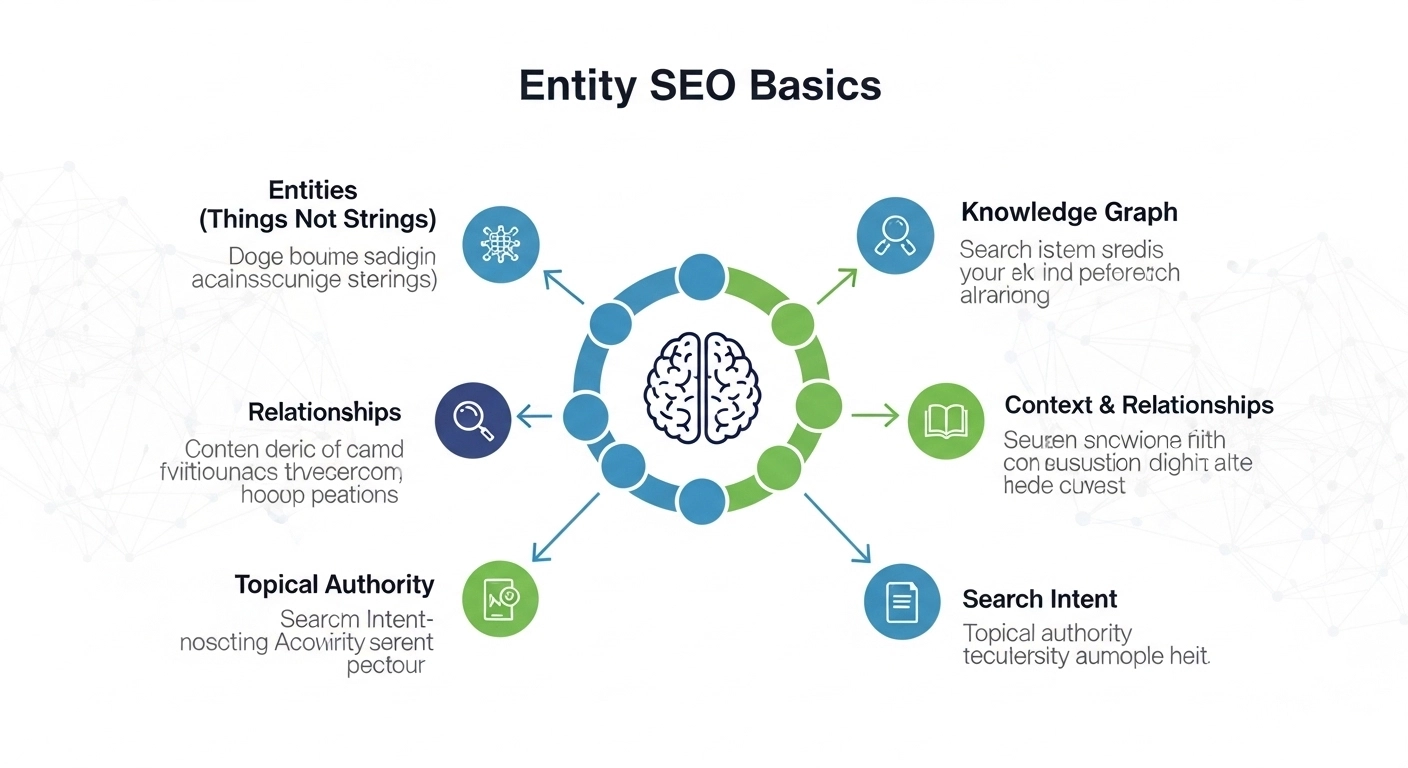
Search engines no longer rely only on keywords—they understand things. That shift is where Entity SEO comes in. If you want consistent rankings, better visibility, and stronger topical authority, you need to optimize for entities, not just terms.
This guide breaks down Entity SEO basics in a clear, practical way—no fluff, just what works.
What Is Entity SEO?
Entity SEO is the process of optimizing your content around entities—people, places, concepts, brands, or objects that search engines can clearly identify and understand.
Search engines like Google Knowledge Graph use entities to connect information across the web. Instead of matching keywords, they map relationships between entities.
Example:
- Keyword SEO: “best football player”
- Entity SEO: Lionel Messi, Cristiano Ronaldo
Google understands these as real-world entities with attributes (teams, stats, achievements).
Why Entity SEO Matters
Search engines are getting smarter. If your content isn’t aligned with entities, you’re missing out on:
1. Better Rankings
Entity-based content helps search engines understand context, improving relevance.
2. Featured Snippets & Rich Results
Entities increase your chances of appearing in knowledge panels and snippets.
3. Voice Search Optimization
Voice queries rely heavily on entity recognition.
4. Topical Authority
Covering related entities builds trust and depth in your niche.
How Search Engines Understand Entities
Search engines use:
- Structured data
- Natural language processing (NLP)
- Semantic relationships
Technologies like Natural Language Processing and Semantic Search allow Google to interpret meaning, not just words.
Key Components of Entity SEO
1. Entity Identification
Start by identifying core entities related to your topic.
Example (Entity SEO basics):
- Entity SEO
- Google Knowledge Graph
- Semantic search
- Structured data
- Schema markup
2. Context & Relationships
Entities don’t exist alone—they connect.
Example:
- Entity SEO → Semantic SEO → Search Intent → Content Optimization
Your content should reflect these relationships naturally.
3. Structured Data (Schema Markup)
Use schema to help search engines understand your content.
Common types:
- Article
- FAQ
- Organization
- Person
Tools like Schema.org define how to mark up your content.
4. Topical Authority
Instead of one article, build a content cluster.
Example Cluster:
- Entity SEO basics (pillar)
- What is semantic SEO?
- How Google understands entities
- Schema markup guide
- Knowledge graph optimization
This creates a strong topical signal.
5. Internal Linking Strategy
Link related content using natural anchor text.
Example:
Instead of:
click here
Use:
learn more about semantic SEO strategies
This reinforces entity relationships.
How to Optimize Content for Entities (Step-by-Step)
Step 1: Start With Search Intent
Understand what the user really wants.
Step 2: Identify Core Entities
Use tools like:
- Google search suggestions
- People Also Ask
- Wikipedia
Step 3: Add Related Entities Naturally
Don’t force them—integrate them in context.
Step 4: Use Clear Structure
- Headings (H2, H3)
- Short paragraphs
- Bullet points (when needed)
Step 5: Add Schema Markup
Implement structured data for better indexing.
Step 6: Build Content Depth
Answer all related questions in one place.
Practical Example
Topic: “Apple”
Without entity clarity:
- Could mean fruit or company
With entity SEO:
- Apple Inc.
- Apple
Your content should clearly signal which entity you mean.
Common Mistakes to Avoid
- Keyword stuffing instead of building context
- Ignoring structured data
- Writing shallow content
- Not linking related topics
- Mixing unrelated entities
Entity SEO vs Traditional SEO
| Traditional SEO | Entity SEO |
|---|---|
| Focus on keywords | Focus on meaning |
| Exact match phrases | Context & relationships |
| Isolated pages | Content ecosystems |
| Basic ranking signals | Semantic understanding |
Simple FAQ
What is an entity in SEO?
An entity is a clearly defined thing—like a person, place, or concept—that search engines can understand independently.
Is Entity SEO the same as Semantic SEO?
They’re closely related. Entity SEO focuses on “things,” while semantic SEO focuses on meaning and relationships.
Do I need schema markup?
Yes, it helps search engines understand your content more clearly and improves visibility.
How do I find entities?
Use Google search results, Wikipedia, and SEO tools to identify related concepts.
Does Entity SEO improve rankings?
Yes—better understanding leads to higher relevance, which can improve rankings.
Final Thoughts
Entity SEO isn’t optional anymore—it’s how modern search works.
If you want to rank consistently:
- Think in topics, not keywords
- Build relationships between concepts
- Create deep, structured, and helpful content
That’s how you align with how search engines actually think.
