
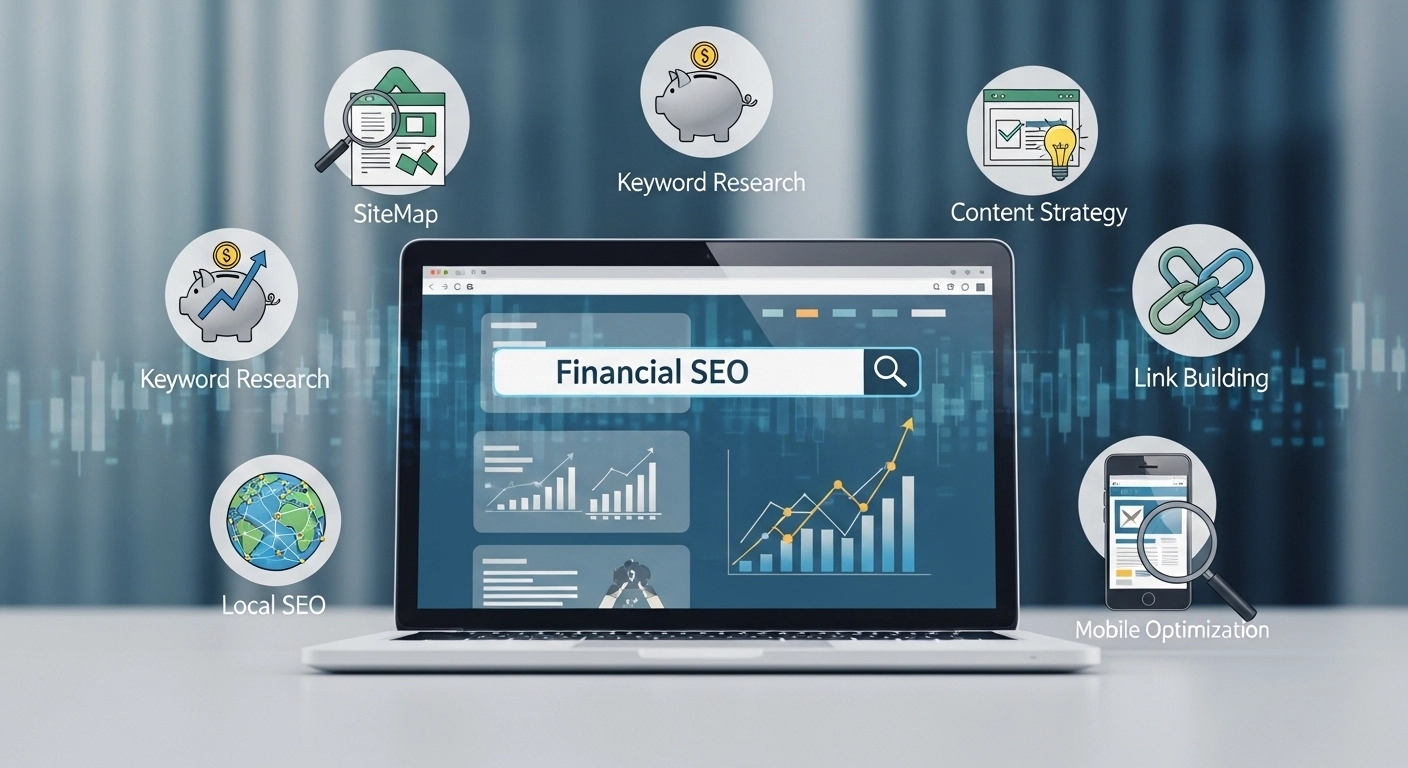
Financial websites operate in one of the most competitive—and sensitive—spaces online. Whether you run a fintech startup, investment blog, accounting firm, or loan service platform, SEO isn’t just about traffic. It’s about trust, compliance, and authority.
In this guide, you’ll learn how specialized SEO services for financial websites work, what makes them different, and how to use them to drive high-quality leads.
Why Financial SEO Is Different
SEO for financial websites falls under YMYL (Your Money or Your Life) content. That means search engines apply stricter standards because your content can impact users’ financial well-being.
Here’s what that means for your strategy:
- Higher trust requirements
- Stronger emphasis on expertise (E-E-A-T)
- More scrutiny on accuracy and transparency
- Greater competition from authoritative brands
If your SEO isn’t aligned with these factors, ranking becomes extremely difficult.
What SEO Services for Financial Websites Include
A strong financial SEO strategy goes beyond keywords. It’s a full system designed for visibility, trust, and conversions.
1. In-Depth Keyword Research (With Intent Focus)
Not all traffic is equal. Financial SEO prioritizes high-intent keywords, such as:
- “best investment plans for beginners”
- “low-interest business loans”
- “tax saving strategies 2026”
These keywords attract users ready to take action—not just browse.
Example:
Instead of targeting “credit cards,” a smarter approach is targeting
→ “best cashback credit cards for small business owners”
2. High-Quality, Expert-Level Content
Content is the backbone of financial SEO—but it must meet strict quality standards.
Effective content includes:
- Clear, accurate financial advice
- Data-backed insights
- Real-world examples
- Updated statistics
- Author credentials (very important)
Tip: Add author bios with qualifications (CPA, CFA, etc.) to build credibility.
3. On-Page SEO Optimization
Every page should be optimized for both users and search engines.
Key elements:
- SEO-friendly titles and meta descriptions
- Proper header structure (H1–H3)
- Internal linking to related financial topics
- Clear readability (avoid jargon overload)
- Optimized images and page speed
4. Technical SEO for Performance & Security
Financial websites must be fast, secure, and technically sound.
Critical areas include:
- HTTPS (non-negotiable for finance sites)
- Fast page load times
- Mobile responsiveness
- Clean URL structure
- Fixing crawl errors and broken links
A slow or insecure site can kill both rankings and trust.
5. Authority Building (Backlinks)
Backlinks remain one of the strongest ranking signals—but in finance, quality matters more than quantity.
Focus on getting links from:
- Finance blogs and publications
- News websites
- Industry directories
- Guest posts on reputable platforms
Example:
A backlink from a respected financial news site is far more valuable than dozens of low-quality links.
6. E-E-A-T Optimization (Trust Signals)
Google evaluates financial websites based on:
- Experience – Real-world knowledge
- Expertise – Qualified authors
- Authoritativeness – Industry recognition
- Trustworthiness – Transparency and accuracy
How to improve E-E-A-T:
- Add author credentials
- Include references and sources
- Display contact information clearly
- Use privacy policies and disclaimers
- Show customer reviews or testimonials
7. Local SEO for Financial Services
If you offer local services (accounting firms, financial advisors), local SEO is essential.
This includes:
- Optimizing your Google Business Profile
- Getting local citations
- Targeting geo-specific keywords
- Collecting positive reviews
Example:
“tax consultant in Lahore” will convert better than a generic keyword.
Common SEO Challenges for Financial Websites
Even with a solid strategy, financial websites face unique challenges:
- Strict content accuracy requirements
- High competition from established brands
- Regulatory and compliance issues
- Slow trust-building process
- Frequent algorithm updates affecting rankings
That’s why working with specialized SEO services is often necessary.
Practical Example: How SEO Drives Financial Leads
Let’s say you run a personal finance blog.
Instead of writing generic articles, you publish:
- “How to Save $10,000 in One Year (Step-by-Step Plan)”
- “Best Investment Apps for Beginners in 2026”
- “How to Reduce Tax Legally for Freelancers”
You optimize each post with:
- Internal links
- Expert insights
- Data-backed tips
Result:
- Higher rankings
- More organic traffic
- Increased affiliate or service conversions
How to Choose the Right SEO Service
Not all SEO agencies understand finance.
Look for:
- Experience in financial or YMYL niches
- Proven case studies
- Strong content strategy
- Technical SEO expertise
- Transparent reporting
Avoid agencies that promise “instant rankings”—that’s a red flag.
FAQ: SEO Services for Financial Websites
1. How long does SEO take for financial websites?
Typically, 3–6 months to see noticeable results, but competitive keywords can take longer.
2. Is SEO worth it for financial businesses?
Yes. It drives high-intent traffic, builds trust, and delivers long-term ROI compared to paid ads.
3. Do I need expert writers for financial content?
Absolutely. Accuracy and credibility are critical for rankings and user trust.
4. Can small financial websites compete with big brands?
Yes, by targeting niche keywords, building authority, and publishing high-quality content consistently.
Final Thoughts
SEO services for financial websites are not just about ranking—they’re about earning trust in a high-stakes industry. With the right strategy, you can attract qualified visitors, establish authority, and grow sustainably.
The key is consistency, expertise, and a focus on real user value.
