
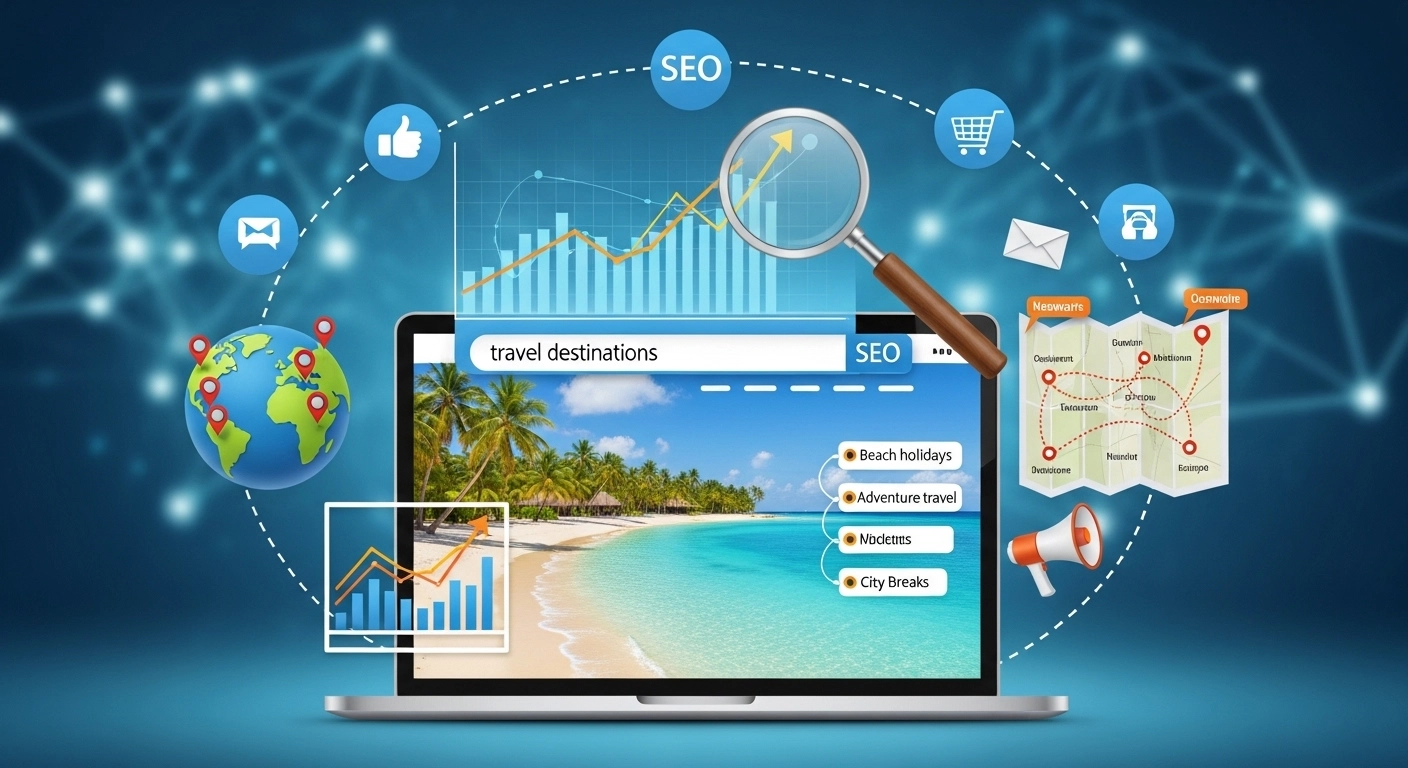
Travel is one of the most competitive industries online. Whether you run a blog, a tour company, or a booking platform, your success depends heavily on how easily travelers can find you on search engines.
That’s where SEO marketing for travel websites comes in.
Done right, it brings consistent, high-intent visitors who are actively planning trips—people ready to explore, compare, and book.
Let’s break down exactly how to make it work.
Why SEO Matters for Travel Websites
Unlike paid ads, SEO builds long-term visibility. Travelers search for things like:
- “Best places to visit in Turkey”
- “Cheap hotels in Dubai”
- “Things to do in Paris”
If your website ranks for these queries, you get free, targeted traffic every day.
More importantly, travel SEO connects you with users at every stage:
- Inspiration (dreaming phase)
- Planning (research phase)
- Booking (decision phase)
Step 1: Smart Keyword Research for Travel SEO
Travel SEO starts with understanding what people are searching for.
Focus on Search Intent
Not all keywords are equal. Group them by intent:
- Informational: “Top beaches in Thailand”
- Commercial: “Best resorts in Maldives”
- Transactional: “Book hotel in New York”
Your strategy should cover all three.
Go Beyond Basic Keywords
Use long-tail and location-based phrases like:
- “family-friendly hotels in Bali”
- “budget travel guide for Italy”
- “3-day itinerary for Dubai”
These are easier to rank for and convert better.
Step 2: Create High-Quality Travel Content
Content is the backbone of SEO marketing for travel websites.
What Works Best
- Destination guides
- Travel itineraries
- Hotel and restaurant reviews
- Local tips and hidden gems
- Seasonal travel advice
Example
Instead of writing:
“Paris travel guide”
Write:
“7-Day Paris Itinerary for First-Time Visitors (With Budget Tips)”
Make it practical, detailed, and easy to follow.
Pro Tip
Use real experiences, photos, and insider tips. Google favors helpful, authentic content.
Step 3: On-Page SEO Optimization
Even great content won’t rank without proper optimization.
Key Elements
- Title Tag: Include your main keyword naturally
- Meta Description: Make it compelling and click-worthy
- Headings (H1, H2, H3): Structure your content clearly
- Internal Links: Connect related articles
- Image Optimization: Use alt text and compress images
Example
Instead of:
IMG_1234.jpg
Use:
bali-beach-sunset.jpg
Step 4: Build Topical Authority
Google rewards websites that cover a topic deeply.
Create Content Clusters
Example:
Main Topic: Travel to Italy
- Best cities in Italy
- Rome travel guide
- Venice itinerary
- Italian food guide
Link them together to build authority.
Step 5: Technical SEO for Travel Websites
A slow or broken website kills rankings.
Must-Have Technical Factors
- Fast loading speed
- Mobile-friendly design
- Secure HTTPS
- Clean URL structure
- Proper indexing
Why It Matters
Travel users often browse on mobile. If your site is slow, they leave—and rankings drop.
Step 6: Local SEO for Travel Businesses
If you run a hotel, tour agency, or local service, local SEO is critical.
Optimize for Local Search
- Create and optimize your Google Business Profile
- Use location-based keywords
- Collect customer reviews
- Add your business to local directories
Step 7: Link Building in the Travel Industry
Backlinks are still a major ranking factor.
Effective Strategies
- Guest posting on travel blogs
- Collaborating with influencers
- Getting featured in travel guides
- Creating shareable resources (maps, itineraries)
Example
A detailed “Ultimate Travel Checklist” can naturally attract links.
Step 8: Use Visual SEO (Images & Videos)
Travel is highly visual.
Optimize Visual Content
- Add descriptive alt text
- Use high-quality images
- Create travel videos
- Embed maps and infographics
This improves engagement and helps rank in image and video search results.
Step 9: Optimize for Voice Search & AI Search
More users now search like this:
- “Where should I go in winter?”
- “Best honeymoon destinations”
Use natural language and question-based content.
Add FAQ sections to capture these queries.
Common Mistakes to Avoid
- Targeting only high-competition keywords
- Publishing thin or generic content
- Ignoring mobile optimization
- Not updating old travel content
- Overusing keywords (keyword stuffing)
Simple FAQ
What is SEO marketing for travel websites?
It’s the process of optimizing your travel site to rank higher on search engines and attract organic traffic from people planning trips.
How long does travel SEO take?
Typically 3–6 months to see noticeable results, depending on competition and consistency.
What type of content ranks best?
Detailed guides, itineraries, reviews, and helpful travel tips perform best.
Is SEO better than paid ads for travel websites?
SEO is better for long-term growth, while ads provide quick but temporary traffic. The best strategy uses both.
Final Thoughts
SEO marketing for travel websites isn’t about quick tricks. It’s about building a valuable resource travelers trust.
If you consistently:
- Target the right keywords
- Create helpful content
- Optimize your website
- Build authority
You’ll not only increase traffic—but also turn visitors into bookings.
