
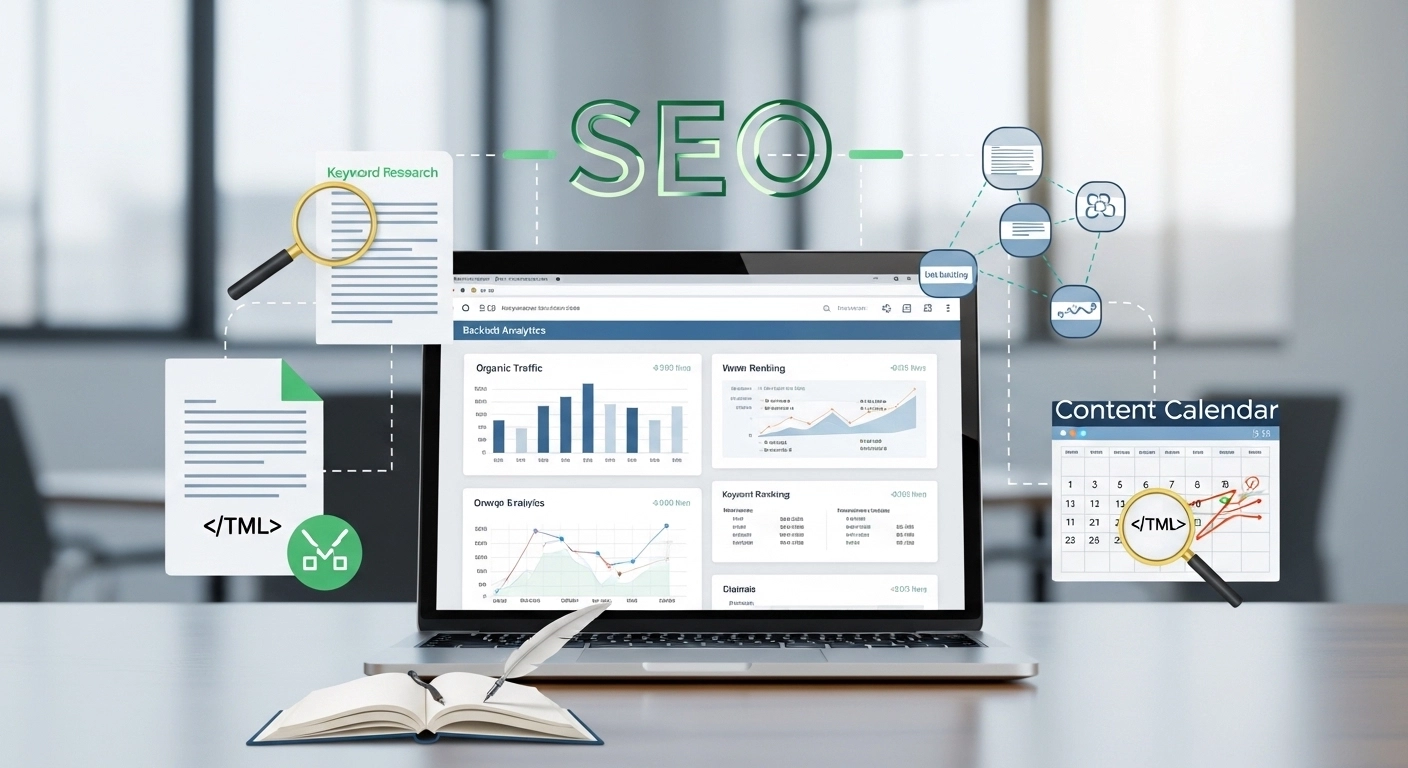
SEO Services for Content Websites: A Practical Guide to Growing Traffic That Lasts.
Content websites live and die by organic traffic. Whether you run a blog, a niche site, or a media platform, the right SEO services can turn steady publishing into consistent growth. The goal isn’t quick wins—it’s building a system that earns rankings, keeps them, and compounds over time.
This guide breaks down what high-impact SEO services look like for content-focused sites, how they work together, and how to choose the right approach for your goals.
What Makes Content Website SEO Different?
Unlike eCommerce or local sites, content websites rely heavily on topical authority, internal linking, and search intent alignment. You’re not just optimizing pages—you’re building a content ecosystem.
Key differences:
- Success depends on content depth and coverage, not just a few landing pages
- Rankings improve with consistent publishing + smart structure
- Internal links and topic clusters matter more than backlinks alone
Core SEO Services That Drive Results
1. Keyword Research & Topic Mapping
Everything starts here. But modern keyword research goes beyond volume and difficulty.
A strong service will:
- Identify high-intent keywords (informational, commercial, comparison)
- Build topic clusters instead of isolated posts
- Map keywords to a content calendar
Example:
Instead of targeting only “SEO tips,” a cluster approach includes:
- SEO tips for beginners
- Technical SEO checklist
- On-page SEO examples
- SEO tools comparison
This structure signals authority and improves rankings across the entire topic.
2. Content Strategy & Editorial Planning
Publishing randomly doesn’t work anymore. You need a clear plan.
A professional SEO service will:
- Create a pillar + cluster model
- Define search intent for every article
- Plan content based on competition gaps
Practical Tip:
If competitors have 50 articles in your niche and you have 10, the strategy is simple—close the gap with better content, not just more content.
3. On-Page SEO Optimization
Even great content won’t rank if it’s poorly optimized.
This includes:
- SEO-friendly titles and meta descriptions
- Proper heading structure (H1, H2, H3)
- Keyword placement (natural, not forced)
- Image optimization and alt text
- Internal linking
Quick Formula:
Title + Headings + Content Quality + Internal Links = Strong On-Page SEO
4. Technical SEO for Content Sites
Technical issues can quietly kill your rankings.
Key services:
- Site speed optimization
- Mobile usability fixes
- Crawlability and indexing improvements
- Fixing broken links and duplicate content
- XML sitemap and robots.txt optimization
Example:
If Google can’t properly crawl your pages, even the best content won’t rank. Technical SEO ensures your site is fully accessible to search engines.
5. Internal Linking Strategy
This is one of the most underrated SEO services for content websites.
Done right, it:
- Distributes authority across pages
- Helps search engines understand your structure
- Increases time on site and engagement
Example:
A blog post about “keyword research” should link to:
- SEO tools
- Content strategy
- On-page SEO guides
This creates a strong content network.
6. Content Optimization & Updates
SEO isn’t one-and-done. Old content needs regular updates.
A good service will:
- Refresh outdated articles
- Improve underperforming pages
- Add new sections and keywords
- Optimize based on Search Console data
Result:
Many sites see traffic jumps just by updating existing content instead of publishing new posts.
7. Link Building (Authority Growth)
Backlinks still matter—but quality beats quantity.
Effective strategies:
- Guest posting on relevant sites
- Digital PR and outreach
- Linkable assets (guides, data, tools)
Important:
Avoid spammy links. One strong backlink can outperform dozens of low-quality ones.
8. Analytics & Performance Tracking
SEO without tracking is guessing.
Key metrics:
- Organic traffic growth
- Keyword rankings
- Click-through rate (CTR)
- Bounce rate and engagement
- Conversions (if applicable)
A good SEO service will turn data into clear actions.
How to Choose the Right SEO Service
Not all SEO providers are equal. Look for:
- Clear strategy (not vague promises)
- Experience with content-heavy sites
- Transparent reporting
- Focus on long-term growth, not shortcuts
Red Flag:
“Guaranteed rankings” or “instant results” usually means risky tactics.
Common Mistakes to Avoid
- Publishing content without keyword research
- Ignoring internal linking
- Focusing only on backlinks
- Not updating old content
- Overusing keywords (keyword stuffing)
Simple FAQ
1. How long does SEO take for content websites?
Typically 3–6 months to see noticeable growth, and 6–12 months for strong results.
2. Do I need to publish content daily?
No. Consistency matters more than frequency. Even 2–4 high-quality posts per month can work.
3. Is technical SEO necessary for blogs?
Yes. Even small technical issues can limit your rankings.
4. What’s more important: content or backlinks?
Content comes first. Backlinks amplify it.
5. Can I do SEO myself?
Yes, but professional services save time and avoid costly mistakes.
Final Thoughts
SEO for content websites isn’t about hacks—it’s about building a system that works over time. With the right combination of keyword strategy, content planning, optimization, and authority building, your site can grow consistently without relying on paid traffic.
If you’re serious about scaling your content website, don’t just publish more—publish smarter, optimize better, and build authority consistently.
