
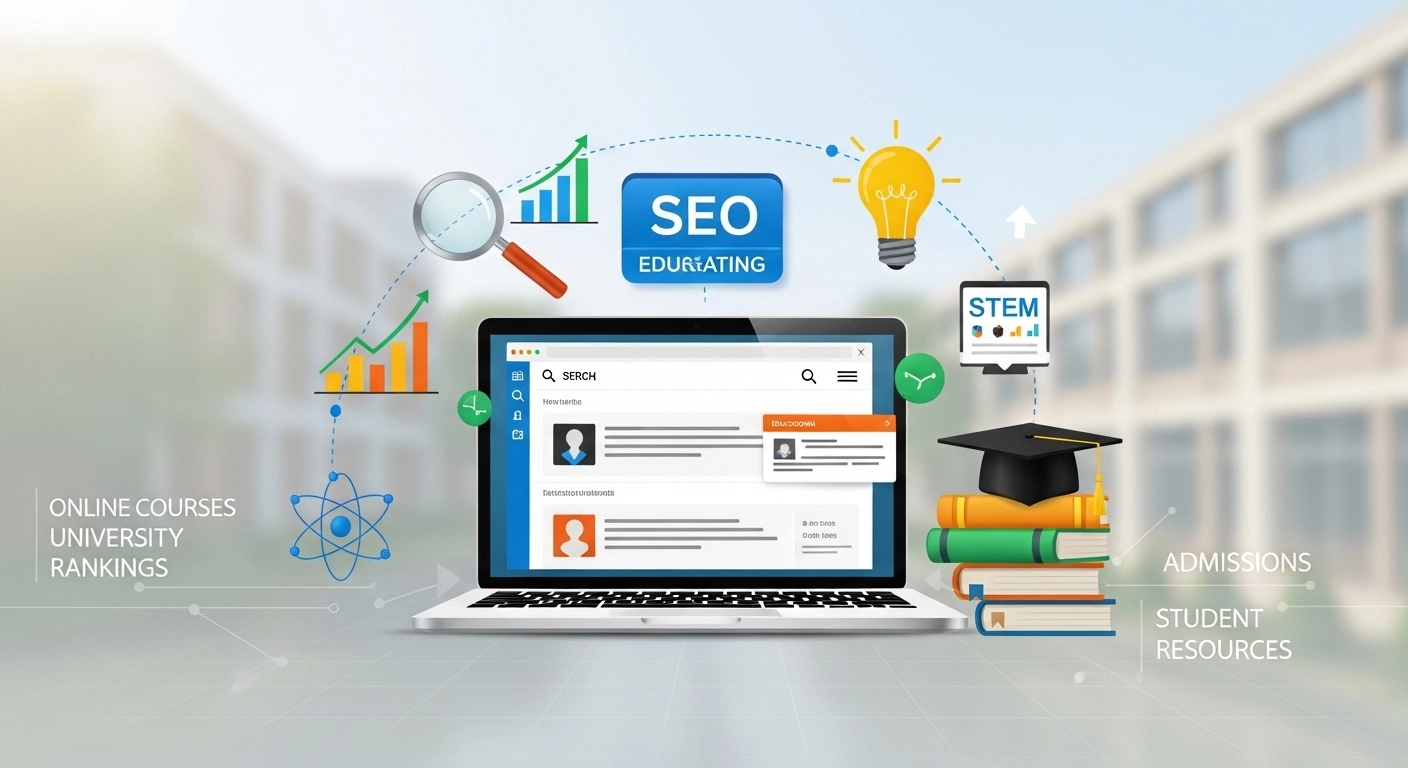
Education websites—whether schools, universities, eLearning platforms, or coaching institutes—face intense competition online. Ranking higher in search results isn’t just about visibility; it directly impacts student enrollments, course sign-ups, and brand credibility.
This guide breaks down how to build a strong SEO marketing strategy specifically for education websites—using practical steps you can implement right away.
Why SEO Matters for Education Websites
Unlike paid ads, SEO brings consistent, long-term traffic from students actively searching for courses, degrees, or learning resources.
With the right SEO strategy, you can:
- Attract high-intent students
- Build trust and authority
- Reduce reliance on paid advertising
- Increase applications and enrollments
1. Start with Smart Keyword Research
Effective SEO begins with understanding what your audience is searching for.
Focus on Search Intent
Education-related searches usually fall into three categories:
- Informational: “best courses after high school”
- Navigational: “XYZ University admissions”
- Transactional: “apply for online MBA”
Target High-Value Keywords
Examples:
- online courses for beginners
- best universities in [location]
- digital marketing course with certificate
- affordable online degree programs
Use long-tail keywords—they’re easier to rank for and bring more qualified traffic.
2. Create High-Quality, Helpful Content
Content is the backbone of SEO for education websites.
What to Publish
- Course pages (clear, detailed, optimized)
- Blog posts (guides, tips, comparisons)
- FAQs (admissions, fees, eligibility)
- Student success stories
- Career-focused articles
Example
Instead of a basic page like:
“Our digital marketing course”
Create:
“Complete Digital Marketing Course for Beginners (Curriculum, Fees, Career Scope)”
This improves both rankings and conversions.
3. Optimize On-Page SEO Elements
Every page should be optimized for both users and search engines.
Key Elements
- Title Tags: Include primary keyword
- Meta Descriptions: Clear and compelling
- Headings (H1, H2, H3): Structured content
- URL Structure: Clean and readable
- Internal Links: Connect related pages
Example
Bad URL:
website.com/page123?id=course
Good URL:
website.com/digital-marketing-course
4. Build Topic Authority (Topical SEO)
Search engines favor websites that deeply cover a subject.
Use Content Clusters
Create a pillar page and link it to related articles.
Example:
- Pillar: “Complete Guide to Online Education”
- Supporting posts:
- Benefits of online learning
- Best online courses in 2026
- How to choose the right course
This builds authority and improves rankings across multiple keywords.
5. Improve Technical SEO
A slow or broken website can hurt rankings—even with great content.
Focus Areas
- Fast loading speed
- Mobile-friendly design
- Secure site (HTTPS)
- Clean site structure
- XML sitemap submission
Tip
Most students browse on mobile, so mobile optimization is critical.
6. Optimize for Local SEO (For Institutions)
If you run a school, college, or training center, local SEO is essential.
Steps
- Create and optimize your Google Business Profile
- Use location-based keywords
- Collect student reviews
- Add accurate contact details
Example Keywords
- “best college in Lahore”
- “IT institute near me”
7. Earn Backlinks from Trusted Sources
Backlinks act as “votes of trust” for your website.
How to Get Them
- Publish research or reports
- Guest post on education blogs
- Partner with institutions
- Get listed in education directories
Quality matters more than quantity.
8. Use Conversion-Focused SEO
Traffic alone isn’t enough—you need conversions.
Optimize for Actions
- Add clear CTAs (Apply Now, Enroll Today)
- Use simple forms
- Highlight benefits and outcomes
- Show testimonials and success stories
Example
Instead of:
“Submit form”
Use:
“Start Your Career Today – Apply Now”
9. Track Performance and Improve
SEO is not one-time work—it requires continuous improvement.
Monitor:
- Organic traffic
- Keyword rankings
- Bounce rate
- Conversion rate
Use tools like Google Analytics and Search Console to refine your strategy.
Common Mistakes to Avoid
- Ignoring search intent
- Using duplicate content
- Overloading keywords
- Slow website speed
- Poor mobile experience
Fixing these can quickly improve performance.
FAQ: SEO Marketing for Education Websites
What is SEO for education websites?
It’s the process of optimizing your website to rank higher in search engines and attract students searching for courses, degrees, or learning resources.
How long does SEO take to show results?
Typically, 3–6 months, depending on competition and consistency.
Which keywords are best for education SEO?
Long-tail, intent-based keywords like “best online courses for beginners” or “MBA admissions 2026.”
Is blogging necessary for education websites?
Yes. Blogging helps target more keywords, answer student questions, and build authority.
Can SEO increase student enrollments?
Absolutely. Higher rankings bring targeted traffic, which leads to more inquiries and applications.
Final Thoughts
SEO marketing for education websites isn’t about quick wins—it’s about building long-term visibility, trust, and authority. When done right, it becomes your most powerful channel for attracting the right students at the right time.
Focus on helpful content, strong technical foundations, and user experience. The results will compound over time.
