
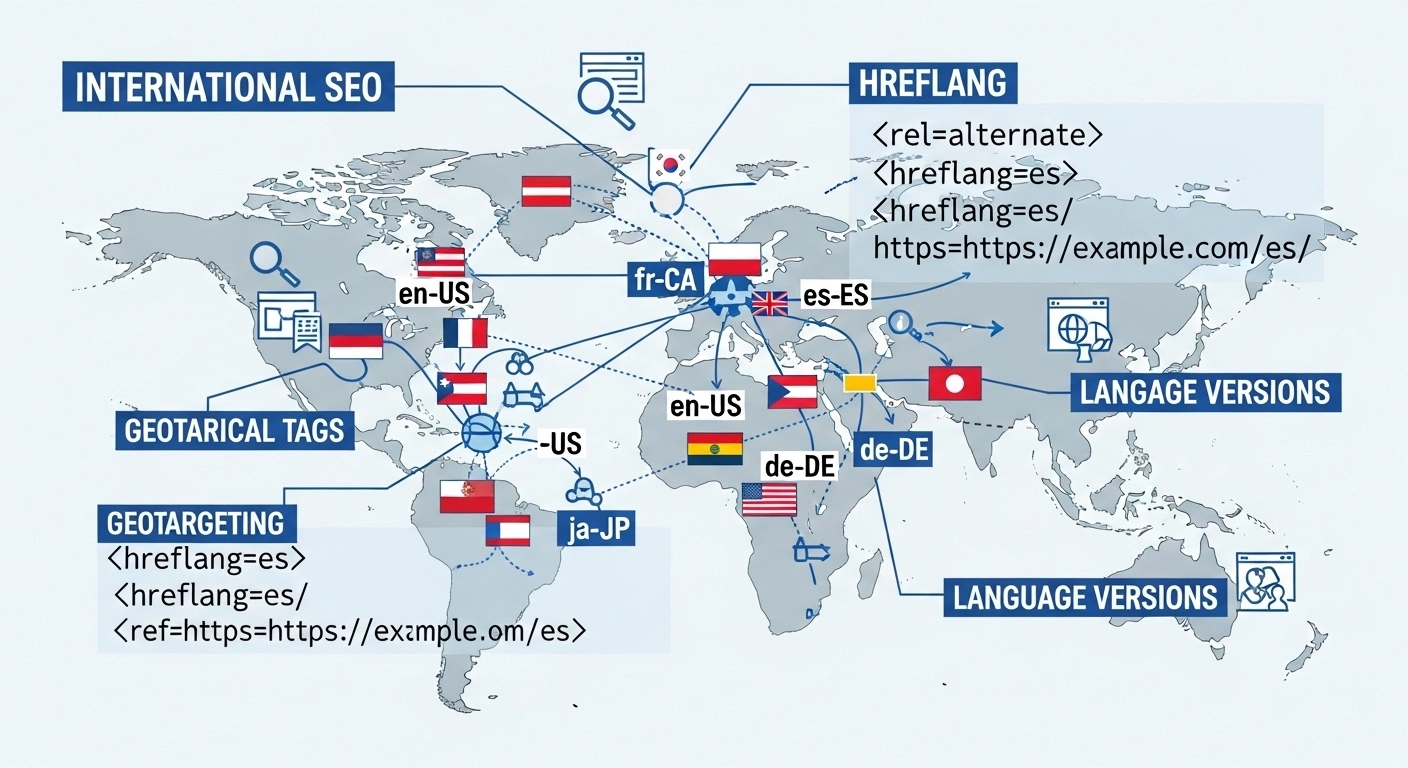
If your website targets users in more than one country or language, you’ve probably heard about International SEO hreflang. And if you’ve ever struggled with duplicate content, wrong country pages showing in Google, or lost international traffic—this tag is exactly what you need to understand.
In this guide, you’ll learn what hreflang is, how it works, and how to use it correctly to improve your global search visibility.
What Is International SEO hreflang?
Hreflang is an HTML attribute used in International SEO to tell search engines which language and regional version of a page should be shown to users.
In simple terms, it helps Google understand:
- Which language your content is in
- Which country the page is targeting
- Which version should appear in search results based on user location and language
For example:
- English users in the US →
/en-us/ - English users in the UK →
/en-gb/ - Spanish users →
/es/
Without hreflang, Google may show the wrong version of your page, leading to poor user experience and lost conversions.
Why hreflang Matters for International SEO
If you run a global website, hreflang is not optional—it’s essential.
Here’s why:
1. Prevents Duplicate Content Issues
Different language pages often look similar. Hreflang signals that these are alternate versions, not duplicates.
2. Improves User Experience
Users land on the correct language or regional page automatically.
3. Boosts International Rankings
Google serves the most relevant version of your page in each country.
4. Reduces Bounce Rate
Visitors are more likely to stay when they see content in their language.
How hreflang Works (Simple Explanation)
Hreflang acts like a map for search engines.
You tell Google:
“This page has alternate versions for other languages and regions.”
Each version links to the others using hreflang tags.
Example structure:
- Page A (US English)
- Page B (UK English)
- Page C (Spanish)
All pages reference each other using hreflang attributes.
hreflang Code Example
Here’s a basic implementation:
<link rel="alternate" hreflang="en-us" href="https://example.com/us/" />
<link rel="alternate" hreflang="en-gb" href="https://example.com/uk/" />
<link rel="alternate" hreflang="es" href="https://example.com/es/" />
<link rel="alternate" hreflang="x-default" href="https://example.com/" />
Key points:
- Each page must include all language versions
- Always include a self-referencing hreflang tag
- Use
x-defaultfor fallback pages
Common hreflang Mistakes to Avoid
Many websites fail International SEO because of incorrect hreflang setup. Avoid these mistakes:
❌ Missing return links
If Page A links to Page B, Page B must also link back.
❌ Wrong language or country codes
Example:
- Correct:
en-us,en-gb - Incorrect:
en-uk
❌ Using hreflang on non-canonical pages
Always ensure hreflang points to canonical URLs.
❌ Not covering all versions
If one version is missing, Google may ignore the entire setup.
Best Practices for hreflang SEO
To get the most from International SEO hreflang, follow these proven practices:
Keep URL structure consistent
Use clear patterns like:
/en//fr//de/
Use correct ISO codes
- Language:
en,fr,es - Country:
us,uk,ca
Implement in all three ways (if possible)
- HTML tags
- HTTP headers
- XML sitemap
Always test your implementation
Use tools like Google Search Console to detect errors.
Real-World Example
Imagine you run an online store:
- A US customer searching “buy running shoes” should land on the US page with USD pricing.
- A UK customer should see GBP pricing and UK shipping options.
- A French user should land on a French-translated page.
Without hreflang, Google might send all users to the wrong version—hurting sales and trust.
hreflang vs. Canonical Tags (Important Difference)
These two are often confused:
- Canonical tag → tells Google which page is the main version
- hreflang tag → tells Google which regional/language version to show
They work together, not against each other.
FAQ: International SEO hreflang
1. Is hreflang a ranking factor?
Not directly, but it improves targeting and user experience, which can boost performance.
2. Can I use hreflang for the same language?
Yes. For example, English for US and UK audiences.
3. Do I need hreflang for a single-language website?
No, hreflang is only for multilingual or multi-regional sites.
4. What happens if hreflang is wrong?
Google may ignore it or show the wrong version of your page.
Conclusion
International SEO hreflang is one of the most powerful tools for global websites. When implemented correctly, it ensures that the right users see the right content in the right language—leading to better rankings, better engagement, and higher conversions.
But when done incorrectly, it can confuse search engines and harm your international visibility.
