
If your content feels scattered and your rankings are stuck, the problem might not be your effort—it’s your structure. The pillar page and cluster model is a proven way to organize content so search engines clearly understand your expertise, and users can easily find what they need.
This guide breaks it down in plain English, with practical steps you can use right away.
What Is the Pillar Page and Cluster Model?
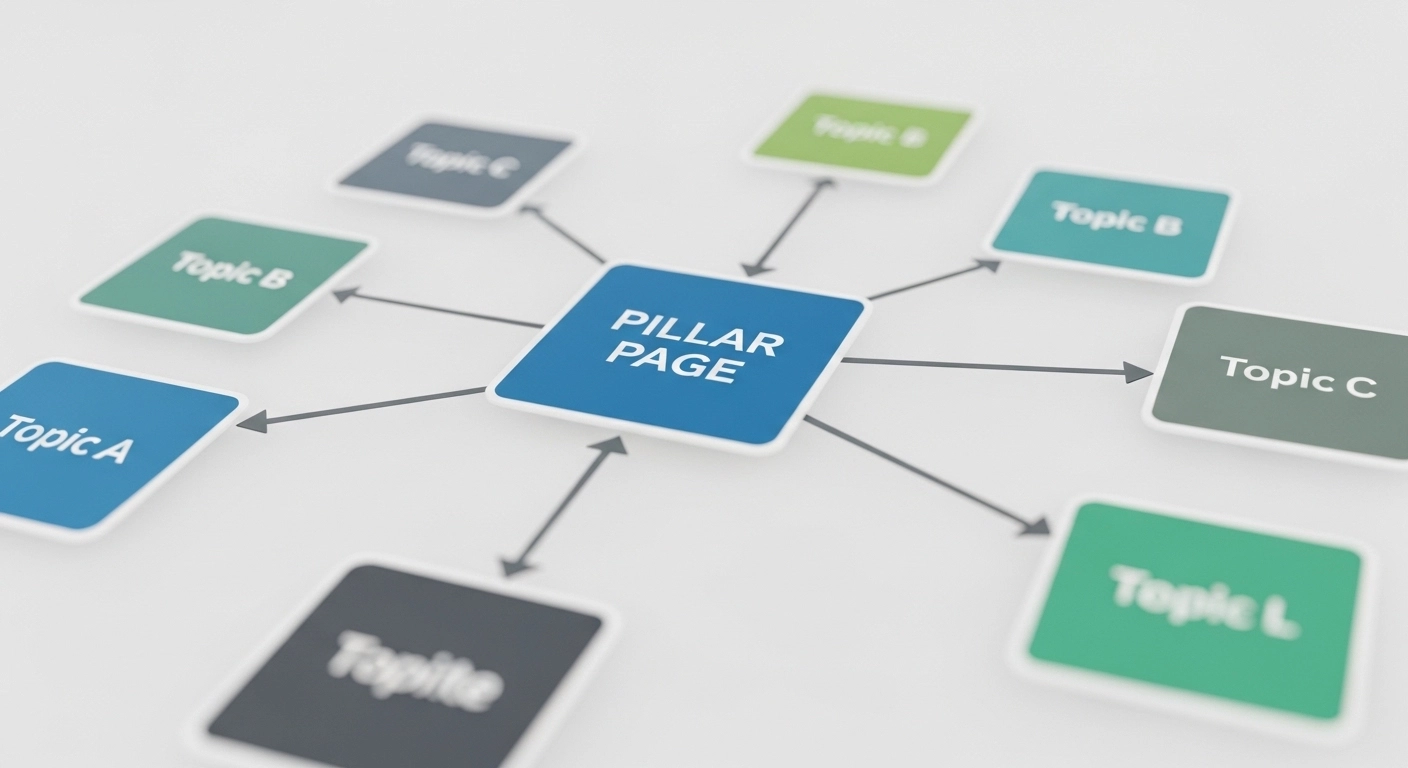
The pillar page and cluster model is a content strategy that groups related topics together under one main “pillar” page.
- Pillar Page: A broad, in-depth page that covers a core topic.
- Cluster Content: Multiple supporting articles that dive deeper into subtopics.
- Internal Links: Each cluster page links back to the pillar, and the pillar links out to all clusters.
Think of it like a hub and spokes:
- The pillar is the hub
- The clusters are the spokes connecting back to it
Why This Model Works for SEO
Search engines reward clarity and authority. This model helps you deliver both.
1. Builds Topical Authority
When you cover a topic from every angle, you signal expertise. This increases your chances of ranking across multiple keywords—not just one.
2. Improves Internal Linking
Instead of random links, you create a structured network that search engines can crawl easily.
3. Enhances User Experience
Users can move from general to specific content without getting lost, which keeps them on your site longer.
4. Targets Search Intent Better
You can match different levels of intent:
- Pillar page → broad, informational queries
- Cluster pages → specific, long-tail queries
Pillar Page vs Cluster Content
| Feature | Pillar Page | Cluster Content |
|---|---|---|
| Scope | Broad topic | Narrow subtopic |
| Length | Long, comprehensive | Focused, detailed |
| Keywords | High-volume | Long-tail |
| Purpose | Overview + navigation | Deep explanation |
Real Example (SEO Topic)
Let’s say your main topic is “SEO”.
Pillar Page:
- “Complete Guide to SEO”
Cluster Content:
- On-page SEO checklist
- Keyword research for beginners
- Technical SEO audit guide
- Link building strategies
- Local SEO tips
Each cluster article links back to the main SEO guide, and the guide links to all cluster posts.
How to Create a Pillar Page and Cluster Model
Step 1: Choose a Core Topic
Pick a topic that:
- Is important to your audience
- Has strong search demand
- Can be broken into subtopics
Example: “Content Marketing,” “Email Marketing,” “SEO Basics”
Step 2: Do Keyword Research
Find:
- One primary keyword (for the pillar page)
- Multiple related long-tail keywords (for cluster pages)
Use tools like Google search suggestions, keyword planners, or SEO tools.
Step 3: Build the Pillar Page
Your pillar page should:
- Cover the topic broadly
- Answer major questions
- Include sections that introduce subtopics
- Link to detailed cluster articles
Keep it comprehensive but easy to scan.
Step 4: Create Cluster Content
Each cluster article should:
- Focus on one specific keyword
- Provide detailed value
- Answer a clear question
- Link back to the pillar page
Example:
“Keyword Research for Beginners” → links back to “SEO Guide”
Step 5: Add Internal Links Strategically
- Pillar → links to all clusters
- Clusters → link back to pillar
- Clusters → can link to each other when relevant
This creates a strong SEO structure.
Best Practices for Maximum Results
- Keep URLs clean and related
- Use consistent anchor text
- Update pillar pages regularly
- Add new cluster content over time
- Avoid duplicate or overlapping topics
Common Mistakes to Avoid
- Creating a pillar page without supporting clusters
- Writing clusters that don’t link back
- Choosing topics that are too broad or too narrow
- Ignoring search intent
- Publishing content without a clear structure
When Should You Use This Model?
Use the pillar and cluster strategy when:
- You want to build authority in a niche
- You’re growing a blog or website
- You’re targeting multiple related keywords
- You want long-term SEO growth
It’s especially powerful for new websites trying to compete with bigger players.
FAQ: Pillar Page and Cluster Model
What is a pillar page in SEO?
A pillar page is a comprehensive page that covers a broad topic and links to detailed articles (cluster content) on related subtopics.
How many cluster pages do I need?
Start with 5–10 high-quality cluster articles. You can expand over time.
Does this model improve rankings?
Yes. It helps search engines understand your site structure and increases your authority on a topic.
Can I use this for any niche?
Absolutely. It works for blogs, eCommerce, service websites, and more.
How long should a pillar page be?
There’s no fixed length, but it should fully cover the topic—usually 2,000+ words.
Final Thoughts
The pillar page and cluster model isn’t just a trend—it’s a smarter way to organize content for both users and search engines. Instead of chasing random keywords, you build a clear, connected system that grows your authority over time.
If you apply this strategy correctly, you won’t just rank for one keyword—you’ll dominate an entire topic.
