
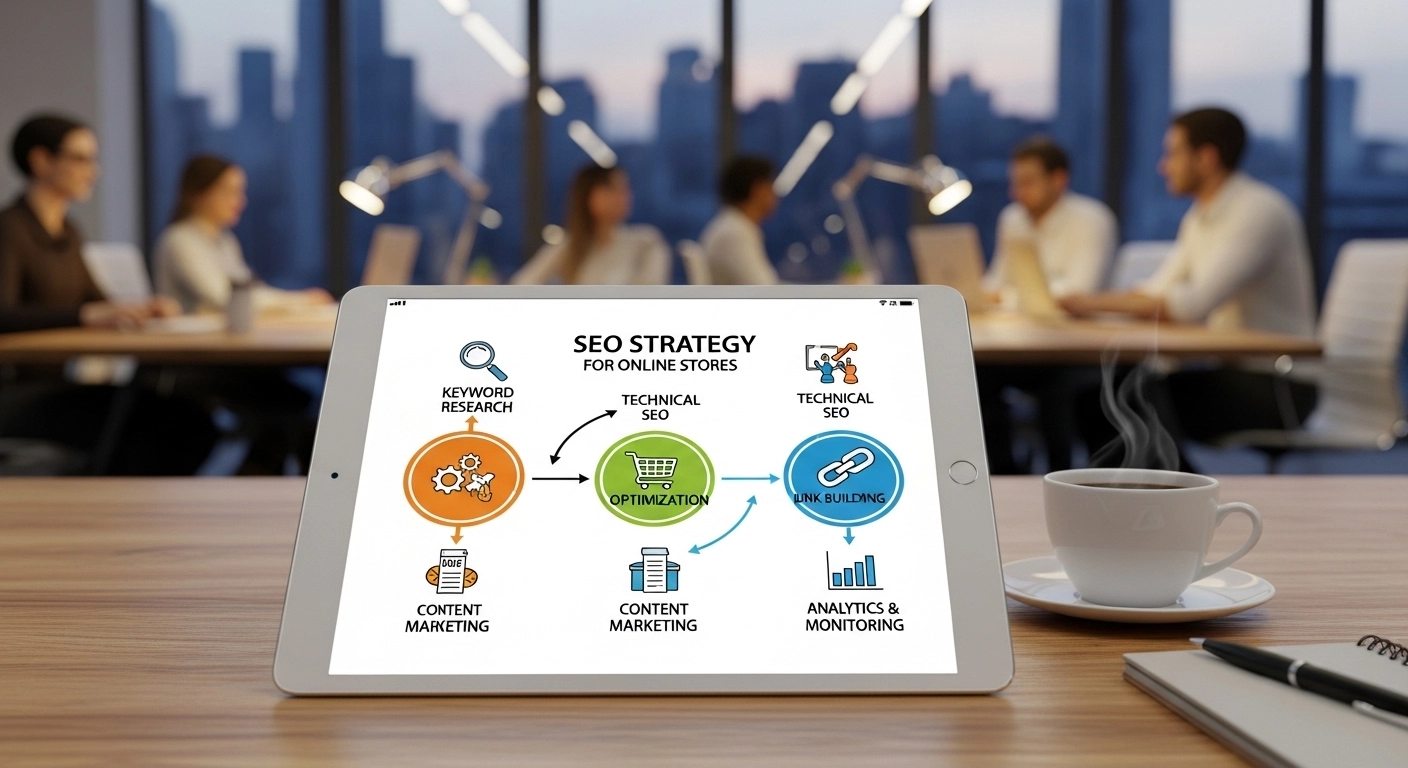
Running an online store is exciting—but without visibility in search engines, even the best products can go unnoticed. A smart SEO strategy for online stores helps your products appear in front of people who are already searching for them.
Unlike paid ads, SEO builds long-term traffic. When your store ranks higher in search results, you attract consistent visitors and increase sales without paying for every click.
This guide explains how to build an effective SEO strategy for ecommerce stores, step by step.
Why SEO Matters for Online Stores
Search engines are one of the biggest sources of ecommerce traffic. When someone searches for a product like “best wireless headphones under $100” or “buy running shoes online,” they are ready to purchase.
If your store appears on the first page of Google, you gain:
- High-intent visitors
- More product page views
- Higher conversion opportunities
- Long-term organic traffic
In short, good SEO turns search engines into a powerful sales channel.
1. Start with Smart Keyword Research
Every SEO strategy begins with understanding what people are searching for.
Focus on buyer-intent keywords rather than general terms.
Examples:
| Generic Keyword | Better Ecommerce Keyword |
| shoes | buy running shoes online |
| headphones | wireless headphones under $100 |
| laptop bag | waterproof laptop backpack |
Types of Keywords to Target
- Product keywords: “Nike running shoes”
- Category keywords: “best gaming keyboards”
- Long-tail keywords: “lightweight running shoes for beginners”
Use tools like Google Keyword Planner, Ahrefs, or SEMrush to find keywords with strong search volume and realistic competition.
2. Optimize Product Pages for Search
Your product pages are where conversions happen, so they must be optimized carefully.
Key Elements to Optimize
SEO Title
Include the product name and a primary keyword.
Example:
Men’s Running Shoes – Lightweight Breathable Trainers
Meta Description
Write a short, compelling description encouraging users to click.
Product Descriptions
Avoid copying manufacturer descriptions. Write unique content highlighting benefits.
Example:
Instead of
“High-quality running shoes with durable material.”
Write
“These lightweight running shoes are designed for comfort during long runs, featuring breathable mesh fabric and shock-absorbing soles.”
Use High-Quality Images
Add descriptive file names and alt text.
Example:
mens-lightweight-running-shoes.jpg
3. Create SEO-Friendly Category Pages
Category pages often attract high-volume keywords.
Example categories:
- Running Shoes
- Gaming Laptops
- Wireless Earbuds
To optimize category pages:
- Write a short introduction with keywords
- Use internal links to product pages
- Add filters and clear navigation
- Include FAQs or buying guides
These pages help search engines understand your store structure.
4. Improve Technical SEO
Technical SEO ensures search engines can crawl and index your store properly.
Important elements include:
Fast Website Speed
Online shoppers leave slow websites quickly. Compress images, use caching, and choose reliable hosting.
Mobile-Friendly Design
Most ecommerce traffic comes from mobile devices. Your store must load smoothly on smartphones.
Clean URL Structure
Good example:
yourstore.com/mens-running-shoes
Bad example:
yourstore.com/product?id=87264
Secure Website (HTTPS)
Search engines prioritize secure websites, and customers trust them more.
5. Use Internal Linking to Guide Users
Internal links help both search engines and visitors explore your store.
Example structure:
Category Page → Product Page
Blog Post → Product Page
Guide Article → Category Page
Example:
A blog article about “How to Choose Running Shoes” can link directly to your Running Shoes category page.
This strategy improves rankings and increases sales opportunities.
6. Create Helpful Content (Content Marketing)
Content marketing is one of the best ways to grow organic traffic.
Instead of only promoting products, create useful content related to your niche.
Examples:
- Buying guides
- Product comparisons
- Tutorials
- “Best products” lists
Example blog topics:
- Best Running Shoes for Beginners
- How to Choose the Right Gaming Keyboard
- Wireless Headphones Buying Guide
These articles attract informational searches and introduce new visitors to your store.
7. Earn Quality Backlinks
Backlinks are still one of the strongest ranking signals.
Ways to get backlinks:
- Guest posting on relevant blogs
- Product reviews by influencers
- Partnerships with niche websites
- Publishing original guides or research
For example, a detailed buying guide can attract links from bloggers and review sites.
8. Optimize for User Experience (UX)
Search engines prioritize websites that offer great user experiences.
Improve UX by:
- Simple navigation
- Clear product categories
- Fast checkout process
- Trust signals (reviews, ratings, guarantees)
A well-structured store keeps visitors longer and improves SEO performance.
Common SEO Mistakes Online Stores Should Avoid
Many ecommerce stores struggle with SEO because of common mistakes.
Avoid these issues:
- Duplicate product descriptions
- Thin category pages
- Slow website speed
- Broken links
- Poor mobile design
Fixing these problems can significantly improve rankings.
Frequently Asked Questions
How long does ecommerce SEO take to work?
SEO usually takes 3–6 months to show significant results, depending on competition, website quality, and content strategy.
What is the most important SEO factor for online stores?
High-quality product pages, strong keyword targeting, and a fast website are among the most important factors.
Should ecommerce stores have a blog?
Yes. A blog helps target informational keywords, attract new visitors, and build authority in your niche.
Is SEO better than paid ads for ecommerce?
Both are useful. Paid ads deliver immediate traffic, while SEO provides long-term organic traffic and lower acquisition costs.
Final Thoughts
A successful SEO strategy for online stores combines keyword research, optimized product pages, strong technical SEO, helpful content, and quality backlinks.
When these elements work together, your store becomes easier for search engines to understand—and easier for customers to find.
SEO is not a one-time task. It’s an ongoing process that rewards consistency and quality.
Start optimizing your store today, publish helpful content regularly, and watch your organic traffic and sales grow over time.
