
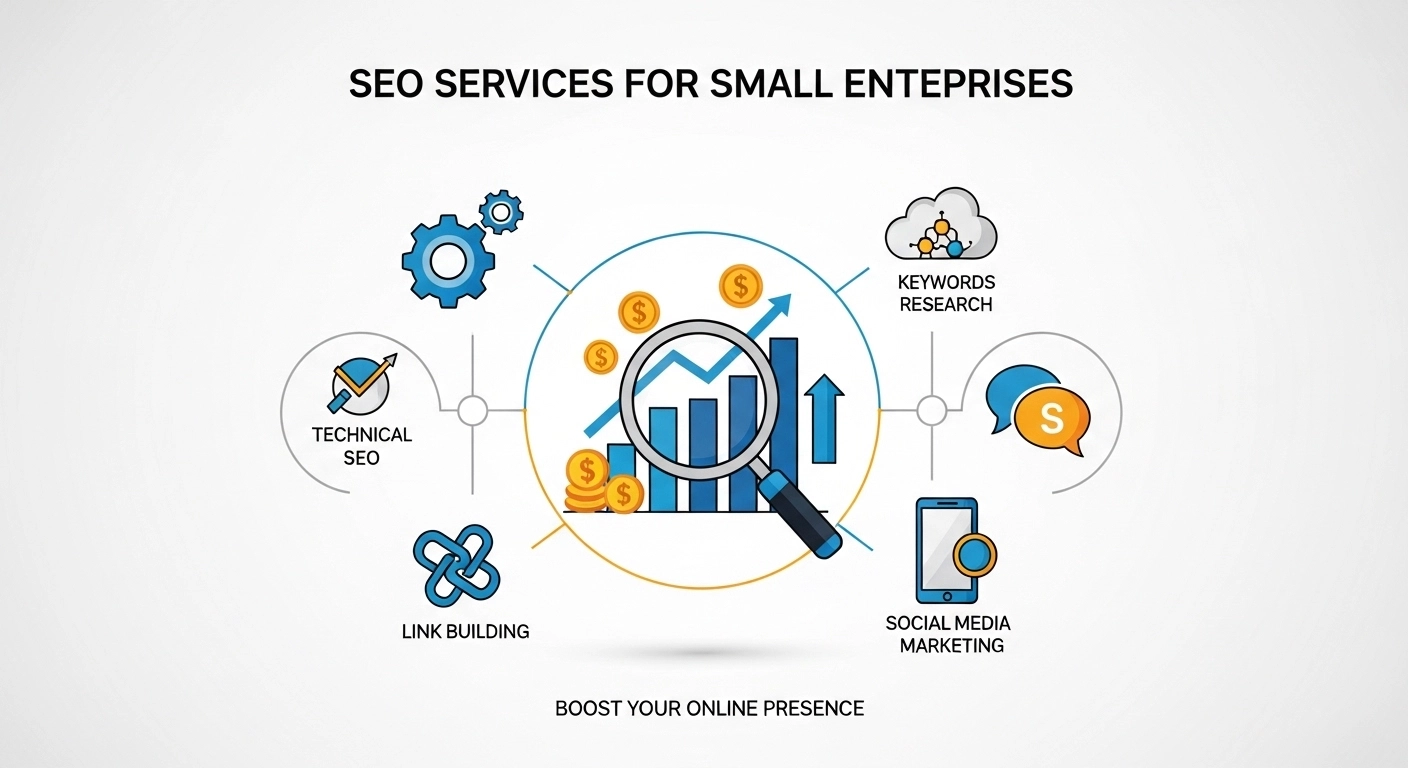
A Practical Guide to Growing Online.
Small enterprises don’t need massive budgets to compete online—but they do need smart, consistent SEO. The right strategy can help you attract qualified traffic, build trust, and turn searchers into paying customers.
If you’re running a small business, this guide explains exactly how SEO services work, what to expect, and how to get real results.
Why SEO Matters for Small Enterprises
Search engines are often the first place people go when they need a product or service. If your business doesn’t appear in search results, you’re losing potential customers to competitors.
SEO helps you:
- Get discovered by people already searching for what you offer
- Build credibility and trust
- Reduce reliance on paid ads
- Generate consistent, long-term traffic
Unlike ads, SEO keeps working over time. One well-optimized page can bring in traffic for months—or even years.
What Are SEO Services for Small Enterprises?
SEO services are a set of strategies designed to improve your website’s visibility in search engines like Google. For small businesses, these services are usually tailored to local audiences, niche markets, and limited budgets.
A complete SEO service typically includes:
1. Keyword Research
This is the foundation of SEO.
Instead of targeting broad, competitive keywords, small enterprises focus on:
- Long-tail keywords (e.g., “affordable web design for small businesses”)
- Local search terms (e.g., “plumber near me”)
- Buyer-intent keywords (e.g., “best accounting software for startups”)
Example:
A small bakery might target “custom birthday cakes in [city]” instead of just “cakes.”
2. On-Page Optimization
This ensures your website is clear, relevant, and easy for search engines to understand.
It includes:
- Optimized titles and meta descriptions
- Proper use of headings (H1, H2, H3)
- Keyword placement (natural, not forced)
- Internal linking between pages
- Image optimization
Example:
A service page titled “Affordable Plumbing Services in Houston” will perform better than a generic “Our Services” page.
3. Technical SEO
Even great content won’t rank if your site has technical issues.
Technical SEO focuses on:
- Website speed
- Mobile responsiveness
- Secure browsing (HTTPS)
- Fixing broken links and errors
- Improving site structure
Example:
If your website takes 5+ seconds to load, many users will leave before it even appears—hurting both rankings and conversions.
4. Content Creation
Content is what attracts and engages your audience.
Effective SEO content includes:
- Blog posts
- Service pages
- Guides and tutorials
- FAQs
The goal is to answer real questions your customers are searching for.
Example:
A small fitness studio could publish:
“Best Home Workouts for Beginners” to attract new clients.
5. Local SEO
For small enterprises, local visibility is critical.
Local SEO helps you appear in:
- Google Maps
- Local search results
- “Near me” searches
Key elements include:
- Google Business Profile optimization
- Local citations (business directories)
- Customer reviews
- Location-based keywords
Example:
A local electrician can rank for “emergency electrician near me” with strong local SEO.
6. Link Building
Backlinks (links from other websites) signal trust to search engines.
For small businesses, this often involves:
- Local directories
- Industry websites
- Guest posting
- Partnerships
Example:
A local restaurant featured in a food blog gets both traffic and SEO value.
How SEO Services Help Small Businesses Grow
SEO isn’t just about rankings—it’s about business results.
Here’s what you can expect:
- More targeted traffic: Visitors already interested in your services
- Better conversion rates: Higher intent = more sales
- Stronger brand presence: People trust businesses they see on Google
- Long-term ROI: SEO compounds over time
Choosing the Right SEO Service Provider
Not all SEO services are equal. Look for a provider that:
- Focuses on your business goals (not just rankings)
- Offers transparent reporting
- Uses ethical (white-hat) techniques
- Understands small business challenges
- Provides a clear, realistic timeline
Red flag: Anyone promising “instant rankings” or “guaranteed #1 positions.”
Common SEO Mistakes Small Enterprises Should Avoid
Even with good intentions, many businesses make these mistakes:
- Targeting overly competitive keywords
- Ignoring local SEO
- Publishing low-quality or duplicate content
- Not optimizing for mobile users
- Expecting overnight results
SEO is a long-term strategy—but when done right, it delivers consistent growth.
Simple FAQ
How long does SEO take to show results?
Most small businesses start seeing noticeable improvements in 3–6 months, depending on competition and effort.
Is SEO better than paid ads?
Both have value. SEO is better for long-term growth, while ads provide immediate traffic.
How much do SEO services cost?
Costs vary, but small business SEO services typically range from affordable monthly plans to custom packages based on your needs.
Can I do SEO myself?
Yes, but it takes time and learning. Many small enterprises hire experts to save time and get faster results.
Final Thoughts
SEO is one of the most powerful growth tools available to small enterprises. It helps you reach the right audience, build trust, and create a steady flow of customers—without relying solely on paid advertising.
The key is consistency. With the right strategy and support, even a small business can compete with larger brands online.
