
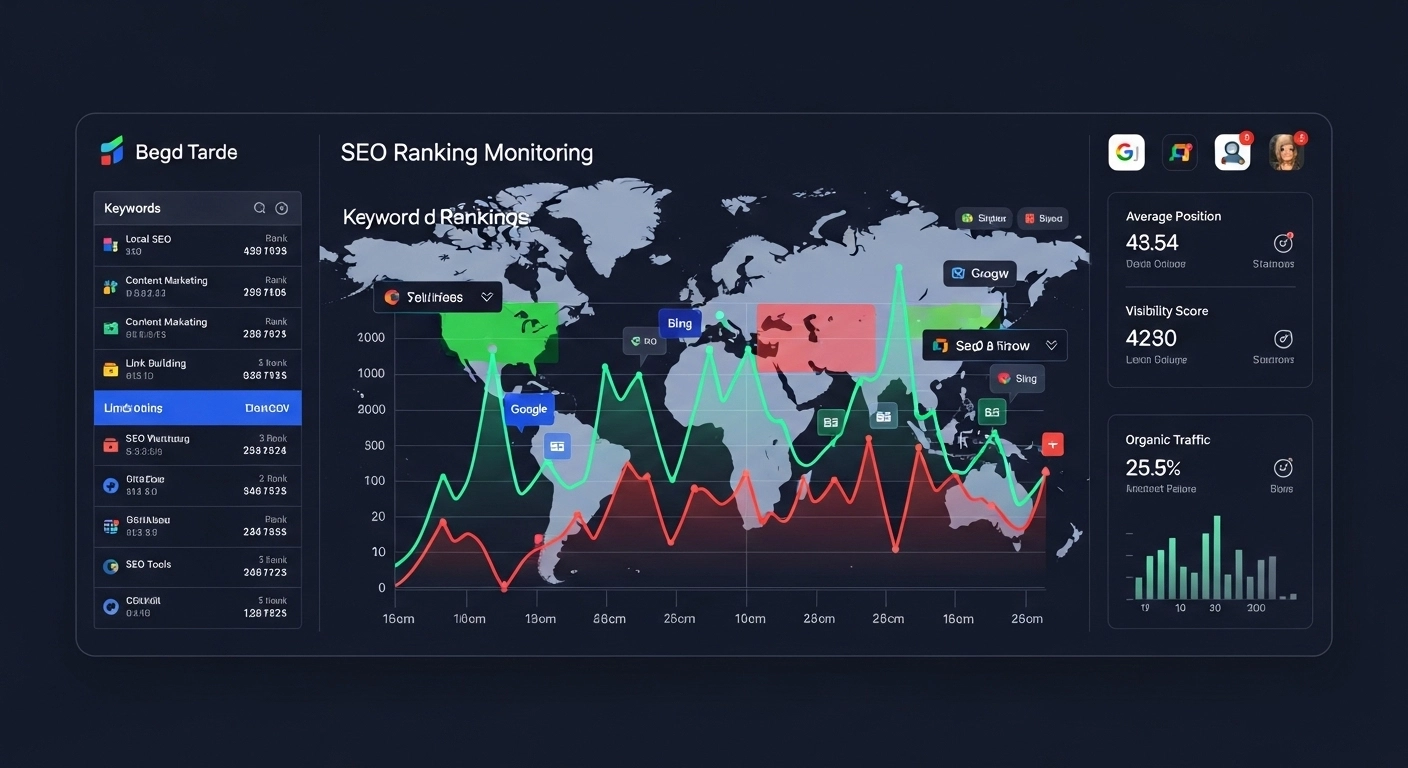
If your website depends on organic traffic, tracking your search rankings isn’t optional—it’s essential. Search results change every day as competitors update content, search engines adjust algorithms, and user behavior shifts. Without monitoring your rankings, it’s almost impossible to know whether your SEO strategy is working.
This is where SEO ranking monitoring services become valuable. These services track where your website appears in search engine results for important keywords, helping you measure progress, identify opportunities, and fix problems before they affect your traffic.
In this guide, you’ll learn what SEO ranking monitoring services are, why they matter, what features to look for, and how they help businesses improve search visibility.
What Are SEO Ranking Monitoring Services?
SEO ranking monitoring services track the position of your website in search engine results pages (SERPs) for specific keywords over time.
Instead of manually searching Google for each keyword, these tools automatically monitor rankings and provide reports showing how your pages perform.
For example:
- Your website ranks #12 for “best running shoes”
- After optimizing content, it moves to #5
- Later, a competitor publishes new content and you drop to #7
A ranking monitoring service tracks these changes and alerts you so you can respond quickly.
Why Ranking Monitoring Matters for SEO
Many businesses focus only on traffic, but rankings reveal the real story behind traffic changes.
Here are the main reasons ranking monitoring is important.
1. Measure SEO Performance
If your rankings improve, your SEO strategy is working. If rankings fall, you need to investigate the cause.
Monitoring helps you answer questions like:
- Are your keywords moving up or down?
- Did a recent content update improve rankings?
- Which pages perform best in search results?
2. Detect Algorithm Impact
Search engines update their algorithms frequently. When rankings suddenly change across multiple keywords, monitoring tools can reveal whether an update might be affecting your site.
This early insight allows you to adjust your strategy faster.
3. Track Competitor Movement
Ranking monitoring services often show which competitors rank above or below you.
For example:
If your competitor jumps from position 10 to position 3, you can analyze their page to understand:
- What content improvements they made
- Whether they gained backlinks
- If they optimized for search intent
This helps you stay competitive.
4. Identify Keyword Opportunities
Monitoring tools reveal keywords where your site ranks between positions 5 and 20. These keywords often require only small improvements to reach page one.
Examples of quick improvements include:
- Adding internal links
- Expanding content depth
- Improving title tags and headings
- Updating outdated information
Key Features of Professional Ranking Monitoring Services
Not all SEO monitoring services offer the same capabilities. High-quality services usually include several important features.
Daily or Weekly Rank Tracking
Reliable services track rankings frequently so you can detect changes quickly.
Many businesses prefer daily tracking for competitive industries.
Location-Based Rankings
Search results vary by location. A good monitoring service tracks rankings for specific cities, countries, or regions.
This is especially useful for:
- Local businesses
- E-commerce stores
- Multi-location brands
Mobile and Desktop Rankings
Google rankings differ between mobile and desktop searches. Monitoring both helps ensure your site performs well across devices.
Keyword Grouping and Tagging
Professional tools allow you to group keywords by category, such as:
- Product keywords
- Blog keywords
- Local keywords
- Brand keywords
This makes performance analysis easier.
Competitor Tracking
Many monitoring platforms automatically identify your main competitors and track their rankings alongside yours.
This comparison highlights where you gain or lose ground.
Historical Ranking Data
SEO progress takes time. Historical data shows ranking trends over weeks or months so you can measure long-term improvements.
How SEO Ranking Monitoring Improves Your Strategy
Ranking data becomes powerful when you use it to guide decisions.
Here are practical ways businesses use ranking monitoring insights.
Content Optimization
If a page ranks on page two, expanding the content and improving keyword relevance can push it to page one.
Example:
A blog post ranking #14 for “email marketing tips” could improve by:
- Adding new sections
- Including examples
- Improving headings and internal links
Content Planning
Ranking reports reveal which topics perform best. This helps guide future content creation.
If several posts about technical SEO rank well, creating related articles can strengthen topical authority.
Link Building Priorities
Pages close to page one often benefit the most from backlinks.
Monitoring tools help identify which pages are worth promoting.
Technical SEO Improvements
If rankings suddenly drop across many keywords, technical issues may be involved, such as:
- slow page speed
- indexing problems
- broken internal links
- crawl errors
Monitoring services help you detect these problems quickly.
Who Needs SEO Ranking Monitoring Services?
These services are useful for almost any website that relies on search traffic.
Common users include:
- SEO agencies managing multiple clients
- E-commerce websites tracking product keywords
- Bloggers and publishers monitoring content performance
- Local businesses targeting city-based searches
- SaaS companies tracking competitive keywords
If organic search is part of your marketing strategy, ranking monitoring is essential.
Best Practices for Tracking SEO Rankings
To get the most value from ranking monitoring services, follow these best practices.
Track the right keywords
Focus on keywords that bring relevant traffic, not just high search volume.
Monitor ranking trends
Short-term fluctuations are normal. Look at patterns over time instead of reacting to daily changes.
Combine rankings with traffic data
Rankings show visibility, while analytics reveal actual traffic and conversions.
Review reports regularly
Weekly or monthly reviews help ensure your SEO strategy stays on track.
Frequently Asked Questions
What is an SEO ranking monitoring service?
An SEO ranking monitoring service tracks your website’s position in search engine results for selected keywords and reports changes over time.
How often should rankings be checked?
Most businesses track rankings daily or weekly. Daily tracking provides faster insights in competitive industries.
Can rankings change every day?
Yes. Search rankings fluctuate regularly due to algorithm updates, new content from competitors, and changes in search behavior.
Do ranking positions affect website traffic?
Yes. Websites ranking in the top three results usually receive the majority of search clicks, while lower positions receive significantly less traffic.
Are free ranking tracking tools reliable?
Free tools can provide basic insights, but professional monitoring services typically offer more accurate data, historical tracking, and competitor analysis.
Conclusion
SEO success depends on visibility, and visibility depends on rankings. Without accurate tracking, it’s difficult to understand whether your SEO efforts are improving or declining.
SEO ranking monitoring services give you the data needed to make smarter decisions. They help you track keyword performance, analyze competitors, identify growth opportunities, and respond quickly to search engine changes.
For businesses serious about organic growth, ranking monitoring isn’t just a reporting tool—it’s a strategic advantage.
