
If your website already gets traffic but conversions and rankings are inconsistent, the problem usually isn’t visibility—it’s performance. That’s where SEO performance optimization services come in.
These services focus on improving how well your website performs in search engines and for users. The goal is simple: better rankings, faster pages, stronger engagement, and more conversions.
In this guide, you’ll learn what SEO performance optimization services include, why they matter, and how they help businesses grow online.
What Are SEO Performance Optimization Services?
SEO performance optimization services improve the technical, content, and user experience factors that influence how search engines rank your website.
Instead of just targeting keywords, these services focus on how efficiently your website performs in search results.
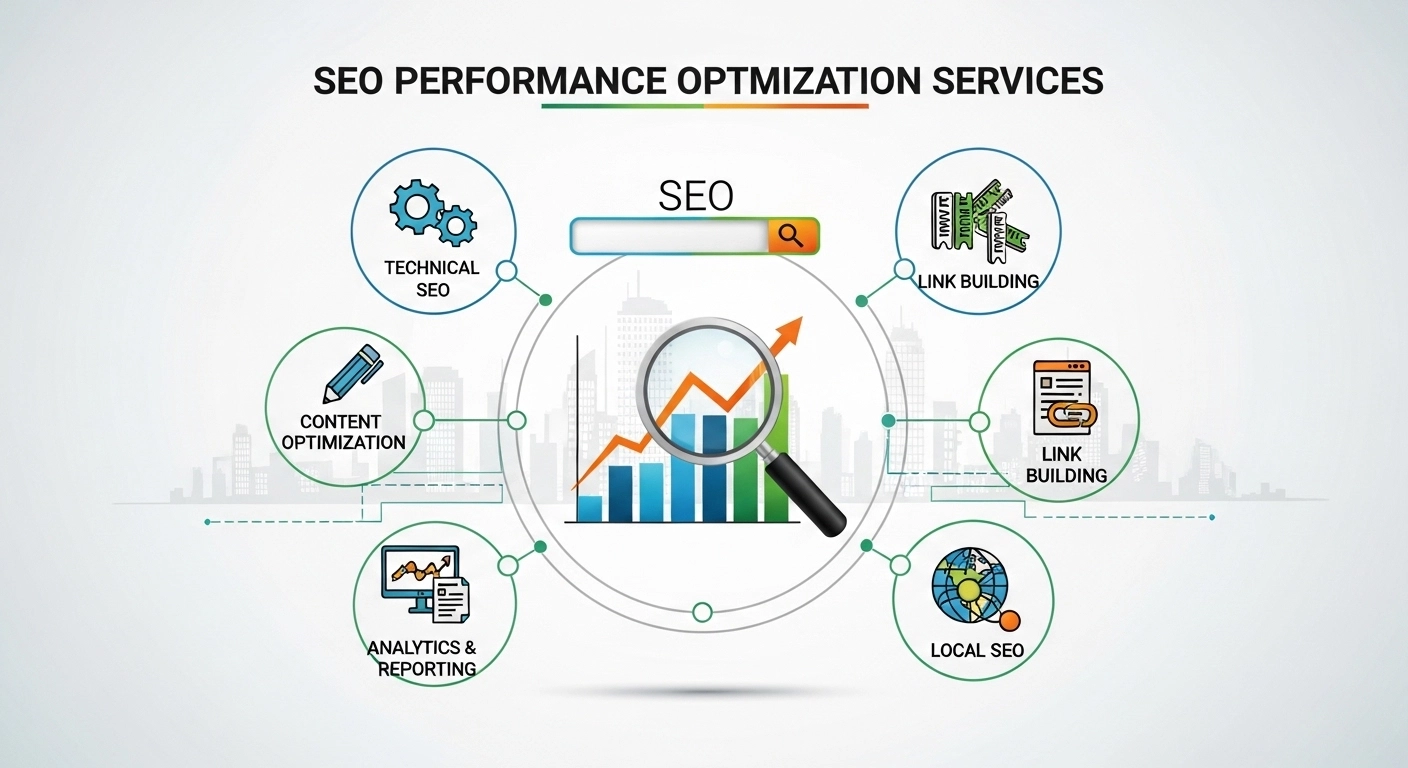
Key areas typically include:
- Website speed optimization
- Technical SEO improvements
- Content optimization
- Core Web Vitals improvements
- Mobile performance optimization
- User experience (UX) improvements
- Conversion optimization
- Data analysis and SEO reporting
The goal is to create a fast, technically sound, and search-friendly website that Google can easily crawl and users enjoy using.
Why SEO Performance Optimization Matters
Many websites publish content regularly but still struggle to rank or convert visitors.
The reason? Poor performance signals.
Search engines evaluate many performance factors such as:
- Page loading speed
- Mobile usability
- Website structure
- User engagement
- Bounce rate
- Technical errors
If your website loads slowly or has technical issues, search engines may rank competitors higher—even if your content is better.
Improving performance directly impacts:
- Higher keyword rankings
- Better user engagement
- Lower bounce rates
- Increased conversions
- Stronger long-term SEO results
Key Components of SEO Performance Optimization
1. Technical SEO Improvements
Technical SEO ensures search engines can properly crawl and index your site.
This includes:
- Fixing crawl errors
- Improving site architecture
- Optimizing XML sitemaps
- Correcting broken links
- Improving URL structure
- Implementing schema markup
A technically healthy website allows search engines to understand and rank your content more efficiently.
2. Website Speed Optimization
Page speed is a confirmed ranking factor and a critical user experience signal.
Optimization typically includes:
- Image compression
- Browser caching
- Code minification (CSS, HTML, JavaScript)
- Faster hosting configuration
- CDN implementation
For example, reducing page load time from 5 seconds to 2 seconds can dramatically increase both rankings and conversions.
3. Core Web Vitals Optimization
Google’s Core Web Vitals measure real-world user experience.
The three key metrics are:
- Largest Contentful Paint (LCP) – loading performance
- First Input Delay (FID) – interactivity
- Cumulative Layout Shift (CLS) – visual stability
SEO performance services focus on improving these metrics so your site passes Google’s performance standards.
4. Content Optimization
High-performing content isn’t just well-written—it’s strategically optimized.
Content optimization includes:
- Improving keyword targeting
- Matching search intent
- Optimizing headings and structure
- Enhancing internal linking
- Updating outdated content
For example, adding clear headings, relevant keywords, and internal links can improve both readability and rankings.
5. Mobile SEO Optimization
More than half of web traffic comes from mobile devices.
SEO optimization ensures your website is:
- Fully responsive
- Fast on mobile networks
- Easy to navigate on smaller screens
Google uses mobile-first indexing, meaning your mobile experience directly affects your rankings.
6. Conversion Rate Optimization (CRO)
Traffic is valuable only when it converts.
SEO performance optimization often includes:
- Improving page layouts
- Optimizing call-to-action buttons
- Reducing friction in forms
- Improving landing pages
For example, a clearer call-to-action like “Get a Free SEO Audit” can significantly increase lead generation.
Benefits of SEO Performance Optimization Services
Businesses that invest in SEO performance improvements typically see measurable growth.
Key benefits include:
- Higher Google rankings
- Faster website loading speeds
- Improved user experience
- Increased organic traffic
- More qualified leads
- Better ROI from SEO efforts
Instead of chasing short-term traffic spikes, performance optimization builds sustainable search visibility.
Who Needs SEO Performance Optimization?
These services are ideal for:
Growing businesses
Websites that already get traffic but want better results.
E-commerce stores
Where speed and usability directly impact sales.
Content websites and blogs
That rely on organic traffic for growth.
Local businesses
Looking to improve visibility in local search results.
How to Choose the Right SEO Optimization Service
Not all SEO providers focus on performance improvements.
When choosing a service, look for:
- Technical SEO expertise
- Proven results and case studies
- Transparent reporting
- Data-driven strategy
- Experience with Core Web Vitals and site speed
Avoid agencies that promise “instant rankings.” Sustainable SEO growth requires strategy and ongoing optimization.
FAQ: SEO Performance Optimization Services
What is SEO performance optimization?
SEO performance optimization improves a website’s technical structure, speed, and content so it ranks higher in search engines and provides a better user experience.
How long does SEO optimization take to show results?
Most websites start seeing improvements within 3 to 6 months, depending on competition and the current state of the website.
Is page speed really important for SEO?
Yes. Page speed is a confirmed Google ranking factor and also affects user experience, engagement, and conversion rates.
What tools are used for SEO performance analysis?
Common tools include:
- Google Search Console
- Google Analytics
- PageSpeed Insights
- Screaming Frog
- Ahrefs or SEMrush
How often should SEO optimization be done?
SEO performance should be monitored continuously, with regular audits every 3–6 months to maintain strong rankings.
Final Thoughts
SEO today is no longer just about adding keywords to a page. It’s about building fast, technically strong, and user-focused websites that search engines trust and users enjoy.
Professional SEO performance optimization services help identify hidden issues, improve site speed, strengthen content, and turn organic traffic into real business growth.
