
f your business website isn’t showing up in Google search results, you’re missing valuable traffic and potential customers. That’s where SEO optimization for business websites comes in.
Search engine optimization (SEO) helps your website appear when people search for products or services you offer. Done correctly, SEO can increase visibility, bring in qualified leads, and grow your business without relying entirely on paid ads.
This guide explains how SEO works for business websites and how you can optimize your site to attract more customers online.
What Is SEO Optimization for Business Websites?
SEO optimization for business websites means improving your website so it ranks higher in search engines like Google when potential customers search for relevant keywords.
For example, if someone searches:
- “best digital marketing agency”
- “website design services near me”
- “affordable SEO services”
SEO helps your business website appear in those results.
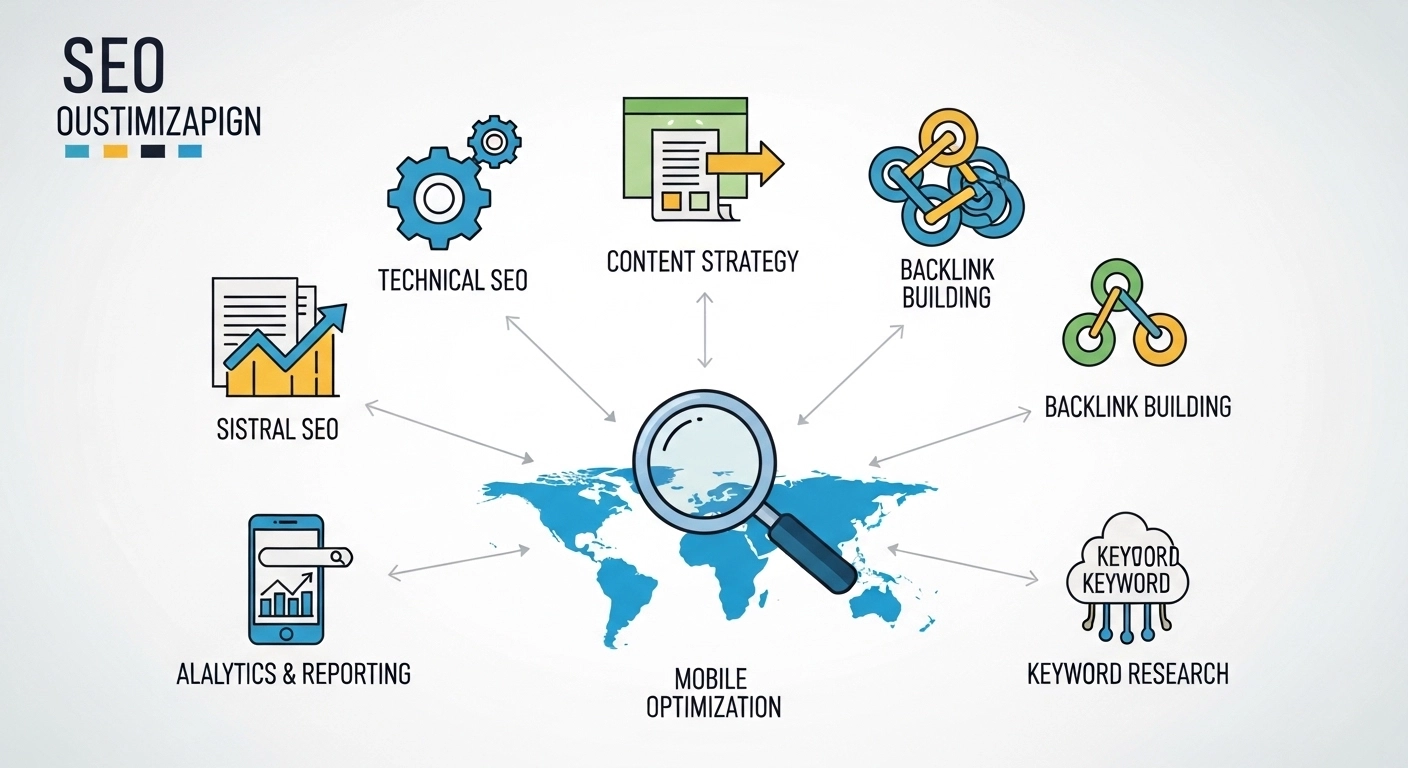
Effective SEO combines several elements, including:
- Keyword research
- High-quality content
- Technical website improvements
- On-page optimization
- Local SEO strategies
- Strong internal linking
When these elements work together, your website becomes easier for search engines to understand and recommend.
Why SEO Is Important for Business Websites
Most online experiences begin with a search engine. If your website doesn’t appear in search results, potential customers may never find your business.
Here’s why SEO matters.
Increased Online Visibility
SEO helps your business appear in search results when people look for services you provide. Higher visibility means more people discovering your brand.
More Qualified Traffic
Unlike random traffic, SEO brings users actively searching for your services, which increases the chance of conversions.
Long-Term Marketing Value
Paid ads stop working when your budget runs out. SEO continues driving traffic over time, making it one of the most cost-effective marketing strategies.
Builds Trust and Credibility
Websites that appear on the first page of search results often seem more trustworthy to users.
Key Elements of SEO Optimization for Business Websites
Successful SEO involves multiple components working together.
1. Keyword Research
Keyword research helps you understand what potential customers are searching for.
For example, a web design business might target keywords like:
- website design services
- professional website design
- affordable web design for small businesses
Choosing the right keywords ensures your content matches real search intent.
Focus on:
- Primary service keywords
- Long-tail keywords
- Location-based keywords (for local businesses)
2. On-Page SEO
On-page SEO involves optimizing the elements on your website pages.
Important on-page factors include:
Title tags
Your page title should clearly describe the content and include the main keyword.
Meta descriptions
A short summary that encourages users to click your link in search results.
Headings (H1, H2, H3)
Use headings to organize your content and improve readability.
Image optimization
Use descriptive file names and alt text for images.
Internal linking
Link related pages within your website to improve navigation and SEO structure.
3. High-Quality Content
Content is one of the strongest ranking factors in SEO.
Your business website should include helpful and informative content such as:
- Service pages
- Blog posts
- How-to guides
- FAQs
- Case studies
Content should answer customer questions and demonstrate expertise in your industry.
For example, a digital marketing agency might publish blog posts like:
- How SEO helps small businesses grow
- Website design tips for better conversions
- Local SEO strategies for small companies
This type of content attracts traffic and builds authority.
4. Technical SEO
Technical SEO focuses on improving how search engines crawl and understand your website.
Key technical factors include:
Fast page speed
Slow websites can hurt rankings and user experience.
Mobile-friendly design
Most users browse on smartphones, so your website must work well on mobile devices.
Secure website (HTTPS)
Security is important for both users and search engines.
Clean site structure
Clear navigation helps both users and search engines find important pages.
5. Local SEO for Businesses
If your business serves a specific area, local SEO is essential.
Local SEO helps your business appear in searches like:
- “SEO agency near me”
- “plumber in Chicago”
- “best dentist in Dallas”
To improve local SEO:
- Create and optimize a Google Business Profile
- Use location-based keywords
- Add your business to local directories
- Encourage customer reviews
This helps your business appear in local search results and map listings.
6. Internal Linking Structure
Internal links connect pages within your website.
For example:
- A blog post about SEO tips can link to your SEO service page.
- A web design article can link to your design services page.
This improves navigation and helps search engines understand which pages are most important.
Practical Example: SEO for a Small Business Website
Imagine a company that provides website design services.
A strong SEO strategy might include:
Homepage
Website design services for businesses
Service pages
Custom website design
E-commerce website development
Website maintenance services
Blog content
How to design a business website
SEO tips for small business websites
Website speed optimization guide
These pages support each other and help the site rank for multiple related keywords.
Common SEO Mistakes Business Websites Should Avoid
Even good websites can struggle with SEO if common mistakes are made.
Avoid these issues:
- Publishing thin or low-quality content
- Ignoring mobile optimization
- Using duplicate content
- Not optimizing title tags and meta descriptions
- Poor internal linking structure
Fixing these issues can significantly improve search performance.
FAQ: SEO Optimization for Business Websites
How long does SEO take to work?
SEO is a long-term strategy. Most websites begin seeing noticeable improvements in 3 to 6 months, depending on competition and content quality.
Can small businesses benefit from SEO?
Yes. SEO is especially valuable for small businesses because it helps them compete online without spending large amounts on advertising.
How many keywords should a business website target?
Each page should focus on one main keyword and several related keywords that match user intent.
Do business websites need a blog for SEO?
While not mandatory, blogging helps attract traffic, answer customer questions, and target additional keywords.
Is SEO better than paid advertising?
Both have benefits. Paid ads provide immediate traffic, while SEO builds long-term organic visibility and credibility.
Conclusion
SEO optimization for business websites is one of the most powerful ways to attract customers online. By focusing on keyword research, high-quality content, technical improvements, and strong internal linking, businesses can improve their search visibility and reach the right audience.
The key is consistency. SEO isn’t a one-time task—it’s an ongoing process that strengthens your website over time.
