
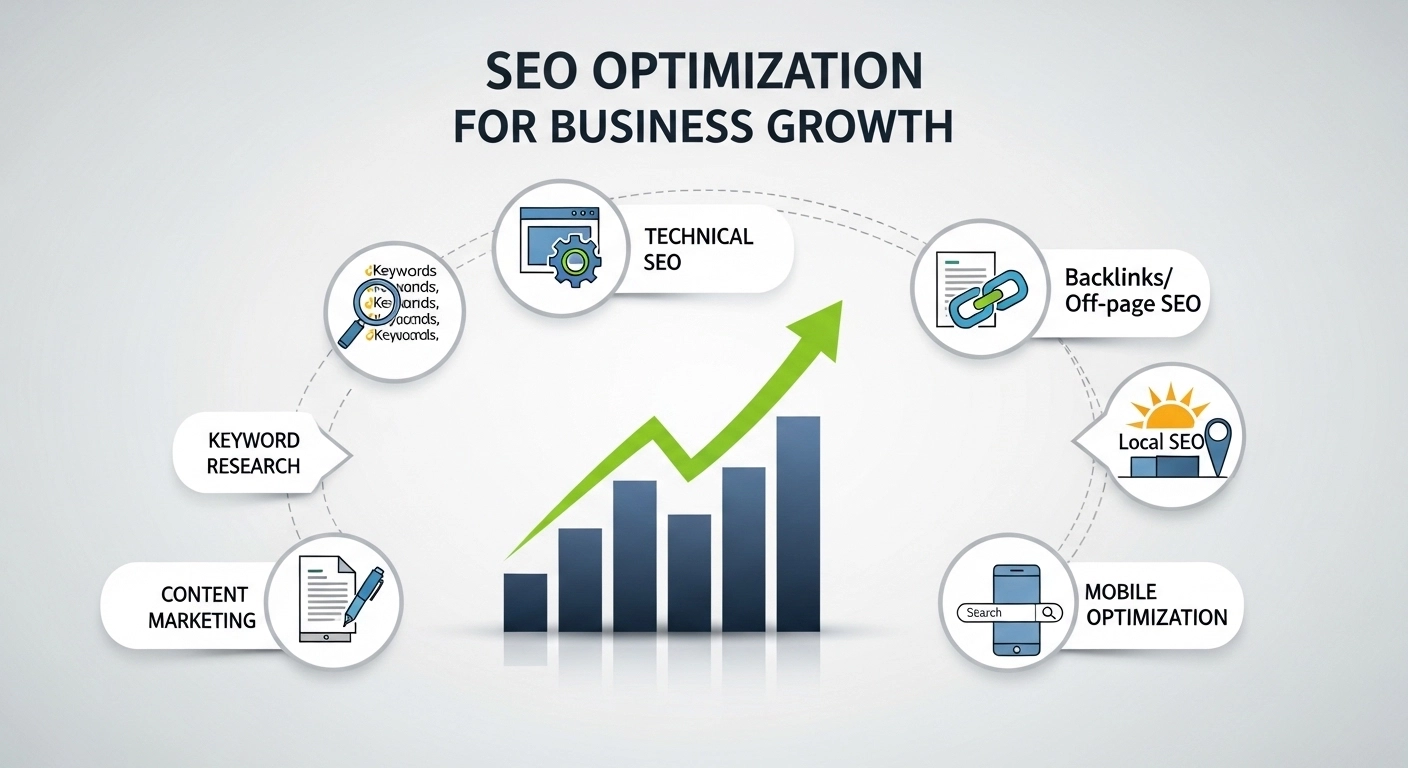
Businesses today compete in a crowded digital marketplace. Simply having a website is no longer enough. If customers cannot find your business online, your competitors will. This is where SEO optimization for business growth becomes essential.
Search Engine Optimization (SEO) helps your business appear in search results when potential customers are looking for your products or services. Done correctly, SEO drives consistent traffic, builds brand credibility, and generates long-term revenue.
This guide explains how SEO works for business growth and how you can start using it effectively.
Why SEO Matters for Business Growth
Search engines are often the starting point of the customer journey. When people need information, products, or services, they search online.
A strong SEO strategy helps your business:
- Increase website traffic
- Attract qualified leads
- Build trust with customers
- Improve brand visibility
- Reduce reliance on paid ads
Unlike advertising, SEO continues to deliver results over time. Once your pages rank well, they can bring traffic for months or even years.
Understanding How SEO Works
SEO focuses on improving your website so search engines can understand and rank it.
The three main pillars of SEO are:
1. On-Page SEO
On-page SEO refers to optimizing elements within your website.
Important factors include:
Keyword optimization
Use relevant search terms that customers are typing into search engines.
Title tags and meta descriptions
These help search engines and users understand what your page is about.
Content quality
Search engines favor helpful, original, and informative content.
Header structure
Using headings (H1, H2, H3) improves readability and SEO structure.
Internal linking
Linking related pages helps search engines crawl your website and keeps users engaged.
Example:
A digital marketing agency might create a page targeting the keyword “SEO services for small businesses.”
2. Technical SEO
Technical SEO ensures your website performs well and is easy for search engines to crawl.
Key elements include:
- Fast page loading speed
- Mobile-friendly design
- Secure HTTPS connection
- Clean website structure
- XML sitemap
A slow or poorly structured website can hurt your rankings even if your content is excellent.
3. Off-Page SEO
Off-page SEO focuses on improving your website’s authority through external signals.
The most important factor is backlinks—links from other websites pointing to yours.
Search engines see backlinks as a vote of trust. The more high-quality sites linking to your content, the more credible your website appears.
Common ways to earn backlinks include:
- Guest blogging
- Publishing valuable guides
- Industry partnerships
- Digital PR
How SEO Drives Real Business Results
SEO is not just about rankings. The real goal is business growth.
Here are practical ways SEO supports growth:
1. Attracts Customers Actively Searching
SEO targets users who already have intent.
For example:
Someone searching for “best accounting software for small business” is likely ready to buy.
Ranking for these keywords brings highly targeted visitors.
2. Builds Long-Term Traffic
Paid advertising stops when the budget ends.
SEO content continues bringing visitors long after publication.
For example, a well-optimized blog post can generate traffic for years.
3. Increases Brand Authority
When users repeatedly see your website in search results, it builds credibility.
Businesses that rank highly are often perceived as industry leaders.
4. Improves Conversion Rates
SEO traffic is highly targeted, which means visitors are more likely to convert.
With clear calls-to-action, SEO visitors can turn into:
- Leads
- Email subscribers
- Customers
A Simple SEO Strategy for Business Growth
If you’re starting SEO, focus on these steps.
1. Do Keyword Research
Identify search terms your customers use.
Look for keywords with:
- Good search volume
- Clear search intent
- Moderate competition
Examples:
- SEO services for local businesses
- how to improve Google rankings
- SEO tips for small businesses
2. Create Helpful Content
Content is the core of SEO.
Publish articles that solve problems and answer questions your audience has.
Examples include:
- Step-by-step guides
- Tutorials
- Case studies
- Industry insights
High-quality content naturally attracts links and shares.
3. Optimize Each Page
Every page should include:
- A clear title tag
- Keyword-focused headings
- Internal links
- Optimized images
- A compelling meta description
These small improvements help search engines understand your content.
4. Improve Website Experience
Search engines prioritize user experience.
Make sure your website:
- Loads quickly
- Works on mobile devices
- Has clear navigation
- Is easy to read
Better user experience improves rankings and conversions.
5. Build Quality Backlinks
Backlinks remain one of the strongest ranking factors.
Focus on earning links from:
- Industry blogs
- Business directories
- News websites
- Partners or collaborators
Avoid spammy link-building tactics, which can harm rankings.
Common SEO Mistakes Businesses Should Avoid
Many businesses struggle with SEO because of avoidable mistakes.
Some common ones include:
Ignoring search intent
Content must match what users want to learn or solve.
Keyword stuffing
Overusing keywords makes content unreadable and can hurt rankings.
Publishing thin content
Short, unhelpful articles rarely rank well.
Neglecting technical SEO
Slow or broken websites limit SEO performance.
Measuring SEO Success
To understand whether your SEO efforts are working, track key metrics.
Important indicators include:
- Organic traffic
- Keyword rankings
- Click-through rate
- Bounce rate
- Conversions from search traffic
Tools such as analytics platforms and SEO software help monitor these metrics and guide improvements.
Frequently Asked Questions
How long does SEO take to show results?
SEO usually takes 3 to 6 months to show noticeable results. Competitive industries may take longer, but the long-term benefits are worth the investment.
Is SEO better than paid advertising?
Both have value. Paid ads deliver immediate traffic, while SEO provides sustainable long-term growth. The best strategy often combines both.
Can small businesses benefit from SEO?
Absolutely. In fact, SEO is one of the most effective marketing strategies for small businesses because it attracts customers actively searching for their services.
Do I need technical skills for SEO?
Basic SEO can be learned easily. However, advanced technical optimization may require professional expertise or an experienced SEO specialist.
Conclusion
SEO optimization for business growth is not a one-time task—it’s a long-term strategy that builds visibility, credibility, and sustainable traffic.
By focusing on quality content, smart keyword targeting, strong technical foundations, and authoritative backlinks, businesses can steadily improve their search rankings and attract more customers.
The companies that invest in SEO today are the ones that dominate search results tomorrow.
