
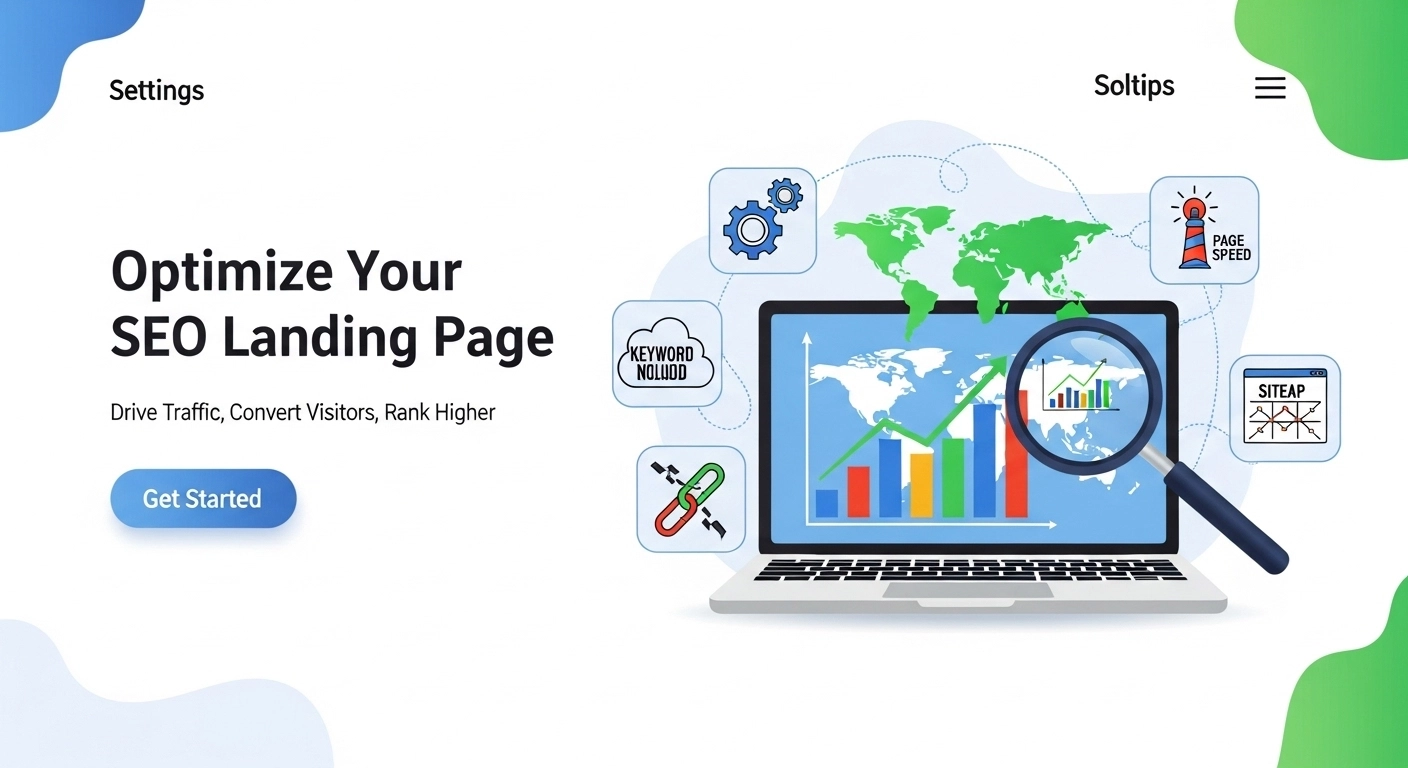
A landing page has one main job: turn visitors into leads or customers. That’s where SEO landing page optimization comes in.
By combining search engine optimization with strong conversion design, you can create landing pages that rank in Google and persuade visitors to take action.
What Is SEO Landing Page Optimization?
- Generating leads
- Selling a product
- Booking a consultation
- Downloading a resource
Why SEO Landing Pages Matter
Many businesses rely only on ads for landing page traffic. That works—but it costs money every time someone clicks.
SEO landing pages bring free organic traffic from search engines.
Benefits include:
- Consistent traffic from Google
- Lower customer acquisition costs
- Higher brand visibility
- Long-term lead generation
Start with Search Intent
The first step in SEO landing page optimization is understanding search intent.
There are usually four types of intent:
Informational – The user wants information
Example: What is SEO?
Commercial – The user is researching services
Example: Best SEO agency
Transactional – The user is ready to buy
Example: Hire SEO expert
Navigational – The user wants a specific website
Landing pages usually target commercial or transactional intent.
Keyword Research for Landing Pages
Every landing page should target one primary keyword and several related keywords.
Example for this topic:
Primary keyword
SEO landing page optimization
Related keywords
landing page SEO tips
optimize landing page for Google
SEO conversion optimization
on-page SEO for landing pages
Use tools like:
- Google Keyword Planner
- Ahrefs
- SEMrush
- Ubersuggest
Look for keywords with clear buying or action intent.
Write a Clear, Keyword-Optimized Title
A good title should:
- Include the primary keyword
- Be under 60 characters
- Sound natural and compelling
Example:
SEO Landing Page Optimization: 10 Proven Ways to Rank and Convert
Craft a Strong Meta Description
Example:
Learn how to optimize landing pages for SEO and conversions. Follow these proven tips to rank higher on Google and turn visitors into customers.
A good description should:
- Include the main keyword naturally
- Explain the benefit
- Encourage clicks
Optimize the Page Structure
Search engines prefer pages that are easy to read and logically organized.
Use a clear structure:
H1 – Page title
H2 – Main sections
H3 – Subtopics
Example structure:
H1: SEO Landing Page Optimization
H2: What Is SEO Landing Page Optimization
H2: Why It Matters
H2: Keyword Research
H2: On-Page Optimization Tips
Create High-Quality, Focused Content
Landing pages should be clear, helpful, and focused on one goal.
Best practices:
- Explain the problem and solution quickly
- Use short paragraphs
- Add bullet points for readability
- Include examples or proof
Example:
“Our SEO service improves rankings.”
Say:
“Our SEO team optimized a client landing page and increased organic leads by 140% in four months.”
Real results build trust.
Improve Page Speed
Slow pages lose visitors quickly.
To improve speed:
- Compress images
- Use fast hosting
- Enable caching
- Reduce unnecessary scripts
A landing page should ideally load in under three seconds.
Use Internal Links Strategically
Internal links help search engines understand your site structure.
Examples:
- Link to blog posts explaining your service
- Link to case studies or testimonials
- Link to related service pages
Optimize for Mobile
Most searches now happen on mobile devices.
A mobile-friendly landing page should:
- Load quickly
- Have large readable text
- Use clear buttons
- Avoid clutter
Add Trust Signals
Trust signals improve conversions and engagement.
Examples include:
- Customer testimonials
- Case studies
- Reviews
- Certifications
- Client logos
These elements show visitors that your business is credible.
Write a Strong Call to Action
Every landing page should clearly tell visitors what to do next.
Examples:
- Start your free trial
- Request a quote
- Download the guide
- Book a consultation
Place the CTA:
- Above the fold
- In the middle of the page
- At the bottom
Multiple CTAs increase the chance of conversions.
Track Performance with Analytics
SEO landing page optimization doesn’t stop after publishing.
- Organic traffic
- Bounce rate
- Conversion rate
- Keyword rankings
Tools like Google Analytics and Google Search Console help identify what’s working and what needs improvement.
ok
Conclusion
SEO landing page optimization is about balancing visibility and conversions.
A successful landing page:
- Targets the right keyword
- Matches search intent
- Provides clear, helpful content
- Loads quickly and works on mobile
- Guides visitors toward a strong call to action
