
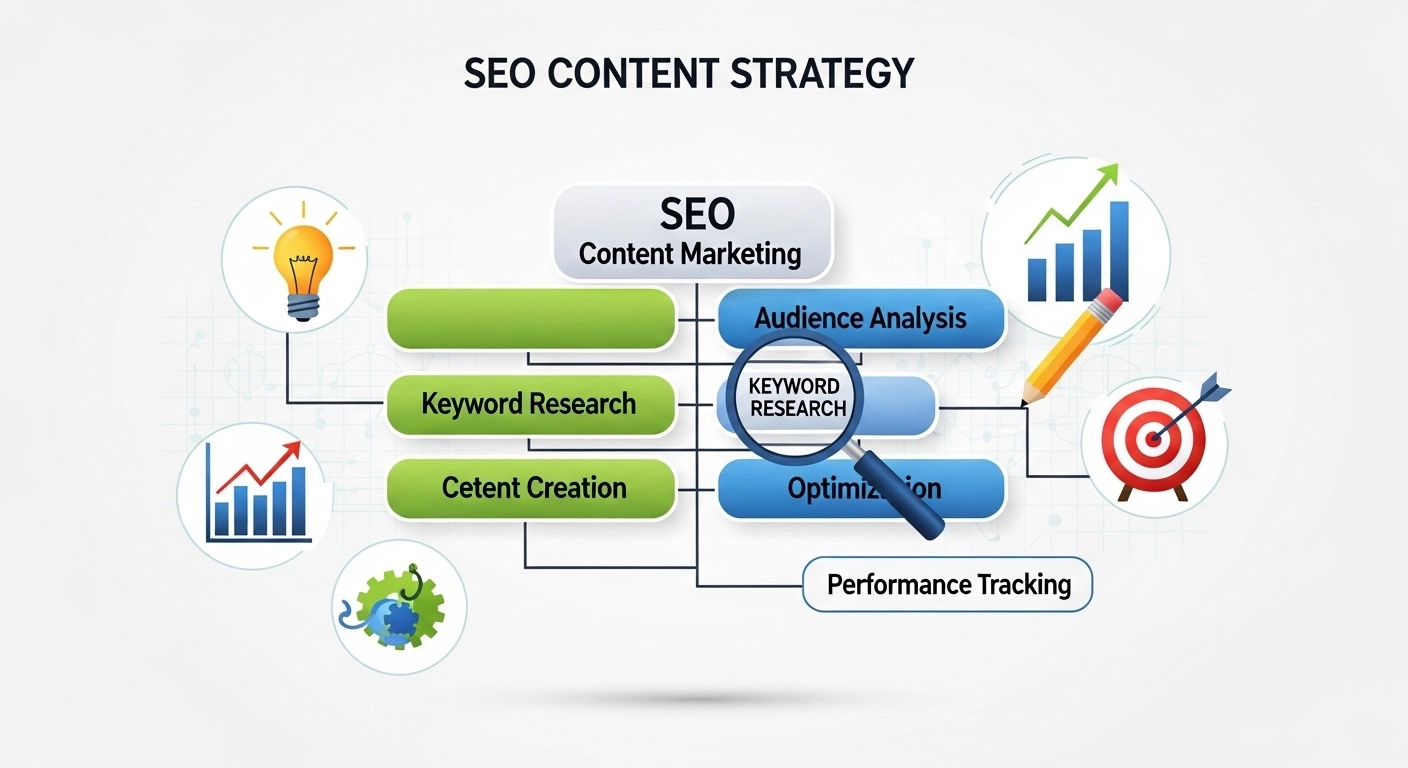
Businesses publish thousands of blog posts every day, yet most of them never rank on Google. The reason is simple: content without a strategy rarely works.
That’s where SEO content strategy services come in. Instead of randomly publishing articles, a structured strategy ensures every piece of content targets the right keywords, answers real search intent, and moves visitors toward conversion.
In this guide, we’ll explain what SEO content strategy services include, why they matter, and how they help businesses grow organic traffic.
What Are SEO Content Strategy Services?
SEO content strategy services focus on planning, creating, and optimizing content that performs well in search engines and delivers business results.
Rather than simply writing blog posts, these services create a data-driven roadmap that aligns content with:
- Search intent
- Target keywords
- Customer journey stages
- Business goals
The result is content that attracts the right audience, ranks in search results, and generates leads or sales.
Why Businesses Need an SEO Content Strategy
Many websites struggle because they publish content without direction.
An SEO content strategy solves several common problems:
1. Low Search Visibility
Random blog posts rarely rank. Strategic content targets keywords people are actively searching for.
2. Weak Traffic Growth
Consistent keyword-focused content helps build long-term organic traffic.
3. Poor Content Structure
A structured plan organizes content into topic clusters and pillar pages, improving site authority.
4. Missed Conversion Opportunities
Strategic content aligns with the buyer journey—from awareness to purchase.
Key Components of SEO Content Strategy Services
A high-quality SEO content strategy typically includes several important elements.
1. Keyword Research and Topic Discovery
Keyword research is the foundation of SEO content.
Experts identify:
- High-volume keywords
- Long-tail search terms
- Low-competition opportunities
- Search intent behind queries
For example, instead of targeting only “SEO services”, a strategy may include related terms such as:
- SEO content strategy
- content marketing SEO
- blog SEO optimization
- keyword strategy for websites
This approach captures more search traffic.
2. Search Intent Analysis
Understanding why someone searches is just as important as the keyword itself.
Search intent usually falls into four categories:
- Informational – learning something
- Navigational – finding a specific site
- Commercial – researching products or services
- Transactional – ready to purchase
Content must match the correct intent to rank well and engage readers.
3. Content Planning and Topic Clusters
Modern SEO relies heavily on topical authority.
Instead of isolated articles, content is structured using a pillar and cluster model.
Example:
Pillar Page:
SEO Content Strategy
Supporting Articles:
- Keyword research guide
- On-page SEO techniques
- SEO content writing tips
- Internal linking strategies
This structure signals expertise to search engines and improves rankings.
4. SEO Content Brief Creation
Professional SEO teams create detailed content briefs before writing.
A typical brief includes:
- Primary keyword
- Related keywords
- Search intent
- Heading structure
- Internal link suggestions
- Recommended word count
- Competitor analysis
This ensures writers produce optimized content from the start.
5. On-Page SEO Optimization
Even the best content won’t rank if it isn’t optimized.
SEO content strategy services ensure every article includes:
- Optimized title tags
- Keyword-rich headings
- Meta descriptions
- Image alt text
- Internal links
- Clear URL structure
These elements help search engines understand the content and improve rankings.
6. Content Optimization and Updates
SEO is not a one-time task.
Existing content must be regularly updated to maintain rankings.
Content optimization may include:
- Adding new keywords
- Improving readability
- Updating statistics
- Expanding thin sections
- Improving internal linking
Refreshing old content often produces quick SEO wins.
Practical Example of an SEO Content Strategy
Imagine a company offering digital marketing services.
Instead of publishing random blogs, a strategic plan might look like this:
Core Topic: Digital Marketing
Content Cluster
- What is SEO?
- SEO content strategy guide
- Keyword research for beginners
- On-page SEO checklist
- Technical SEO audit guide
- Local SEO for small businesses
Each article links to the main pillar page, creating a strong internal linking structure and improving site authority.
Benefits of SEO Content Strategy Services
A well-executed content strategy delivers measurable results.
Higher Organic Traffic
Keyword-focused content increases visibility in search engines.
Better Rankings
Structured content and topical authority improve ranking potential.
Consistent Lead Generation
High-quality content attracts qualified visitors interested in your services.
Long-Term Growth
Unlike paid ads, SEO content continues generating traffic for months or years.
How to Choose the Right SEO Content Strategy Service
Not all SEO providers deliver the same results.
When evaluating services, look for:
- Proven keyword research process
- Clear content planning framework
- Focus on search intent
- Transparent reporting
- Experience in your industry
A reliable provider focuses on sustainable growth, not quick tricks.
Frequently Asked Questions
What is an SEO content strategy?
An SEO content strategy is a structured plan for creating and optimizing content to rank in search engines and attract targeted traffic.
How long does SEO content take to work?
Most SEO content starts showing results within 3 to 6 months, depending on competition, domain authority, and content quality.
How many blog posts are needed for SEO?
There is no fixed number, but consistent publishing—often 4 to 8 high-quality articles per month—helps build topical authority.
Is SEO content different from regular content?
Yes. SEO content is specifically optimized for search engines using keyword research, structured headings, and on-page SEO techniques.
Final Thoughts
Publishing content without a plan rarely delivers meaningful results. Businesses that succeed in organic search follow a clear, data-driven approach.
SEO content strategy services provide that roadmap—combining keyword research, search intent analysis, and structured content planning to help websites rank, attract traffic, and convert visitors into customers.
