
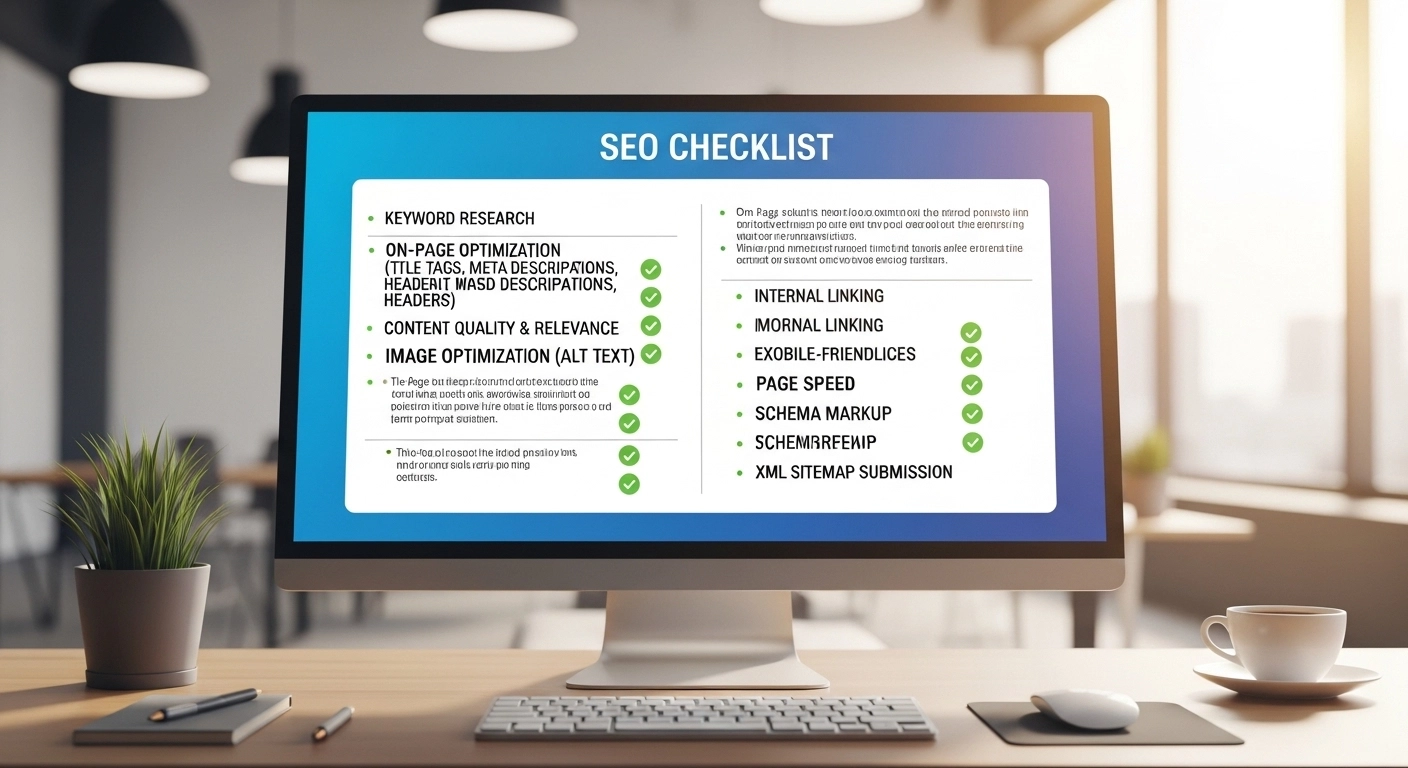
Publishing a blog post without SEO is like opening a shop in the desert—no one will find it. A solid SEO checklist for publishing ensures your content is discoverable, readable, and competitive from day one.
This guide walks you through a clear, step-by-step checklist you can follow every time you hit “publish.”
Why You Need an SEO Checklist
Even great content can fail if basic SEO elements are missing. A checklist helps you:
- Avoid common mistakes
- Improve search rankings
- Increase organic traffic
- Deliver a better user experience
Think of it as your final quality control before going live.
1. Keyword Optimization (Before You Publish)
Start with one primary keyword and a few related terms.
Checklist:
- Use your main keyword in the title
- Include it in the first 100 words
- Add it naturally throughout the content
- Use variations (LSI keywords) to avoid repetition
Example:
Primary keyword: SEO checklist for publishing
Related terms: content optimization, on-page SEO, blog publishing tips
2. SEO-Friendly Title (H1)
Your title is the first thing users and search engines see.
Best practices:
- Keep it under 60 characters
- Include the main keyword
- Make it compelling
Example:
“SEO Checklist for Publishing: 15 Steps to Rank Faster”
3. Meta Description Optimization
This is your click magnet in search results.
Checklist:
- 120–155 characters
- Include your keyword
- Add a clear benefit
Example:
“Follow this SEO checklist for publishing to optimize every blog post, improve rankings, and drive more organic traffic.”
4. URL Structure (Slug)
Keep URLs clean and readable.
Checklist:
- Short and simple
- Include the keyword
- Avoid numbers and unnecessary words
Example:yourwebsite.com/seo-checklist-publishing
5. Heading Structure (H2, H3)
Organized content is easier to read and rank.
Checklist:
- Use one H1 (title)
- Break content into H2s and H3s
- Include keywords naturally in headings
6. Content Quality & Readability
Google rewards helpful, easy-to-read content.
Checklist:
- Short paragraphs (2–4 lines)
- Simple language
- Clear structure
- Actionable insights
Tip: Write for humans first, search engines second.
7. Internal Linking
Help users and search engines navigate your site.
Checklist:
- Link to 2–5 relevant posts
- Use descriptive anchor text
- Avoid over-linking
Example:
Instead of “click here,” use “on-page SEO checklist.”
8. External Links (Authority Boost)
Linking to trusted sources builds credibility.
Checklist:
- Link to high-authority websites
- Open links in a new tab
- Use only relevant references
9. Image Optimization
Images improve engagement—but must be optimized.
Checklist:
- Compress images for fast loading
- Use descriptive file names
- Add alt text with keywords
Example alt text:
“SEO checklist for publishing blog post”
10. Mobile-Friendliness
Most users browse on mobile devices.
Checklist:
- Responsive design
- Easy-to-read fonts
- Proper spacing
11. Page Speed Optimization
Speed affects both rankings and user experience.
Checklist:
- Optimize images
- Minimize scripts
- Use caching
12. Call-to-Action (CTA)
Every post should guide the reader to the next step.
Examples:
- Subscribe to a newsletter
- Read another article
- Download a guide
13. Schema Markup (Optional but Powerful)
Helps search engines understand your content better.
Examples:
- Article schema
- FAQ schema
14. Proofreading & Final Review
Before publishing, double-check everything.
Checklist:
- Fix grammar and spelling
- Check formatting
- Test all links
15. Post-Publish Actions
SEO doesn’t stop after publishing.
Checklist:
- Share on social media
- Submit URL to search engines
- Monitor performance
Simple FAQ
Q1: How often should I use this SEO checklist?
Every time you publish content. Consistency is key for long-term SEO success.
Q2: Can I rank without following all steps?
Yes, but skipping steps reduces your chances of ranking competitively.
Q3: What is the most important part of SEO?
Content quality and search intent. Without them, technical SEO won’t help much.
Q4: How long does SEO take to show results?
Typically 1–3 months, depending on competition and consistency.
Final Thoughts
A well-optimized post doesn’t happen by accident—it follows a system. This SEO checklist for publishing gives you that system, ensuring every article is fully optimized before going live.
If you apply these steps consistently, you’ll not only improve rankings but also create content that genuinely helps your audience.
