
The Smart SEO Strategy for Building Topical Authority.
If you want your website to rank higher on Google, publishing random blog posts is no longer enough. Search engines now favor websites that organize content around clear topics and demonstrate expertise.
This is where the Pillar Page and Cluster Model becomes one of the most powerful SEO strategies.
Used by leading brands and SEO experts, this model helps websites build topical authority, improve internal linking, and rank for competitive keywords.
In this guide, you’ll learn exactly what the pillar page and cluster model is, why it works, and how to implement it step by step.
What Is the Pillar Page and Cluster Model?
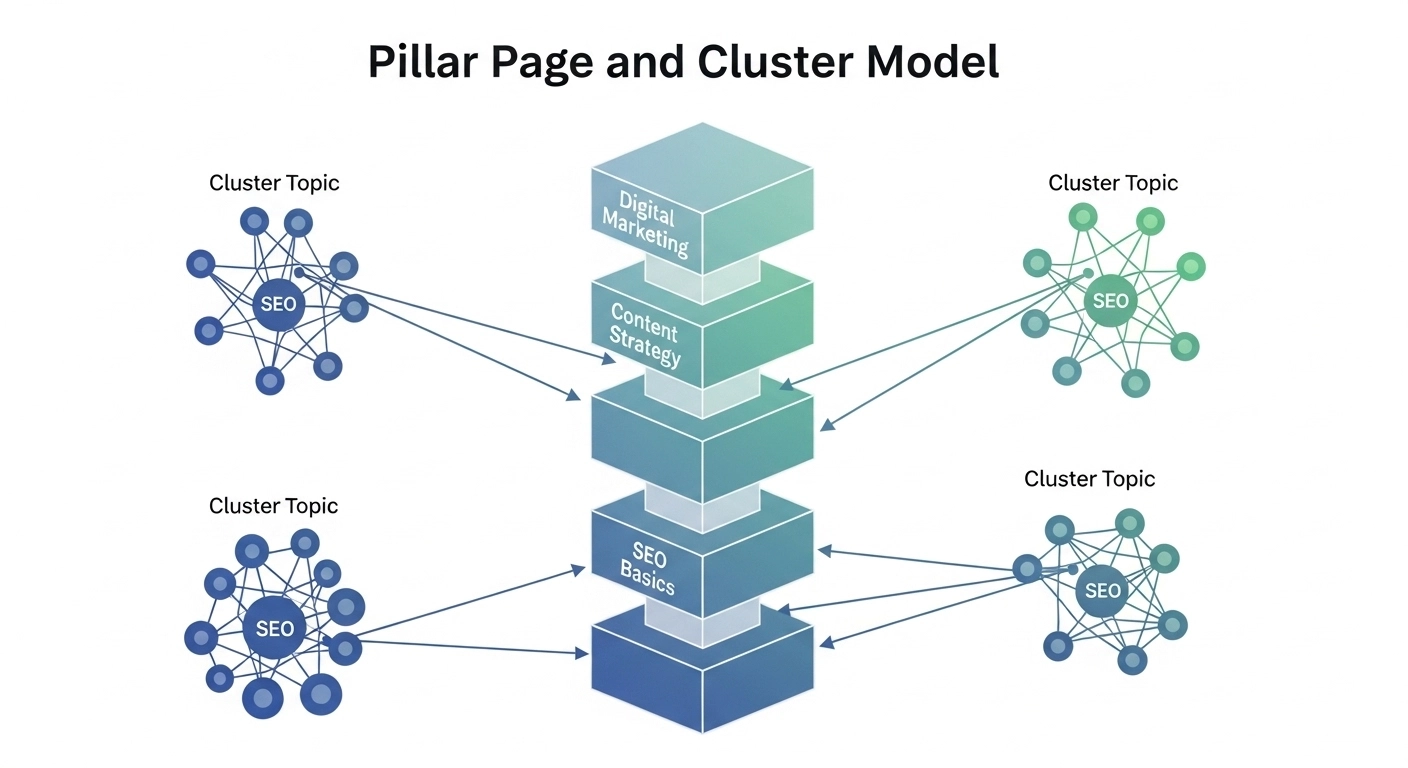
The pillar page and cluster model is a content strategy where a main page (pillar page) covers a broad topic, and several supporting articles (cluster pages) dive deeper into related subtopics.
All cluster pages link back to the pillar page, and the pillar page links to each cluster.
This creates a structured content hub around a single topic.
Simple Structure
Pillar Page → Main Topic
Cluster Pages → Detailed Subtopics
Example:
Pillar Page:
Complete Guide to SEO
Cluster Pages:
- On-Page SEO Checklist
- Keyword Research for Beginners
- Technical SEO Basics
- Internal Linking Strategy
- SEO Content Writing Tips
Each cluster article links back to the SEO pillar page, helping search engines understand that your website has deep knowledge on the topic.
Why the Pillar Page and Cluster Model Works for SEO
Google’s algorithm focuses on topic relevance and expertise. When your content is organized into topic clusters, search engines can easily understand your site’s structure.
Here are the key SEO benefits.
1. Builds Topical Authority
When multiple articles cover different aspects of a topic, your site becomes a trusted resource.
Instead of ranking for one keyword, you start ranking for dozens of related keywords.
2. Improves Internal Linking
Internal links help search engines crawl and understand your site.
The cluster model naturally creates a strong internal linking structure, which helps distribute link authority across your pages.
3. Boosts Keyword Rankings
Cluster pages target long-tail keywords, while the pillar page targets the main high-volume keyword.
This strategy helps your website rank for:
- primary keywords
- long-tail search terms
- semantic keyword variations
4. Improves User Experience
Visitors can easily navigate related content.
Instead of leaving your site after reading one article, they explore multiple helpful resources, increasing time on site and engagement.
What Is a Pillar Page?
A pillar page is a long, comprehensive guide that broadly covers a major topic.
It does not go extremely deep into every section. Instead, it links to cluster pages where readers can learn more.
Example Pillar Page Topics
- Complete Guide to SEO
- Digital Marketing for Beginners
- WordPress Website Guide
- Content Marketing Strategy
A strong pillar page typically contains:
- 2,000–4,000+ words
- clear headings and sections
- internal links to cluster posts
- simple explanations for beginners
Think of it as the main hub of information.
What Are Cluster Pages?
Cluster pages are supporting blog posts that focus on specific subtopics related to the pillar page.
Each cluster article targets one focused keyword.
Example SEO Cluster Articles
If the pillar page is SEO Guide, cluster posts could be:
- How to Do Keyword Research
- On-Page SEO Checklist
- Technical SEO Audit Guide
- Internal Linking Strategy
- SEO for WordPress
Each cluster page links back to the pillar page, reinforcing the topic structure.
Real Example of the Pillar and Cluster Model
Let’s imagine you run a digital marketing blog.
Pillar Page
Digital Marketing Complete Guide
Cluster Content
- Social Media Marketing Tips
- Email Marketing Strategy
- SEO Basics for Beginners
- PPC Advertising Guide
- Content Marketing Strategy
All cluster posts connect to the digital marketing pillar page, forming a strong content hub.
This structure signals to Google that your site is an authority on digital marketing.
How to Create a Pillar Page and Cluster Strategy
Follow these simple steps to build a strong topic cluster.
1. Choose a Core Topic
Start with a broad topic relevant to your niche.
Examples:
- SEO
- Web Design
- Blogging
- Affiliate Marketing
Your pillar topic should have high search demand.
2. Find Cluster Keywords
Next, research long-tail keywords related to the topic.
For example, if the pillar topic is SEO, cluster keywords might include:
- on-page SEO guide
- keyword research tips
- technical SEO checklist
- SEO content writing
These will become your cluster articles.
3. Create the Pillar Page
Write a comprehensive guide that explains the topic broadly.
Include sections that introduce subtopics, and link to the detailed cluster posts.
4. Publish Cluster Content
Write separate blog posts for each subtopic.
Each post should:
- target a specific keyword
- explain the topic in detail
- link back to the pillar page
5. Build Internal Links
Internal linking is the core of this model.
Your structure should look like this:
Pillar Page → Links to cluster pages
Cluster Pages → Link back to pillar page
This creates a strong SEO content network.
Best Practices for the Pillar Page and Cluster Model
To get the best results, follow these proven tips.
Keep topics focused
Choose one clear theme per pillar.
Publish quality content
Google values helpful, in-depth articles.
Use consistent internal links
Always connect cluster pages to the pillar.
Update content regularly
Refreshing content keeps rankings strong.
Add visual elements
Charts, images, and examples improve readability.
Common Mistakes to Avoid
Many websites use the cluster strategy incorrectly.
Avoid these mistakes:
- Writing cluster posts without linking to the pillar page
- Choosing topics that are too broad
- Publishing thin or low-quality content
- Ignoring keyword research
- Creating too many pillar pages at once
Focus on one strong topic cluster at a time.
FAQ: Pillar Page and Cluster Model
What is the difference between a pillar page and a cluster page?
A pillar page covers a broad topic, while cluster pages focus on specific subtopics related to that main topic.
How many cluster pages should a pillar page have?
Most successful clusters have 5 to 20 supporting articles, depending on the topic.
How long should a pillar page be?
A strong pillar page is usually 2,000 to 4,000 words because it needs to cover the topic comprehensively.
Does the pillar page and cluster model improve SEO?
Yes. It helps search engines understand your website structure, improves internal linking, and builds topical authority, which can boost rankings.
Can small websites use this strategy?
Absolutely. Even small blogs can rank higher by creating well-organized topic clusters.
Final Thoughts
The pillar page and cluster model is one of the most effective modern SEO strategies for building topical authority and improving search rankings.
Instead of publishing scattered content, this approach organizes your website into clear topic hubs that search engines and readers both understand.
When done correctly, the model can help your website:
- rank for more keywords
- improve internal linking
- build authority in your niche
- increase organic traffic
Ready to Grow Your Website?
Start by choosing one core topic, create a powerful pillar page, and build cluster articles around it. Over time, your content network will grow into a strong SEO foundation that drives consistent traffic.
