
When someone lands on your website, they decide within seconds whether they trust it or not. That decision affects everything—how long they stay, whether they buy, and even how search engines evaluate your site.
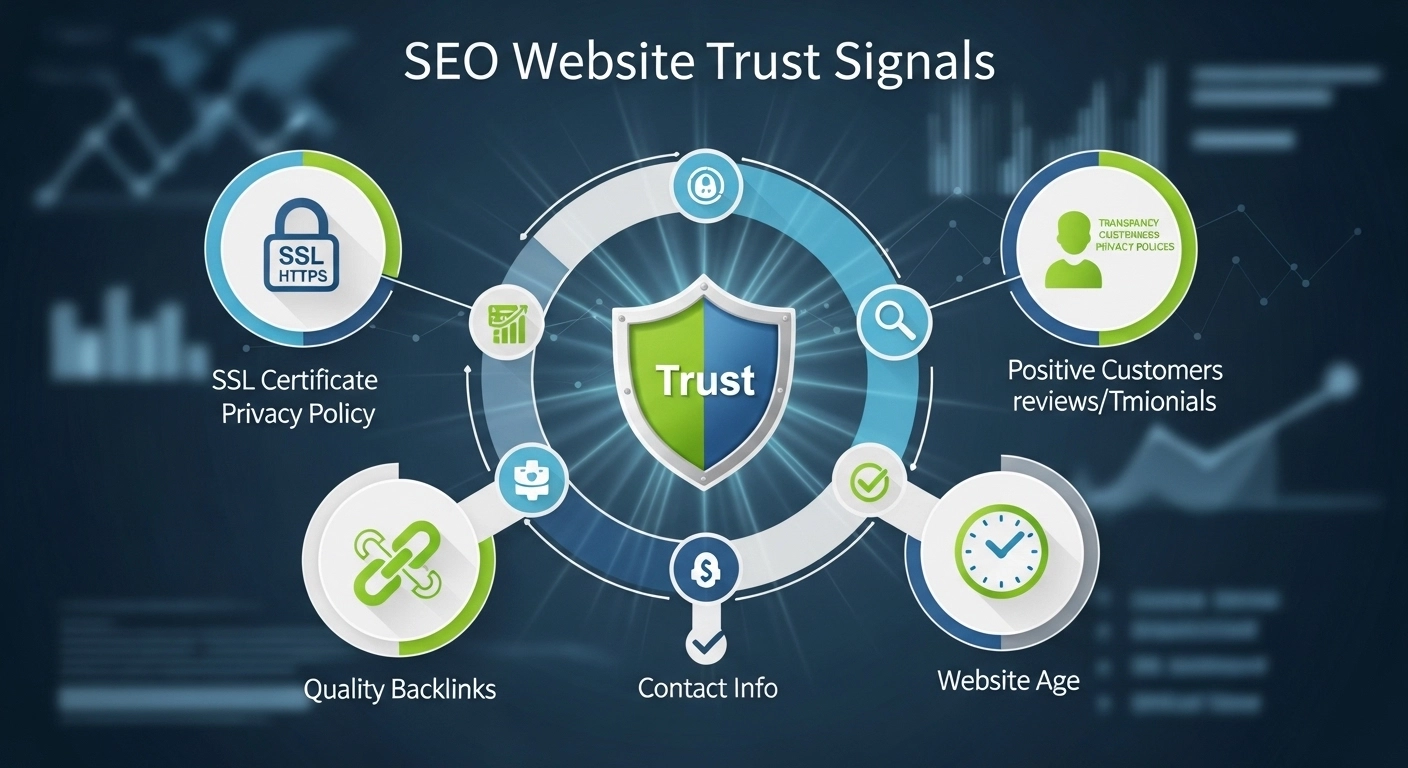
SEO website trust signals are the elements that show visitors and search engines your website is legitimate, secure, and reliable. The stronger your trust signals, the higher your chances of ranking well in search results and converting visitors into customers.
In this guide, you’ll learn what trust signals are, why they matter for SEO, and how to add them to your website.
What Are SEO Website Trust Signals?
SEO trust signals are visual, technical, and content-based elements that show users and search engines your website is safe, authoritative, and credible.
Think of them as proof that your website is real and trustworthy.
Examples include:
- Secure HTTPS connection
- Customer reviews and testimonials
- Clear contact information
- Professional website design
- Author credentials
- Privacy policies and legal pages
Search engines use these signals to determine whether your website deserves to rank.
Why Trust Signals Matter for SEO
Search engines aim to show users the most reliable results. If your website appears trustworthy, it sends positive signals that improve your chances of ranking.
Here’s why trust signals matter:
1. They Improve User Experience
When visitors see reviews, security badges, and clear information, they feel more comfortable using your website.
That leads to:
- Longer time on site
- Lower bounce rates
- Higher conversions
All of these are positive SEO indicators.
2. They Support Google’s E-E-A-T Guidelines
Google evaluates websites using Experience, Expertise, Authoritativeness, and Trustworthiness (E-E-A-T).
Strong trust signals show:
- Real expertise
- Transparent information
- Credible authors
These factors help search engines trust your content.
3. They Increase Conversion Rates
A visitor who trusts your website is far more likely to:
- Buy a product
- Submit a form
- Subscribe to your newsletter
Trust equals action.
The Most Important SEO Website Trust Signals
Below are the key trust signals every modern website should include.
1. HTTPS Security (SSL Certificate)
A secure website is the most basic trust signal.
When your site uses HTTPS, users see a lock icon in their browser. This tells them their data is protected.
Benefits include:
- Higher user trust
- Better security
- Slight SEO ranking advantage
If your site still uses HTTP, upgrading to HTTPS should be your first step.
2. Clear Contact Information
Legitimate businesses make it easy for visitors to contact them.
Include:
- Phone number
- Email address
- Business location
- Contact form
For example, an online store that clearly displays customer support information appears far more trustworthy than one that hides it.
3. Customer Reviews and Testimonials
Reviews are powerful trust builders.
When potential customers see real feedback from other users, it reduces uncertainty.
Examples of strong review signals:
- Product reviews
- Google reviews
- Video testimonials
- Case studies
Even a few honest reviews can significantly improve credibility.
4. About Us Page
An About page shows there are real people behind the website.
A good About page should include:
- Your story
- Your mission
- Team members
- Experience and expertise
Adding photos of the team can increase authenticity.
5. Author Information for Blog Content
If you publish blog posts, include an author bio.
This helps establish expertise and credibility.
A good author bio includes:
- Author name
- Professional background
- Credentials
- Social profiles
This is especially important for industries like health, finance, or education.
6. Professional Website Design
Design plays a huge role in trust.
Visitors judge credibility within seconds based on visual appearance.
A trustworthy website typically has:
- Clean layout
- Fast loading speed
- Mobile-friendly design
- Clear navigation
Outdated or cluttered designs often make users leave immediately.
7. Privacy Policy and Legal Pages
Websites that collect data should clearly display:
- Privacy Policy
- Terms and Conditions
- Cookie Policy
These pages show transparency and legal compliance.
They also help build trust with both users and search engines.
8. Social Proof and Media Mentions
If your brand has been featured somewhere, show it.
Examples:
- “As seen in” media logos
- Awards and certifications
- Industry partnerships
These signals demonstrate authority and reputation.
9. Secure Payment Badges (for eCommerce)
For online stores, payment security is critical.
Displaying trusted payment badges such as:
- Visa
- Mastercard
- PayPal
- Secure checkout icons
helps reassure buyers their information is safe.
10. High-Quality Content
Content itself is one of the strongest trust signals.
Helpful, accurate, and well-written content shows expertise and authority.
Focus on:
- Answering real user questions
- Providing practical advice
- Using reliable sources
Websites that consistently publish useful content build long-term trust with both users and search engines.
How to Add Trust Signals to Your Website
If you want to strengthen your site’s credibility, start with these steps:
- Install an SSL certificate (HTTPS)
- Create a detailed About page
- Add customer testimonials
- Display clear contact information
- Publish expert blog content
- Improve site speed and design
- Include privacy and legal pages
Even small improvements can make a big difference.
Common Mistakes That Reduce Website Trust
Avoid these issues that hurt credibility:
- Missing contact information
- Too many ads or popups
- Poor grammar or spelling
- Fake testimonials
- Slow or broken pages
If users feel uncertain, they leave quickly—and that hurts SEO.
Frequently Asked Questions
What are trust signals in SEO?
Trust signals are elements on a website that show credibility, security, and authenticity. Examples include HTTPS security, reviews, author bios, and clear contact information.
Do trust signals affect Google rankings?
Yes. While not always direct ranking factors, trust signals improve user experience and support Google’s E-E-A-T guidelines, which influence search rankings.
What is the most important trust signal?
HTTPS security is the most basic trust signal. After that, reviews, expert content, and transparent business information are extremely important.
How can a new website build trust quickly?
A new website can build trust by adding an About page, publishing helpful content, showing contact information, and collecting genuine customer reviews.
Final Thoughts
In SEO, trust is everything.
If users don’t trust your website, they won’t stay, engage, or buy. And when users leave quickly, search engines notice.
By adding strong SEO website trust signals—like HTTPS security, real reviews, expert content, and transparent information—you create a website that both users and search engines can rely on.
The result? Better rankings, higher conversions, and long-term credibility.
Start strengthening your trust signals today, and your website will become a place visitors—and Google—
