
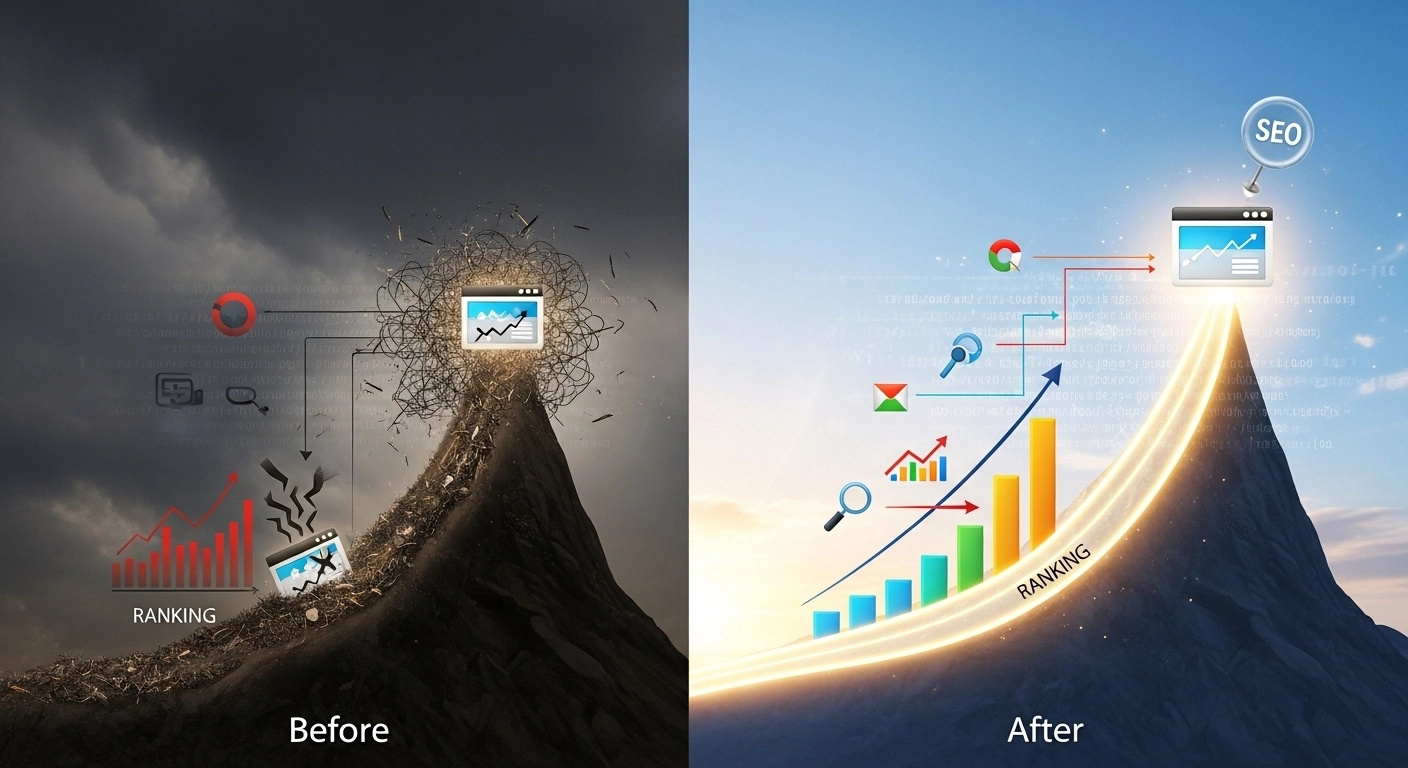
If you have a website, one goal matters more than almost anything else—ranking higher on Google. Better rankings mean more visibility, more visitors, and ultimately more customers.
But improving your SEO website ranking isn’t about tricks or shortcuts. It’s about building a fast, helpful, and trustworthy website that search engines and users both love.
In this guide, you’ll learn practical strategies that actually improve website rankings—from keyword research and content optimization to technical SEO and link building.
Understand How Google Ranks Websites
Before improving your ranking, it helps to understand what search engines look for.
Search engines evaluate websites using hundreds of factors, but most fall into three main categories:
Content quality – Is the information helpful, relevant, and well structured?
Technical performance – Is the website fast, mobile-friendly, and easy to crawl?
Authority and trust – Do other websites link to it? Is the brand reliable?
When these three areas are strong, rankings usually improve.
Start With Smart Keyword Research
Every SEO strategy begins with the right keywords. These are the search terms people type into Google.
Instead of targeting broad, highly competitive keywords, focus on long-tail keywords that match user intent.
Example:
Broad keyword:
SEO
Better keyword:
SEO website ranking improvement
Even better keyword:
how to improve website ranking on Google
Tools that help with keyword research include:
- Google Keyword Planner
- Ahrefs
- SEMrush
- Ubersuggest
Look for keywords with good search volume and lower competition.
Optimize On-Page SEO
On-page SEO helps search engines understand what your page is about.
Here are the most important elements to optimize.
Title Tag
Your title should include the main keyword and encourage clicks.
Example:
SEO Website Ranking Improvement: 10 Proven Strategies That Work
Headings (H1, H2, H3)
Headings organize your content and improve readability.
Example structure:
H1: SEO Website Ranking Improvement
H2: Keyword Research
H2: On-Page Optimization
H2: Technical SEO
Meta Description
A good meta description improves click-through rate.
Example:
Learn proven strategies to improve your SEO website ranking, increase organic traffic, and rank higher on Google with practical SEO techniques.
Internal Links
Link to related pages on your website. This helps search engines understand your site structure and improves user navigation.
Example:
A blog post about keyword research linking to a guide about content optimization.
Publish High-Quality Content Regularly
Content is one of the strongest ranking signals.
Google prioritizes websites that provide useful, original, and in-depth information.
Strong SEO content usually includes:
Clear explanations
Real examples
Step-by-step guides
Updated information
Helpful visuals
Instead of writing short articles, aim for comprehensive content that fully answers the user’s question.
For example, a complete guide to improving website rankings should cover:
Keyword strategy
Technical SEO
Backlinks
Content marketing
User experience
This creates topical authority, which helps search engines trust your website.
Improve Website Speed
Website speed directly impacts rankings and user experience.
If a website loads slowly, visitors leave quickly—and Google notices.
Ways to improve site speed:
Compress images
Use fast hosting
Enable browser caching
Minimize CSS and JavaScript
Use a content delivery network (CDN)
Tools to test website speed include:
Google PageSpeed Insights
GTmetrix
Lighthouse
A good target is under 3 seconds loading time.
Make Your Website Mobile-Friendly
More than half of web traffic comes from mobile devices.
Google now uses mobile-first indexing, meaning it primarily evaluates the mobile version of your website.
To improve mobile SEO:
Use responsive design
Make text easy to read
Ensure buttons are easy to tap
Optimize images and layout
You can test your site with Google’s Mobile-Friendly Test tool.
Build High-Quality Backlinks
Backlinks remain one of the most powerful ranking factors.
A backlink is when another website links to your content.
Search engines treat these links like votes of confidence.
Ways to build backlinks include:
Guest blogging
Creating shareable guides
Publishing research or data
Getting listed in directories
Collaborating with bloggers
Focus on quality over quantity. A few links from trusted websites are more valuable than many low-quality links.
Improve User Experience (UX)
Search engines increasingly measure how users interact with websites.
Important UX factors include:
Page speed
Easy navigation
Clear design
Helpful content
Low bounce rate
If visitors stay longer and explore multiple pages, it signals to Google that your content is valuable.
Keep Content Updated
SEO is not a one-time task. Search engines prefer fresh and updated content.
Update your articles by:
Adding new information
Improving readability
Updating statistics
Adding internal links
Expanding sections
Refreshing content can often boost rankings without creating new posts.
Track Your SEO Performance
You can’t improve what you don’t measure.
Key SEO metrics to monitor:
Organic traffic
Keyword rankings
Click-through rate
Bounce rate
Backlinks
Useful tools include:
Google Search Console
Google Analytics
Ahrefs
SEMrush
Tracking these metrics helps you see what’s working and what needs improvement.
Frequently Asked Questions
How long does SEO ranking improvement take?
SEO usually takes 3–6 months to show noticeable results, depending on competition, website age, and content quality.
What is the most important factor for SEO ranking?
High-quality content combined with strong backlinks and good technical SEO has the biggest impact on rankings.
Can a new website rank on Google?
Yes. New websites can rank by targeting low-competition keywords, publishing helpful content, and building authority over time.
How often should I update my website for SEO?
Updating important pages every 3–6 months helps maintain rankings and improve content freshness.
Conclusion
Improving your SEO website ranking isn’t about quick tricks—it’s about building a better website for users.
Focus on:
Smart keyword research
High-quality content
Strong on-page SEO
Fast and mobile-friendly design
High-quality backlinks
When these elements work together, your website becomes more valuable to both visitors and search engines.
Start applying these strategies today, and over time you’ll see stronger rankings, more traffic, and better online growth.
