
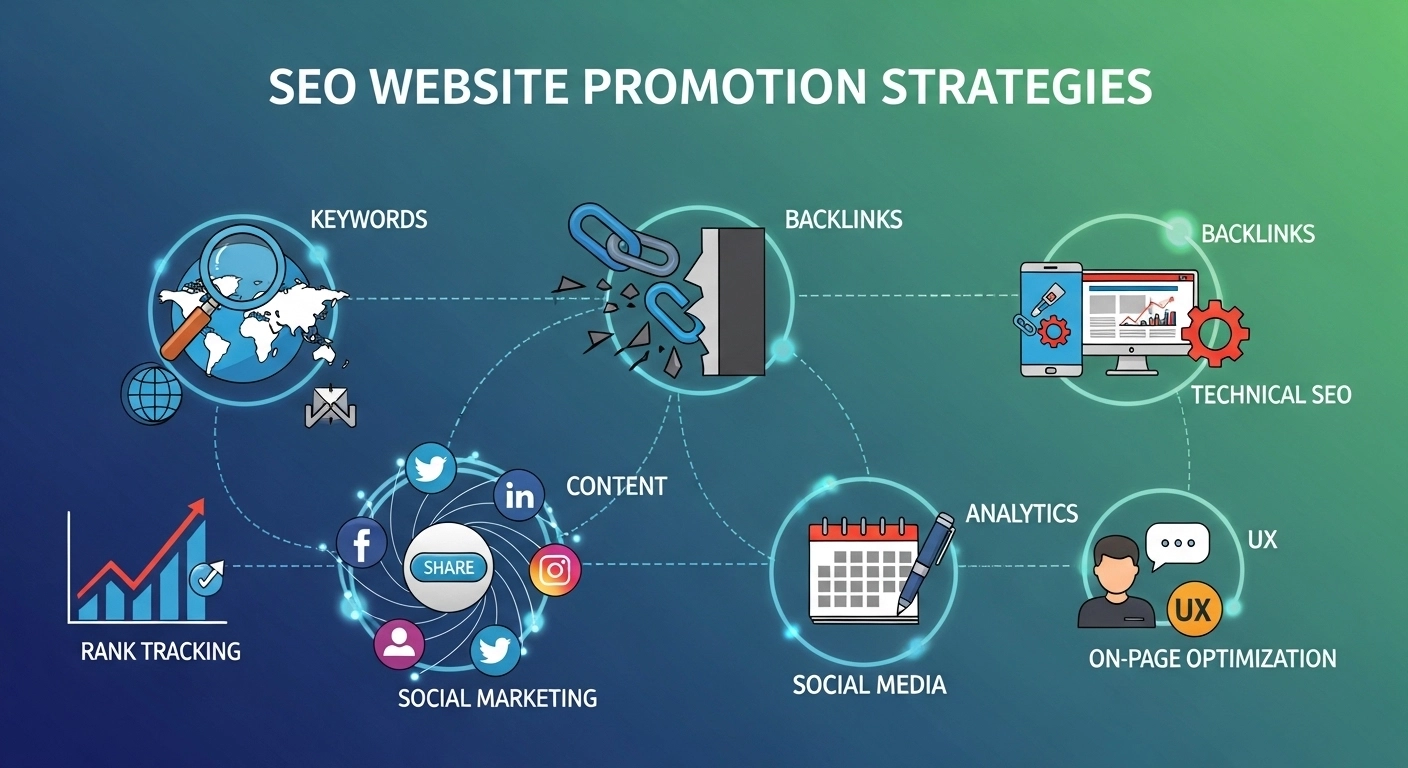
If you build a website but no one visits it, it’s like opening a shop in the middle of a desert. Website promotion through SEO is what brings people to your digital door.
SEO website promotion strategies help your website appear in search engines when people look for information, products, or services. When done correctly, SEO brings consistent organic traffic without paying for ads.
This guide explains the most effective SEO promotion strategies you can use today to increase visibility, rankings, and website traffic.
1. Start With Smart Keyword Research
Every SEO strategy begins with understanding what people search for.
Keyword research helps you find the exact words and phrases your audience types into Google.
Focus on:
- Long-tail keywords (3–5 word phrases)
- Low competition keywords
- Search intent (what the user wants to achieve)
Example
Instead of targeting:
SEO
Target:
SEO website promotion strategies for small business
Tools that help:
- Google Keyword Planner
- Ubersuggest
- Ahrefs
- SEMrush
These tools reveal search volume, competition level, and keyword opportunities.
2. Create High-Quality Content That Solves Problems
Search engines reward content that genuinely helps users.
Your content should:
- Answer real questions
- Provide clear explanations
- Offer practical solutions
- Be easy to read
Types of SEO content that perform well include:
- How-to guides
- Tutorials
- List posts
- Case studies
- Comparison articles
Example
Instead of writing a generic article about SEO, write:
“10 SEO Website Promotion Strategies That Increase Traffic in 90 Days.”
The more helpful your content is, the more likely it will rank and attract backlinks.
3. Optimize On-Page SEO Elements
On-page SEO tells search engines what your page is about.
Important elements include:
Title Tag
Your title should include the main keyword.
Example:
SEO Website Promotion Strategies: 10 Ways to Increase Organic Traffic
Meta Description
A clear summary that encourages users to click.
Headings (H1, H2, H3)
Headings organize your content and improve readability.
Keyword Placement
Use your main keyword naturally in:
- Title
- First paragraph
- Headings
- Image alt text
Avoid keyword stuffing.
4. Build a Strong Internal Linking Structure
Internal links connect pages within your website.
They help search engines understand your site structure and distribute ranking power across pages.
Example:
A blog post about SEO strategies can link to:
- Keyword research guide
- On-page SEO tutorial
- Technical SEO checklist
Benefits of internal linking:
- Improves crawlability
- Keeps users on your site longer
- Strengthens topic authority
5. Earn High-Quality Backlinks
Backlinks remain one of the most powerful SEO ranking factors.
When trusted websites link to your content, search engines see your site as credible.
Effective ways to earn backlinks include:
- Guest posting on industry blogs
- Creating data-driven content
- Publishing original research
- Building useful tools or templates
- Digital PR outreach
Example:
If a marketing blog links to your SEO guide, it signals authority and can improve your rankings.
Focus on quality over quantity.
6. Improve Website Speed and Performance
Slow websites lose both users and rankings.
Search engines prioritize fast, mobile-friendly websites.
Ways to improve site speed:
- Compress images
- Use a fast hosting provider
- Enable caching
- Minimize CSS and JavaScript
- Use a Content Delivery Network (CDN)
Tools to test speed:
- Google PageSpeed Insights
- GTmetrix
- Lighthouse
Even a one-second improvement in load time can significantly improve engagement.
7. Optimize for Mobile Users
More than half of all searches happen on mobile devices.
Google uses mobile-first indexing, meaning it primarily evaluates the mobile version of your website.
Mobile SEO best practices include:
- Responsive design
- Fast loading pages
- Readable fonts
- Easy navigation
- Clickable buttons
A mobile-optimized website improves both rankings and user experience.
8. Use Social Media to Amplify SEO
Social media doesn’t directly affect rankings, but it helps your content reach more people.
When your content gets shared, it can lead to:
- More traffic
- More brand awareness
- More backlinks
Promote your content on platforms like:
- LinkedIn
- Twitter (X)
- Facebook
- Pinterest
Example:
Share your blog post with a short summary and a compelling headline.
9. Publish Content Consistently
Consistency signals to search engines that your website is active and valuable.
Create a simple publishing schedule:
- 1–2 blog posts per week
- Update old content regularly
- Expand existing articles with new information
Updating content often improves rankings without writing a completely new article.
10. Track Performance and Improve
SEO promotion is an ongoing process.
You must measure results and refine your strategy.
Important metrics include:
- Organic traffic
- Keyword rankings
- Bounce rate
- Click-through rate (CTR)
- Backlinks
Useful tools:
- Google Search Console
- Google Analytics
- Ahrefs
- SEMrush
Data helps you understand what works and what needs improvement.
Frequently Asked Questions
What is SEO website promotion?
SEO website promotion is the process of improving a website’s visibility in search engines through techniques like keyword optimization, content creation, backlinks, and technical improvements.
How long does SEO promotion take to work?
SEO usually takes 3 to 6 months to show noticeable results. Competitive industries may take longer, but the traffic is sustainable and long-term.
Is SEO better than paid advertising?
SEO provides long-term organic traffic, while paid ads deliver immediate but temporary results. The best strategy often combines both.
What is the most important SEO promotion strategy?
High-quality content combined with strong backlinks is typically the most powerful strategy for improving search rankings.
Final Thoughts
Effective SEO website promotion strategies are not about tricks or shortcuts. They focus on creating helpful content, optimizing your website, and building authority over time.
When you combine:
- Smart keyword research
- Valuable content
- Technical optimization
- Strong backlinks
your website becomes easier for both users and search engines to trust.
SEO is a long-term investment, but the rewards are worth it—steady traffic, stronger brand visibility, and sustainable growth.
Start implementing these strategies today, and your website can become a powerful source of organic traffic for years to come.
