
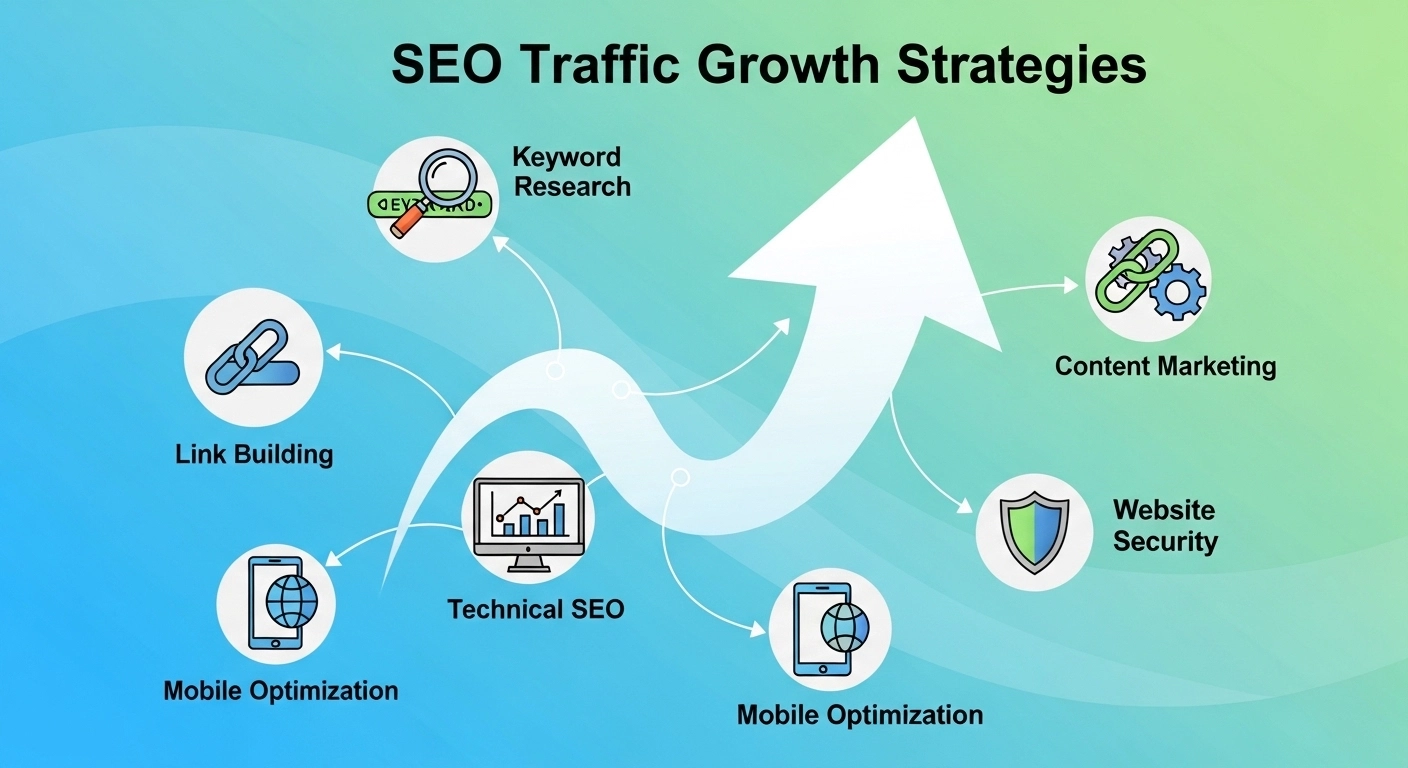
Getting more organic traffic from search engines is one of the most valuable goals for any website owner. Unlike paid ads, SEO traffic grows over time, bringing consistent visitors without ongoing advertising costs.
However, growing SEO traffic is not just about adding keywords to a page. It requires a clear strategy, useful content, and a well-optimized website.
In this guide, you’ll learn proven SEO traffic growth strategies that work in today’s search environment and can help your website attract more visitors from Google.
Understand Search Intent Before Creating Content
One of the biggest reasons pages fail to rank is misunderstanding search intent.
Search intent means understanding why someone searches for a keyword. Are they looking for information, a product, or a comparison?
For example:
- Informational intent: “What is SEO?”
- Commercial intent: “Best SEO tools”
- Transactional intent: “Buy SEO software”
Before writing content, search your keyword on Google and analyze the results. If the top pages are guides, create a detailed guide. If they are product pages, match that format.
Matching intent helps search engines see your page as the best answer for the query.
Build a Strong Keyword Strategy
Traffic growth starts with choosing the right keywords.
Instead of targeting only competitive keywords, focus on long-tail keywords and related topics.
Examples:
- SEO traffic growth strategies
- how to increase organic traffic
- SEO tips for new websites
- ways to grow website traffic organically
Use tools like keyword planners or SEO platforms to find:
- search volume
- keyword difficulty
- related questions
Targeting clusters of related keywords helps your content rank for multiple searches.
Create High-Quality, Helpful Content
Search engines prioritize helpful content that solves real problems.
Strong SEO content usually includes:
- clear explanations
- practical steps
- examples
- updated information
- easy readability
Instead of writing short posts, aim for complete guides that cover the topic from multiple angles.
For example, a post about SEO traffic growth might include:
- keyword research tips
- on-page SEO tactics
- link-building strategies
- technical SEO improvements
The goal is to make your page the most useful resource available.
Optimize On-Page SEO Elements
On-page SEO helps search engines understand your page.
Key elements to optimize include:
Title Tag
Write a clear title that includes your main keyword.
Example:
SEO Traffic Growth Strategies: 10 Proven Ways to Increase Organic Visitors
Headings
Use structured headings (H1, H2, H3) to organize your content and make it easier to read.
Meta Description
Write a short summary encouraging users to click.
Image Optimization
Use descriptive file names and alt text for images.
Internal Links
Link to related articles on your website to help users and search engines navigate your content.
These simple improvements can significantly boost search visibility.
Improve Website Speed and Technical SEO
Even great content struggles to rank if a website has technical problems.
Important technical factors include:
- fast page loading speed
- mobile-friendly design
- secure HTTPS connection
- clean site structure
- proper indexing
Search engines prefer websites that load quickly and offer a smooth user experience.
Tools like site audits can help identify issues affecting rankings.
Build High-Quality Backlinks
Backlinks remain one of the strongest ranking factors in SEO.
A backlink is when another website links to your content. It signals trust and authority.
Effective ways to earn backlinks include:
- writing guest posts
- creating data-driven content
- publishing helpful guides
- building relationships with bloggers
- sharing original research
Focus on quality over quantity. A few links from authoritative websites are more valuable than many low-quality links.
Use the Topic Cluster Strategy
Modern SEO works best when content is organized into topic clusters.
A topic cluster includes:
- one main pillar page covering a broad topic
- multiple supporting articles targeting specific subtopics
Example structure:
Pillar page:
SEO Traffic Growth Strategies
Supporting articles:
- Keyword Research Guide
- On-Page SEO Checklist
- Technical SEO Basics
- Link Building Strategies
All articles link to each other, creating strong topical authority.
Search engines reward websites that demonstrate deep expertise on a subject.
Update and Refresh Existing Content
Many websites focus only on new content and ignore older posts.
Updating existing content can quickly improve rankings.
Content refresh ideas include:
- adding new statistics
- improving readability
- updating outdated information
- adding internal links
- optimizing for new keywords
A well-updated article can regain traffic and rank higher in search results.
Track Performance and Improve
SEO growth requires ongoing monitoring.
Track metrics such as:
- organic traffic
- keyword rankings
- click-through rate (CTR)
- bounce rate
- backlinks
Analytics tools help you understand what content works best and where improvements are needed.
Small adjustments over time lead to steady traffic growth.
Frequently Asked Questions
How long does it take to grow SEO traffic?
SEO usually takes 3 to 6 months to show strong results. However, competitive keywords may take longer depending on your website authority and content quality.
What is the fastest way to increase organic traffic?
Targeting long-tail keywords with helpful content is often the fastest way to gain early traffic, especially for new websites.
How many blog posts are needed for SEO growth?
There is no fixed number, but websites that publish consistent, high-quality content tend to see stronger traffic growth.
Do backlinks still matter for SEO?
Yes. Backlinks remain one of the most important ranking signals because they indicate credibility and trust.
Conclusion
Growing organic traffic requires more than basic keyword optimization. The most successful websites combine strong keyword research, high-quality content, on-page SEO, technical improvements, and strategic backlinks.
When these elements work together, search engines recognize your site as a reliable resource—leading to higher rankings and consistent traffic growth.
SEO is a long-term strategy, but the rewards are significant. With the right approach, your website can attract thousands of visitors every month.
