
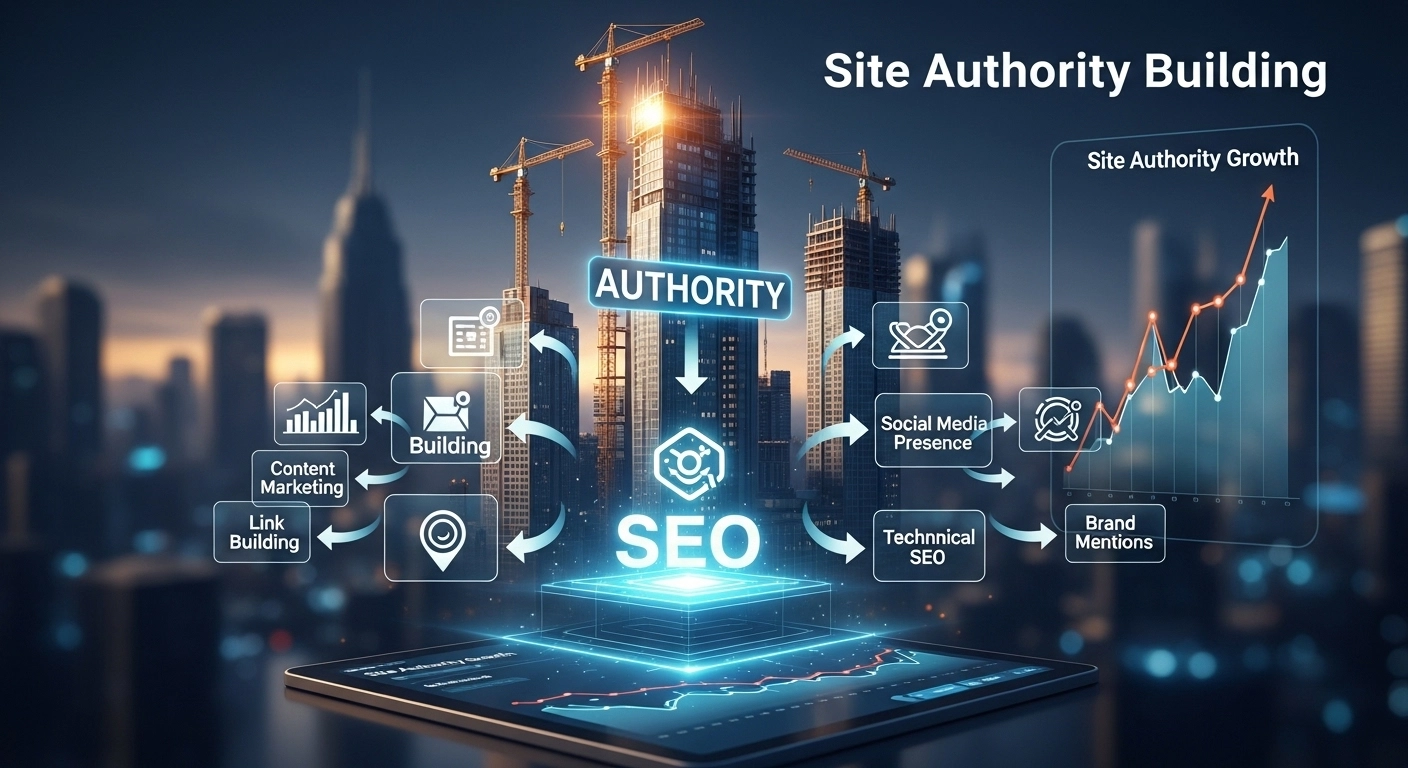
If you want your website to rank consistently in search engines, you need more than just keywords and blog posts. You need site authority.
Search engines like Google trust websites that demonstrate expertise, credibility, and relevance. When your site builds authority, your pages rank faster, stay ranked longer, and attract more organic traffic.
In this guide, you’ll learn how SEO site authority building works and the exact strategies you can use to grow it step-by-step.
What Is SEO Site Authority?
SEO site authority refers to how trustworthy and influential your website appears to search engines.
When a site has strong authority, Google sees it as a reliable source of information. This increases the chances that your content will appear higher in search results.
Authority is influenced by several factors, including:
- Quality backlinks from trusted websites
- Consistent, valuable content
- Strong internal linking
- Positive user engagement
- Technical website health
Think of it like reputation. If many credible websites reference your content and users spend time reading it, your authority naturally grows.
Why Site Authority Matters for SEO
Building site authority is one of the most important long-term SEO strategies.
Websites with strong authority usually experience:
Higher search rankings
Google trusts authoritative sites more.
Faster indexing of new content
New articles rank quicker.
More organic traffic
Higher rankings mean more clicks.
Stronger brand credibility
Users trust websites that appear consistently in search results.
For example, if a new blog and a well-known industry website publish the same article, the authoritative site will almost always rank higher.
Key Factors That Build Website Authority
Authority is not built overnight. It grows through a combination of SEO practices that signal trust to search engines.
1. High-Quality Backlinks
Backlinks remain one of the strongest ranking signals.
When reputable websites link to your content, search engines treat it as a vote of confidence.
Examples of strong backlinks include:
- Links from industry blogs
- Mentions in news websites
- Educational (.edu) or organization (.org) links
- Guest posts on relevant sites
Focus on quality over quantity. One backlink from a trusted website is often more powerful than dozens of low-quality links.
2. Topical Authority Through Content
Search engines reward websites that cover a topic deeply and consistently.
Instead of writing random articles, build topic clusters.
Example structure:
Main topic (pillar page):
SEO Guide for Beginners
Supporting articles:
- Keyword research guide
- On-page SEO checklist
- Technical SEO basics
- Internal linking strategy
- Link building techniques
This structure signals to Google that your website is an expert on the subject.
3. Strong Internal Linking
Internal links help search engines understand the structure of your website.
They also pass authority between pages.
Example:
If a high-traffic blog post links to another article on your site, it helps boost that page’s visibility.
Best practices include:
- Linking related articles naturally
- Using descriptive anchor text
- Connecting pillar pages with supporting content
4. Content Quality and Search Intent
Publishing content regularly is not enough.
Your content must fully answer the searcher’s question.
Strong content typically includes:
- Clear headings and structure
- Practical examples
- Helpful visuals or explanations
- Updated information
When users stay longer on your page and find value, search engines interpret that as a positive signal.
5. Technical SEO and Site Performance
Search engines prefer websites that are technically reliable.
Important technical factors include:
- Fast page speed
- Mobile-friendly design
- Secure HTTPS connection
- Proper indexing
- Clean site structure
A technically optimized site helps search engines crawl and trust your content more easily.
6. Brand Mentions and Online Reputation
Even when a website does not link directly to you, brand mentions can contribute to authority.
Examples include:
- Social media discussions
- Industry citations
- Podcast mentions
- Online communities
The more your brand appears across the web, the more signals of trust search engines receive.
A Simple SEO Authority Building Strategy
If you’re starting from scratch, follow this simple process:
Step 1: Choose a niche topic
Step 2: Create a pillar page around that topic
Step 3: Publish multiple related articles
Step 4: Connect them using internal links
Step 5: Promote content to earn backlinks
Step 6: Update content regularly
Over time, this creates a strong topical ecosystem that search engines recognize as authoritative.
Common Mistakes That Hurt Site Authority
Many websites struggle with authority because of avoidable mistakes.
Examples include:
Publishing thin content
Short, low-value articles rarely rank.
Buying spammy backlinks
Low-quality links can harm rankings.
Ignoring internal linking
Disconnected pages reduce authority flow.
Not updating old content
Outdated content loses trust signals.
Avoiding these mistakes protects your long-term SEO growth.
Frequently Asked Questions
How long does it take to build site authority?
SEO authority usually takes 3–12 months to grow significantly. The timeline depends on content quality, backlinks, and competition in your niche.
Is domain authority the same as site authority?
Domain authority is a third-party metric created by SEO tools. Site authority refers more broadly to how search engines evaluate trust and credibility.
How many backlinks are needed to build authority?
There is no fixed number. A few strong backlinks from trusted sites can outperform hundreds of weak links.
Can a new website build authority quickly?
Yes, if it publishes high-quality content, targets low-competition keywords, and earns relevant backlinks early.
Final Thoughts
SEO site authority building is not a shortcut strategy—it’s a long-term investment in trust and credibility.
By creating valuable content, earning quality backlinks, and structuring your website intelligently, you gradually signal to search engines that your site deserves higher rankings.
The websites dominating search results today didn’t get there overnight. They built authority through consistent effort, strong content, and strategic SEO practices.
