
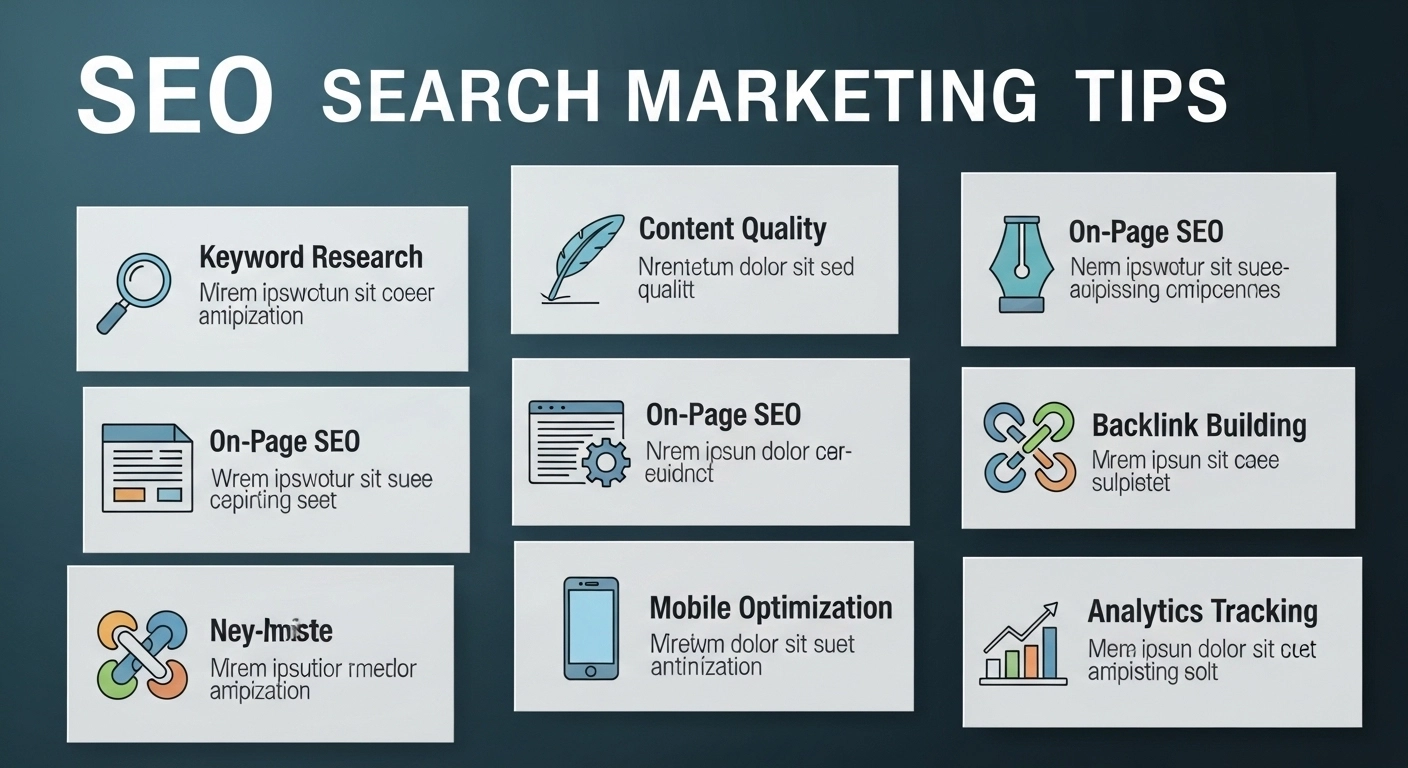
Search engines are often the biggest source of traffic for websites. But ranking on Google today requires more than just adding a few keywords to a page. Successful SEO search marketing combines smart keyword research, useful content, strong technical performance, and a great user experience.
If you want more visibility, more clicks, and more customers, these practical SEO search marketing tips will help you build a strategy that works in 2026 and beyond.
1. Start With Search Intent, Not Just Keywords
Many websites fail because they focus on keywords but ignore search intent—the reason behind a search.
For example:
- Someone searching “SEO tools” wants a list or comparison.
- Someone searching “how to do SEO for a new website” wants a step-by-step guide.
If your content does not match the intent, Google will not rank it well.
How to optimize for search intent
- Google the keyword and analyze the top results
- Identify whether results are guides, lists, tutorials, or product pages
- Create content that matches the dominant format
When your content satisfies the searcher’s need, rankings improve naturally.
2. Do Smart Keyword Research
Keyword research helps you understand what people are actually searching for.
Focus on three types of keywords:
Primary keywords
Your main topic (example: SEO search marketing tips)
Long-tail keywords
More specific searches with lower competition
Example:
- SEO tips for beginners
- how to improve website ranking
Related semantic keywords
Examples include:
- on-page SEO
- keyword optimization
- search engine ranking
- organic traffic
- SEO strategy
These related terms help search engines understand your content better.
Good keyword tools
- Google Keyword Planner
- Ahrefs
- SEMrush
- Ubersuggest
3. Write High-Quality SEO Content
Content is still the most important factor in SEO.
Great SEO content is:
- helpful
- clear
- easy to read
- focused on solving a problem
Instead of writing for search engines, write for real people.
Example
Bad content:
“SEO marketing tips SEO strategy SEO tips SEO ranking.”
Good content:
“Improving your SEO ranking starts with understanding your audience, choosing the right keywords, and publishing content that answers real questions.”
Google rewards useful content that people stay on and read.
4. Optimize On-Page SEO Elements
On-page SEO tells search engines what your page is about.
Key elements to optimize:
Title Tag
Include your main keyword naturally.
Example:
SEO Search Marketing Tips: 10 Proven Ways to Increase Organic Traffic
Headings (H1, H2, H3)
Use headings to organize content and include keywords where natural.
Meta Description
Write a compelling description that encourages clicks.
Example:
“Learn the best SEO search marketing tips to improve rankings, increase website traffic, and grow your online presence.”
Image Optimization
Use descriptive file names and alt text.
Example:
seo-search-marketing-strategy.png
5. Improve Website Speed and Technical SEO
Search engines prefer websites that are fast and easy to crawl.
Important technical SEO factors include:
- Fast page loading speed
- Mobile-friendly design
- Secure HTTPS connection
- Clean URL structure
- XML sitemap
A slow website can reduce both rankings and conversions.
Tools to test site performance:
- Google PageSpeed Insights
- GTmetrix
- Lighthouse
6. Build Strong Internal Links
Internal linking helps search engines understand your site structure and distribute authority across pages.
Example structure:
- Main guide: SEO Strategy
- Link to Keyword Research Guide
- Link to On-Page SEO Checklist
- Link to Technical SEO Basics
- Link to Keyword Research Guide
Benefits of internal linking:
- Improves crawlability
- Keeps users on your website longer
- Helps important pages rank better
7. Earn High-Quality Backlinks
Backlinks remain one of the strongest ranking factors in search marketing.
A backlink is when another website links to your content.
High-quality backlinks usually come from:
- guest blogging
- industry blogs
- resource pages
- original research
- helpful guides
Focus on quality over quantity. A few links from trusted websites are more valuable than hundreds of low-quality links.
8. Update Content Regularly
Search engines prefer fresh, updated content.
Instead of constantly creating new posts, improve your existing pages.
Ways to update content:
- Add new statistics
- Improve examples
- Expand sections
- Update screenshots
- Fix outdated information
Updating content can often boost rankings quickly.
9. Focus on User Experience (UX)
Google increasingly measures how users interact with your site.
Important UX signals include:
- time on page
- bounce rate
- mobile usability
- page speed
Improve UX by:
- using short paragraphs
- adding headings
- including images and examples
- making content easy to scan
When readers enjoy your content, rankings improve naturally.
Frequently Asked Questions
What is SEO search marketing?
SEO search marketing is the process of optimizing your website so it appears higher in search engine results. It includes keyword research, content creation, technical optimization, and link building to increase organic traffic.
How long does SEO take to work?
SEO usually takes 3–6 months to show noticeable results. Competitive industries may take longer because rankings depend on content quality, backlinks, and website authority.
What is the most important SEO factor?
High-quality content that matches search intent is one of the most important SEO factors. Without valuable content, even strong technical SEO will not rank well.
Are backlinks still important for SEO?
Yes. Backlinks remain one of the strongest ranking signals because they help search engines measure trust and authority.
Final Thoughts
SEO search marketing is not about tricks or shortcuts. It is about creating valuable content, understanding what people are searching for, and making your website easy for both users and search engines to navigate.
