
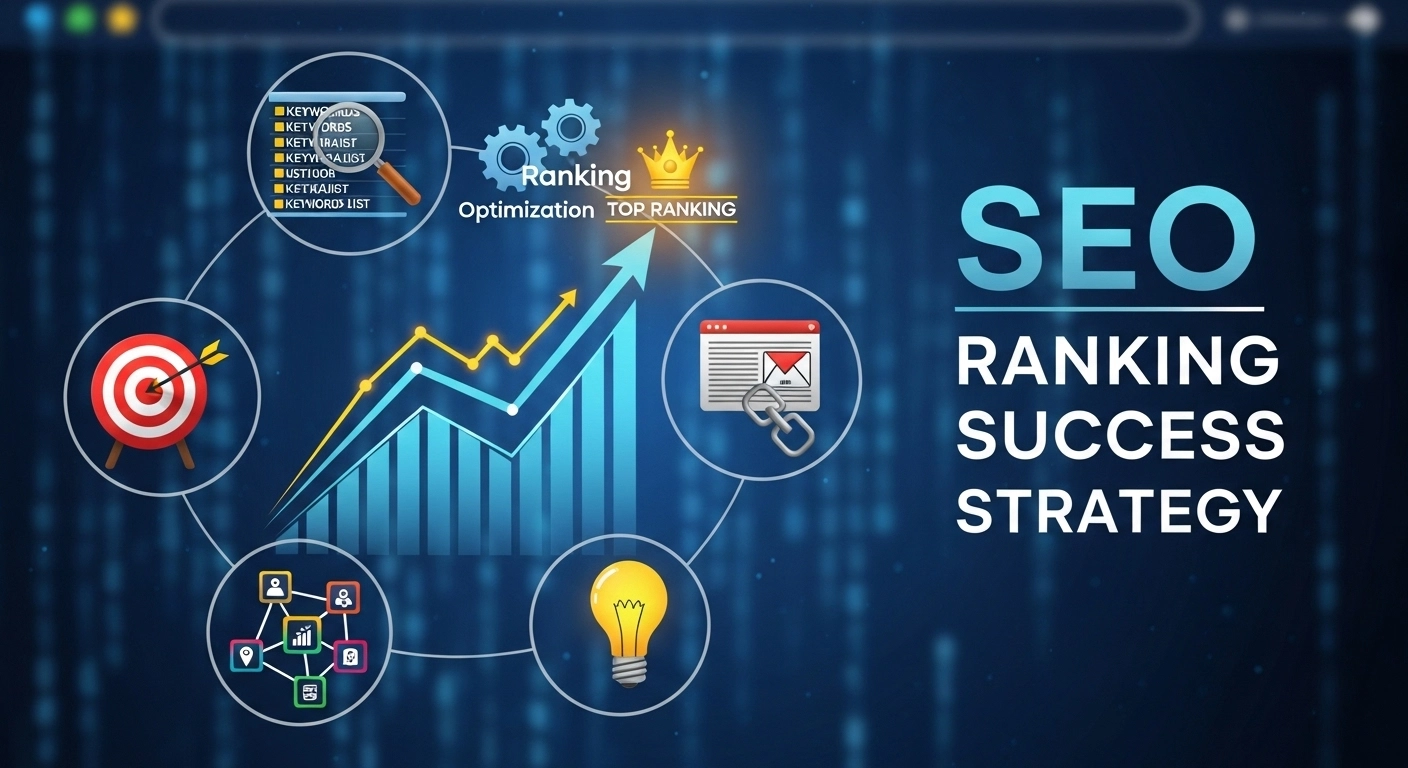
If you want your website to appear on the first page of Google, you need more than just writing articles and hoping for traffic. A real SEO ranking success strategy combines the right keywords, high-quality content, technical optimization, and consistent improvement.
The good news is that SEO is not magic. It’s a repeatable process. When you understand the core steps and apply them correctly, your chances of ranking increase dramatically.
This guide explains a clear strategy you can follow to improve your rankings and attract consistent organic traffic.
1. Start With Smart Keyword Research
Every successful SEO strategy begins with keyword research. Keywords are the search terms people type into Google when they are looking for information.
The goal is to find keywords that have:
- Good search volume
- Low or medium competition
- Clear search intent
For example, instead of targeting a broad keyword like SEO, you could target a long-tail keyword like:
SEO ranking success strategy for beginners
Long-tail keywords are easier to rank for and bring more targeted visitors.
Popular tools for keyword research include Google Keyword Planner, Ahrefs, SEMrush, and Ubersuggest.
Tip: Always check what type of content already ranks on page one. This helps you understand what Google prefers for that keyword.
2. Understand Search Intent
Search intent means the reason behind a search query. If your content does not match the user’s intent, it will not rank well.
There are four main types of search intent:
Informational – The user wants to learn something
Navigational – The user wants to find a specific website
Commercial – The user is researching products
Transactional – The user wants to buy something
For example, someone searching “SEO ranking success strategy” expects a step-by-step guide or actionable tips.
If you provide clear explanations and practical strategies, Google is more likely to rank your page.
3. Create High-Quality SEO Content
Content is the foundation of every SEO strategy.
Google rewards pages that provide helpful, original, and well-structured information.
Strong SEO content usually includes:
Clear headings (H1, H2, H3)
Short readable paragraphs
Examples and practical advice
Relevant images or visuals
Internal links to related pages
For example, instead of writing a short 400-word article, create a complete guide that fully answers the topic.
The goal is simple:
When someone reads your article, they should not need to search again.
4. Optimize On-Page SEO
On-page SEO helps search engines understand your content.
Key elements to optimize include:
Title Tag
Include the main keyword naturally.
Example:
SEO Ranking Success Strategy: 10 Proven Steps to Rank Higher
Meta Description
Write a compelling summary that encourages clicks.
Headings (H1, H2, H3)
Use keywords and related terms in headings.
URL Structure
Keep URLs short and descriptive.
Example:
yourwebsite.com/seo-ranking-success-strategy
Image Optimization
Use descriptive file names and alt text.
Example alt text:
“SEO ranking strategy workflow”
5. Build Internal Links
Internal linking connects your pages together and helps search engines crawl your website.
For example, if you write about keyword research, you can link to another article about on-page SEO tips.
Benefits of internal linking:
Improves website structure
Keeps visitors on your site longer
Helps distribute page authority
A good rule is to add 3–5 internal links per article when relevant.
6. Improve Technical SEO
Technical SEO ensures your website is easy for search engines to crawl and index.
Important technical factors include:
Fast website speed
Mobile-friendly design
Secure HTTPS connection
Clean site architecture
XML sitemap
Google also prioritizes Core Web Vitals, which measure page loading speed, interactivity, and visual stability.
Even great content can struggle to rank if your website loads slowly.
7. Earn High-Quality Backlinks
Backlinks are links from other websites to your content. They are one of the strongest ranking signals in SEO.
However, quality matters more than quantity.
Effective ways to earn backlinks include:
Guest posting on industry blogs
Creating helpful guides and research content
Sharing insights on social media
Building relationships with bloggers and website owners
When reputable websites link to your content, Google sees your site as more trustworthy.
8. Update and Improve Content Regularly
SEO is not a one-time task. Search rankings change constantly.
Successful websites regularly update their content by:
Adding new information
Improving outdated sections
Updating statistics and examples
Optimizing for new keywords
Refreshing content often leads to ranking improvements and increased traffic.
9. Track Your SEO Performance
To know if your strategy is working, you must measure results.
Important SEO tools include:
Google Search Console – tracks rankings and indexing
Google Analytics – shows traffic and user behavior
SEO tools like Ahrefs or SEMrush – analyze keywords and competitors
Track metrics such as:
Organic traffic
Keyword rankings
Click-through rate (CTR)
Bounce rate
These insights help you refine your SEO strategy over time.
Frequently Asked Questions
What is the most important factor in SEO ranking?
High-quality content that matches search intent is the most important factor. Without valuable content, other SEO tactics have limited impact.
How long does SEO take to work?
SEO usually takes 3 to 6 months to show significant results, depending on competition, website authority, and content quality.
Are backlinks still important for SEO?
Yes. Backlinks remain one of Google’s strongest ranking signals because they indicate trust and authority.
How often should I update SEO content?
It’s recommended to review and update important articles every 3 to 6 months to keep them relevant and competitive.
Final Thoughts: Build a Long-Term SEO Strategy
Achieving strong rankings on Google requires patience, consistency, and the right strategy. When you combine smart keyword research, high-quality content, technical optimization, and strong backlinks, your website can steadily climb the search results.
