
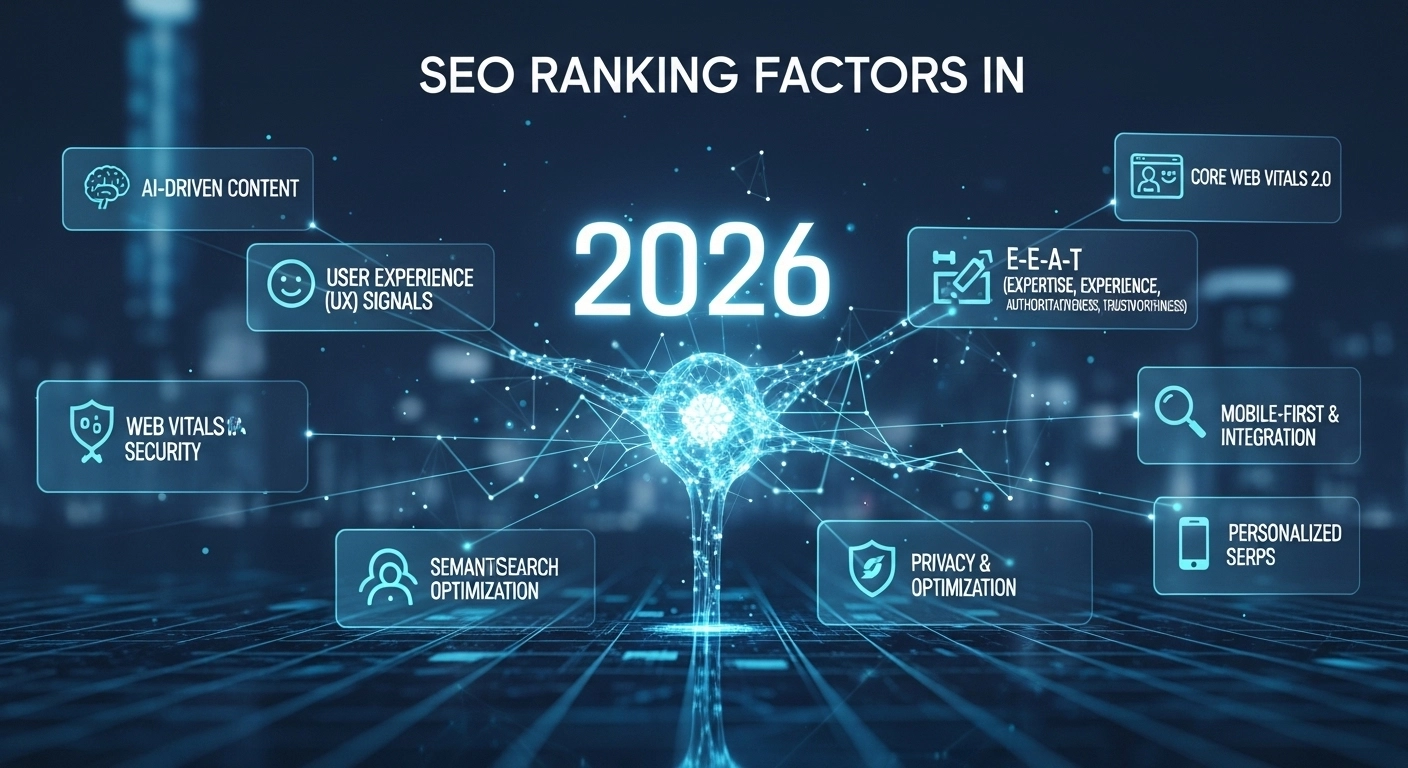
Search engine optimization is constantly evolving. What worked a few years ago doesn’t always work today. In 2026, Google’s ranking system is smarter, more focused on user experience, and better at understanding content quality.
If you want your website to rank higher in search results, you need to focus on the SEO factors that actually matter today.
This guide explains the most important SEO ranking factors in 2026, how they work, and how you can use them to improve your website rankings.
1. High-Quality, Helpful Content
Content is still the foundation of SEO.
Google’s systems are designed to reward content that helps users solve problems, answer questions, or learn something useful.
In 2026, quality matters more than quantity. A single well-researched article can outperform dozens of thin pages.
What high-quality content looks like
- Clear answers to search queries
- Accurate and trustworthy information
- Easy-to-read structure with headings
- Real examples and practical advice
- Updated information
Example
If someone searches “how to start a blog”, Google prefers a guide that explains step-by-step instructions rather than a short 300-word article.
Tip: Write content for humans first, not search engines.
2. Search Intent Optimization
Search intent means understanding what users actually want when they type a query.
Google analyzes user behavior to match the most relevant pages to a search.
The four main search intents
- Informational – users want knowledge
- Navigational – users want a specific website
- Commercial – users are researching products
- Transactional – users want to buy
Example
If someone searches “best laptops under $1000”, they expect comparisons and reviews—not a product sales page.
Matching the correct search intent significantly improves rankings.
3. Strong On-Page SEO
On-page SEO helps search engines understand your content.
Key elements include:
Title tag
Your title should include the main keyword and be compelling.
Example:
SEO Ranking Factors 2026: 12 Things Google Actually Uses
Headings (H1, H2, H3)
Headings organize your content and make it easier for both users and search engines to understand.
Meta descriptions
While not a direct ranking factor, a good meta description improves click-through rate (CTR).
Keyword placement
Use your main keyword naturally in:
- Title
- Introduction
- Headings
- Image alt text
- Conclusion
Avoid overusing keywords.
4. Page Experience and Core Web Vitals
Google cares about how users experience your website.
Core Web Vitals measure performance such as:
- Loading speed
- Visual stability
- Interactivity
A fast, smooth website keeps users engaged and reduces bounce rates.
Ways to improve page experience
- Optimize images
- Use fast hosting
- Reduce unnecessary scripts
- Enable caching
Faster websites usually rank better because users stay longer.
5. Mobile-First Optimization
Most internet traffic now comes from mobile devices.
Google uses mobile-first indexing, meaning it evaluates the mobile version of your site first.
A mobile-friendly website should have:
- Responsive design
- Fast loading on phones
- Easy navigation
- Readable text without zooming
If your site performs poorly on mobile, rankings will suffer.
6. High-Quality Backlinks
Backlinks remain one of the strongest ranking signals.
When other websites link to your content, Google sees it as a vote of trust.
However, quality matters more than quantity.
Good backlinks come from
- Authority websites
- Relevant blogs in your niche
- News sites
- Industry publications
Bad backlinks
- Spam directories
- Link farms
- Paid links from low-quality sites
Focus on earning links through valuable content rather than buying them.
7. Topical Authority
Google prefers websites that show deep expertise in a topic.
Instead of publishing random content, successful sites build content clusters.
Example: SEO website structure
Pillar page:
Complete Guide to SEO
Cluster posts:
- Keyword research guide
- On-page SEO checklist
- Technical SEO audit
- Link building strategies
This structure helps search engines understand your site as an authority.
8. Internal Linking Strategy
Internal links help Google discover and understand pages on your site.
They also guide users to related content.
Best practices
- Link to relevant pages naturally
- Use descriptive anchor text
- Link from high-authority pages to new pages
Example:
If you write about keyword research, link to your article about SEO tools.
9. E-E-A-T (Experience, Expertise, Authority, Trust)
Google evaluates content based on E-E-A-T:
- Experience – real-world knowledge
- Expertise – subject knowledge
- Authority – reputation in the niche
- Trust – reliable information
Ways to improve E-E-A-T:
- Add author bios
- Cite credible sources
- Show real examples
- Include case studies
This is especially important for health, finance, and legal topics.
10. User Engagement Signals
Google studies how users interact with search results.
Important engagement signals include:
- Click-through rate (CTR)
- Time spent on page
- Bounce rate
- Return visits
If users quickly leave a page, Google may assume the content isn’t helpful.
Creating engaging and useful content improves these signals.
11. Fresh and Updated Content
Search engines prefer updated and relevant information.
Older articles can lose rankings if they become outdated.
How to keep content fresh
- Update statistics
- Add new sections
- Improve readability
- Fix outdated links
Refreshing content can quickly boost rankings.
12. Technical SEO
Technical SEO ensures that search engines can crawl and index your website properly.
Important technical factors include:
- XML sitemap
- Robots.txt file
- Secure HTTPS connection
- Clean URL structure
- Schema markup
Technical issues can prevent even great content from ranking.
Quick SEO Checklist for 2026
To improve rankings, focus on:
- Helpful, high-quality content
- Search intent optimization
- Strong on-page SEO
- Fast loading website
- Mobile-friendly design
- High-quality backlinks
- Topical authority
- Smart internal linking
- Strong E-E-A-T signals
- Regular content updates
- Solid technical SEO
These factors work together to help Google understand and trust your website.
Frequently Asked Questions
What is the most important SEO ranking factor in 2026?
High-quality content that satisfies search intent remains the most important ranking factor. Google prioritizes pages that provide the best answer for a user’s query.
Are backlinks still important for SEO?
Yes. Backlinks from authoritative and relevant websites continue to be one of the strongest signals for ranking higher in search results.
Does website speed affect SEO?
Yes. Fast websites improve user experience and help meet Google’s Core Web Vitals standards, which influence rankings.
How long does SEO take to work?
SEO usually takes 3 to 6 months to show noticeable results, depending on competition, website authority, and content quality.
Conclusion
SEO in 2026 is no longer about tricks or shortcuts. It’s about creating helpful content, providing a great user experience, and building real authority online.
Websites that focus on solving user problems, optimizing for search intent, and maintaining strong technical foundations will consistently rank higher in Google.
