
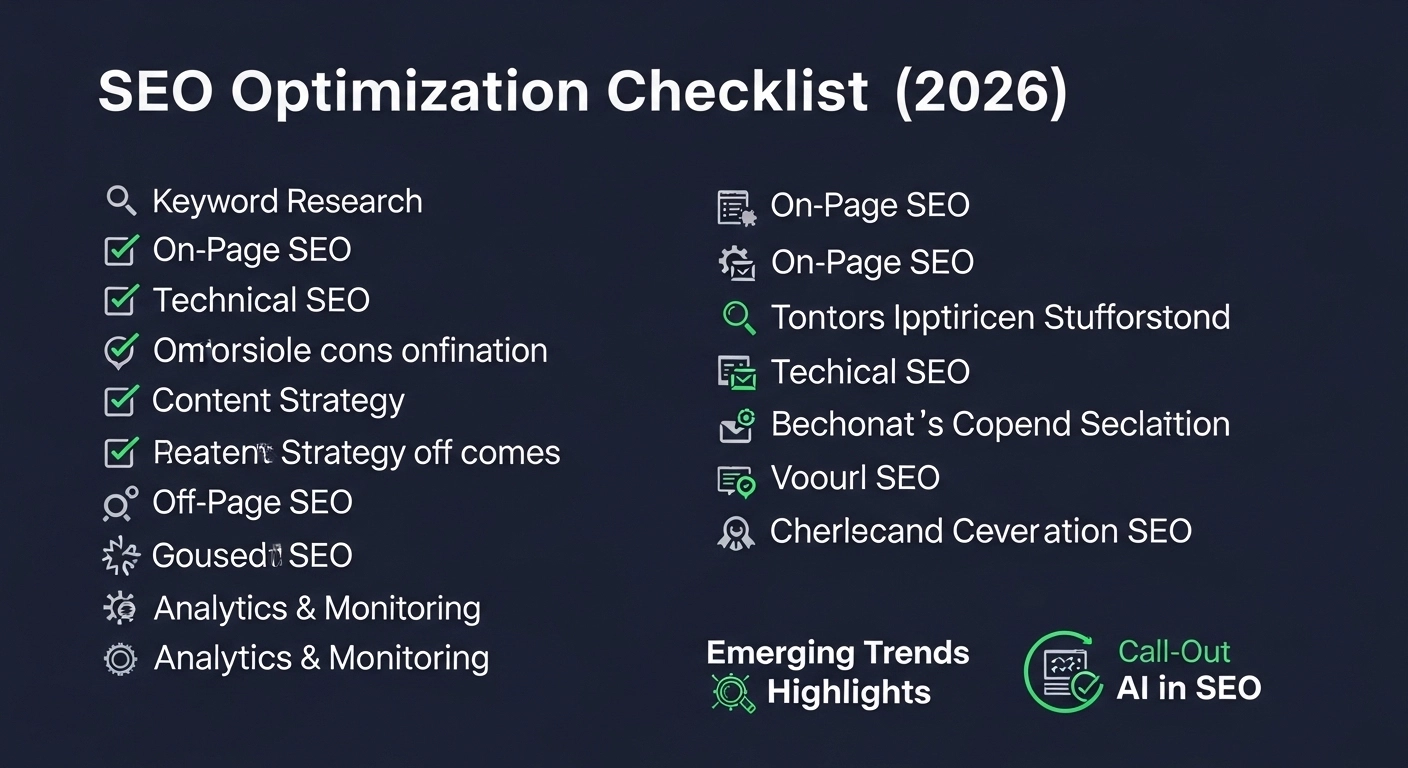
Search engine optimization isn’t just about adding a few keywords to a page. Today, ranking on Google requires a combination of smart keyword targeting, high-quality content, technical performance, and a strong user experience.
That’s where an SEO optimization checklist becomes essential.
Whether you’re running a blog, business website, or online store, this guide will walk you through a clear, practical SEO checklist you can use to improve rankings, increase traffic, and make your content easier for search engines to understand.
The Ultimate SEO Optimization Checklist
Below is a step-by-step checklist covering the most important parts of SEO: keyword research, on-page SEO, technical SEO, and content optimization.
1. Keyword Research Checklist
Everything in SEO starts with the right keywords. If you target the wrong terms, even great content won’t rank.
What to check
Identify your main keyword for each page
Find long-tail keywords related to the topic
Analyze search intent (informational, commercial, transactional)
Check keyword difficulty before targeting
Research competitor keywords
Include semantic keywords and related phrases
Example
Main keyword: SEO optimization checklist
Related keywords:
SEO checklist for beginners
technical SEO checklist
on page SEO checklist
SEO audit checklist
website SEO optimization
Using these variations helps search engines understand the full topic.
2. On-Page SEO Checklist
On-page SEO helps search engines understand what your page is about.
Essential on-page elements
Write a clear SEO title (50–60 characters)
Include the keyword in the title
Add the keyword in the first paragraph
Use H1, H2, and H3 headings properly
Add related keywords naturally in content
Write a compelling meta description
Optimize image alt text
Use internal links to relevant pages
Example SEO Title
SEO Optimization Checklist: 20 Steps to Improve Your Website Ranking
Example Meta Description
Follow this complete SEO optimization checklist to improve rankings, increase traffic, and optimize your website for search engines.
3. Content Optimization Checklist
Google rewards content that is helpful, clear, and comprehensive.
Content best practices
Write content that fully answers the search query
Keep paragraphs short and easy to read
Use bullet points and lists
Add practical examples
Include updated statistics when possible
Avoid duplicate content
Write for humans first, search engines second
Ideal content length
For competitive keywords, aim for 1200–2000 words of useful content.
4. Technical SEO Checklist
Technical SEO ensures search engines can properly crawl and index your website.
Key technical checks
Your website loads quickly (under 3 seconds)
Your site is mobile-friendly
Use HTTPS security
Create and submit an XML sitemap
Fix broken links and errors
Use clean URL structures
Improve Core Web Vitals
Example of a clean URL
Good:
example.com/seo-optimization-checklist
Bad:
example.com/page?id=834&seo=1
5. Internal Linking Checklist
Internal links help search engines understand your site structure and distribute ranking power.
Best practices
Link to related blog posts
Use descriptive anchor text
Avoid linking too many times with the same anchor
Create topic clusters and pillar pages
Ensure every important page has internal links
Example:
A blog about technical SEO should link to posts about site speed optimization and SEO audits.
6. Image SEO Checklist
Images also contribute to SEO if optimized correctly.
Image optimization tips
Use descriptive file names
Add keyword-rich alt text
Compress images for faster loading
Use modern formats like WebP
Add images that support the content
Example file name:
seo-optimization-checklist-guide.jpg
7. User Experience (UX) SEO Checklist
Google increasingly measures how users interact with your website.
UX signals that affect SEO
Fast page loading
Easy navigation
Mobile-friendly design
Low bounce rate
Clear layout and formatting
If users stay longer on your page, search engines see it as a positive signal.
8. Off-Page SEO Checklist
Off-page SEO focuses on building your website’s authority.
Key strategies
Earn high-quality backlinks
Publish guest posts
Promote content on social media
Get listed in relevant directories
Build brand mentions online
Quality backlinks remain one of the strongest ranking factors.
Quick SEO Optimization Checklist (Summary)
Here’s a simple quick-reference checklist:
Research the right keywords
Write a strong SEO title
Optimize headings (H1, H2, H3)
Write high-quality content
Add internal links
Optimize images
Improve page speed
Ensure mobile friendliness
Fix technical errors
Build high-quality backlinks
FAQ: SEO Optimization Checklist
What is an SEO optimization checklist?
An SEO optimization checklist is a structured list of steps used to improve a website’s visibility in search engines. It typically includes keyword research, on-page SEO, technical SEO, and content optimization.
How often should I perform an SEO checklist?
Most websites should perform an SEO review every 3–6 months, while high-traffic sites often review SEO monthly.
What is the most important SEO factor?
High-quality content that matches search intent is the most important factor. Without valuable content, other SEO tactics have limited impact.
Can beginners use an SEO checklist?
Yes. A checklist simplifies SEO by breaking it into clear steps, making it easier for beginners to optimize their website.
Final Thoughts
SEO success rarely happens by accident. It comes from consistent optimization, smart keyword targeting, and a strong technical foundation.
Using this SEO optimization checklist ensures every page on your website follows best practices that help search engines understand and rank your content.
Start applying these steps today, and you’ll build a website that not only ranks better—but also delivers real value to your audience.
