
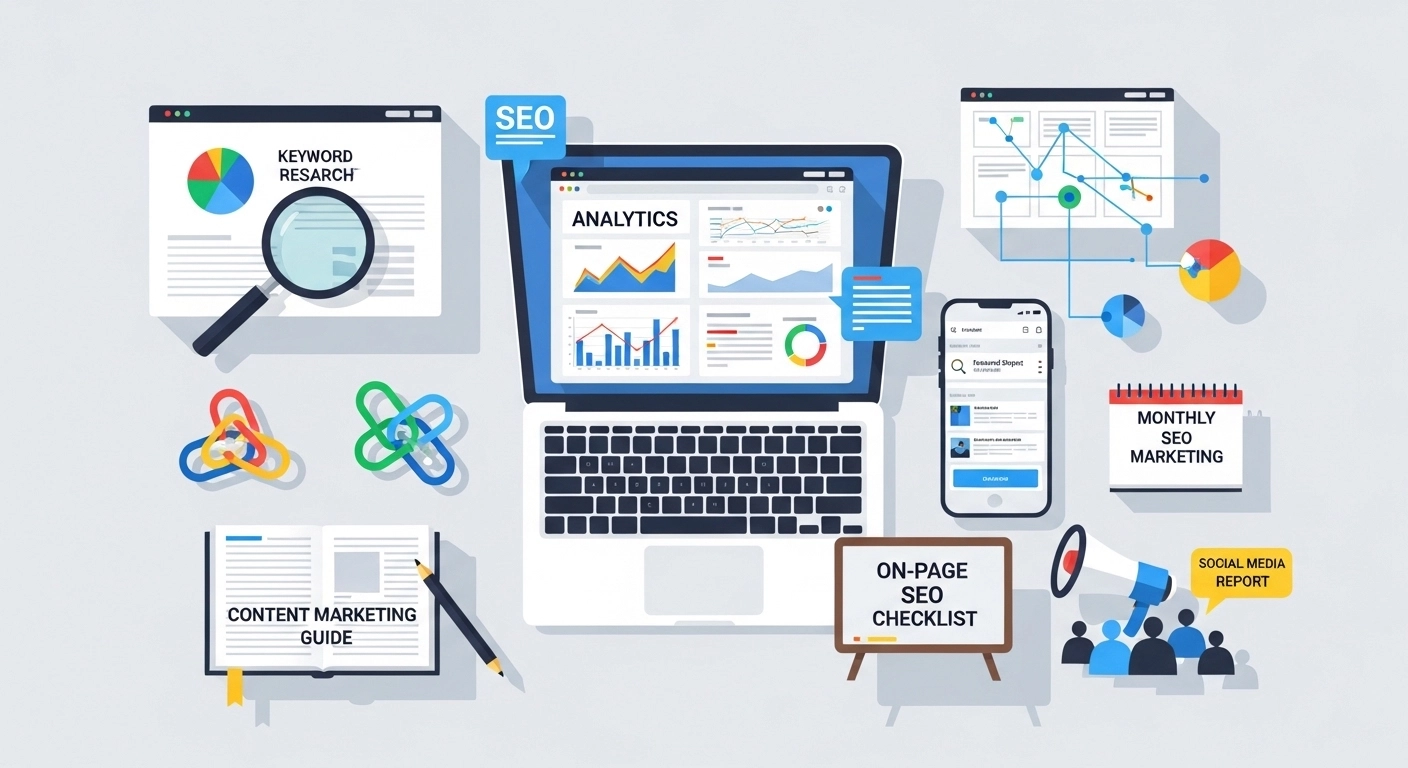
Search engine optimization (SEO) is one of the most powerful ways to attract consistent, high-quality traffic to your website. But SEO is no longer just about adding keywords to a page. Modern SEO marketing techniques focus on user intent, helpful content, technical performance, and authority.
If you want your website to rank higher in search results and bring in more visitors, you need a strategy that combines content, technical optimization, and smart promotion.
In this guide, you’ll learn practical SEO marketing techniques that actually work today—whether you’re running a blog, an online store, or a business website.
1. Start With Search Intent
Search intent is the reason behind a search query. Understanding what users want helps you create content that matches their needs.
There are four main types of search intent:
- Informational – Users want to learn something
Example: “What is SEO?” - Navigational – Users are looking for a specific website
Example: “YouTube login” - Commercial – Users are researching before buying
Example: “Best laptops under $1000” - Transactional – Users want to make a purchase
Example: “Buy running shoes online”
Before creating content, search your target keyword and analyze the top results. This shows you what kind of content search engines already prefer.
2. Perform Smart Keyword Research
Keyword research helps you discover what your audience is searching for.
Focus on:
- Long-tail keywords (more specific phrases)
- Low-competition opportunities
- Questions people ask
Example:
Instead of targeting:
SEO
Try targeting:
- SEO marketing techniques for beginners
- SEO strategy for small businesses
- How to improve SEO rankings
Tools that help with keyword research include:
- Google autocomplete
- “People also ask” sections
- SEO research tools
The goal is to find keywords that bring targeted traffic, not just high volume.
3. Create High-Quality Content
Content is still the foundation of SEO.
But today, search engines prioritize helpful, well-structured content that answers real questions.
Strong SEO content should:
- Solve a problem
- Be easy to read
- Provide practical examples
- Cover the topic thoroughly
For example, instead of writing a short 500-word article, create a comprehensive guide that explains the topic step-by-step.
Search engines reward depth, clarity, and usefulness.
4. Optimize On-Page SEO Elements
On-page SEO helps search engines understand your content.
Important elements include:
Title Tag
Include your primary keyword and make it compelling.
Example:
SEO Marketing Techniques: 12 Strategies That Increase Traffic
Meta Description
Write a short summary that encourages clicks.
Headings (H1, H2, H3)
Use headings to structure your content clearly.
Image Optimization
- Add descriptive file names
- Use alt text
- Compress images for faster loading
These small optimizations help search engines crawl and rank your pages more effectively.
5. Improve Website Speed
Page speed is a ranking factor and also affects user experience.
A slow website can increase bounce rates and reduce conversions.
Ways to improve site speed:
- Compress images
- Use browser caching
- Reduce unnecessary scripts
- Choose reliable hosting
- Use a content delivery network (CDN)
Fast websites create better experiences and perform better in search rankings.
6. Build a Strong Internal Linking Structure
Internal links connect pages within your website.
Benefits of internal linking include:
- Helping search engines crawl your site
- Passing authority between pages
- Keeping visitors engaged longer
Example:
If you write a guide about SEO marketing techniques, you can link to related articles such as:
- Keyword research guide
- On-page SEO checklist
- Technical SEO basics
This creates a content ecosystem that strengthens your site’s topical authority.
7. Earn High-Quality Backlinks
Backlinks are links from other websites pointing to your site. They remain one of the strongest SEO ranking signals.
Effective ways to build backlinks include:
- Guest posting
- Creating shareable content
- Publishing original research
- Writing in-depth guides
- Digital PR outreach
Focus on quality over quantity. A few links from authoritative sites are more valuable than hundreds of low-quality ones.
8. Optimize for Mobile Users
Most web traffic now comes from mobile devices.
Search engines use mobile-first indexing, meaning they evaluate the mobile version of your site first.
Mobile optimization includes:
- Responsive design
- Fast loading pages
- Easy navigation
- Readable text sizes
- Mobile-friendly buttons
A smooth mobile experience improves both rankings and engagement.
9. Use Topic Clusters and Pillar Pages
Topic clusters organize your content around a central subject.
Example:
Pillar Page: SEO Marketing Guide
Supporting articles:
- Keyword research strategies
- On-page SEO techniques
- Technical SEO basics
- Link building methods
All supporting content links back to the pillar page.
This structure signals topical authority, helping search engines understand your expertise.
10. Update Old Content Regularly
SEO is not a one-time task.
Updating existing content can significantly improve rankings.
Ways to refresh content:
- Add new statistics
- Improve explanations
- Update outdated information
- Add new sections
- Optimize for additional keywords
Many websites see traffic increases simply by updating older posts.
11. Optimize for Featured Snippets
Featured snippets appear at the top of search results.
To increase your chances of appearing in snippets:
- Answer questions clearly
- Use bullet lists
- Add short definitions
- Structure content with headings
Example format:
What is SEO marketing?
SEO marketing is the process of optimizing a website to increase its visibility in search engine results and attract organic traffic.
Clear answers increase the chances of snippet placement.
12. Track SEO Performance
You cannot improve what you do not measure.
Important SEO metrics include:
- Organic traffic
- Keyword rankings
- Click-through rate
- Bounce rate
- Backlinks
Analytics and search performance tools help you identify what is working and where improvements are needed.
FAQ: SEO Marketing Techniques
What is SEO marketing?
SEO marketing is the practice of optimizing a website to improve its visibility in search engine results and attract organic traffic through content, technical improvements, and link building.
How long does SEO take to work?
SEO usually takes 3–6 months to show significant results. However, the timeline depends on competition, website authority, and content quality.
What is the most important SEO technique?
Creating high-quality, helpful content that matches search intent is one of the most important factors for SEO success.
Are backlinks still important for SEO?
Yes. Backlinks remain a major ranking signal because they help search engines measure website authority and trust.
Conclusion
SEO is constantly evolving, but the fundamentals remain clear: helpful content, strong technical performance, and trusted authority drive search rankings.
By applying these SEO marketing techniques—understanding search intent, creating valuable content, optimizing on-page elements, building backlinks, and improving site performance—you can build a sustainable strategy that generates consistent organic traffic.
SEO is not about quick tricks. It’s about building a website that search engines trust and users love.
Start implementing these techniques today, and your website will be positioned for long-term growth.
