
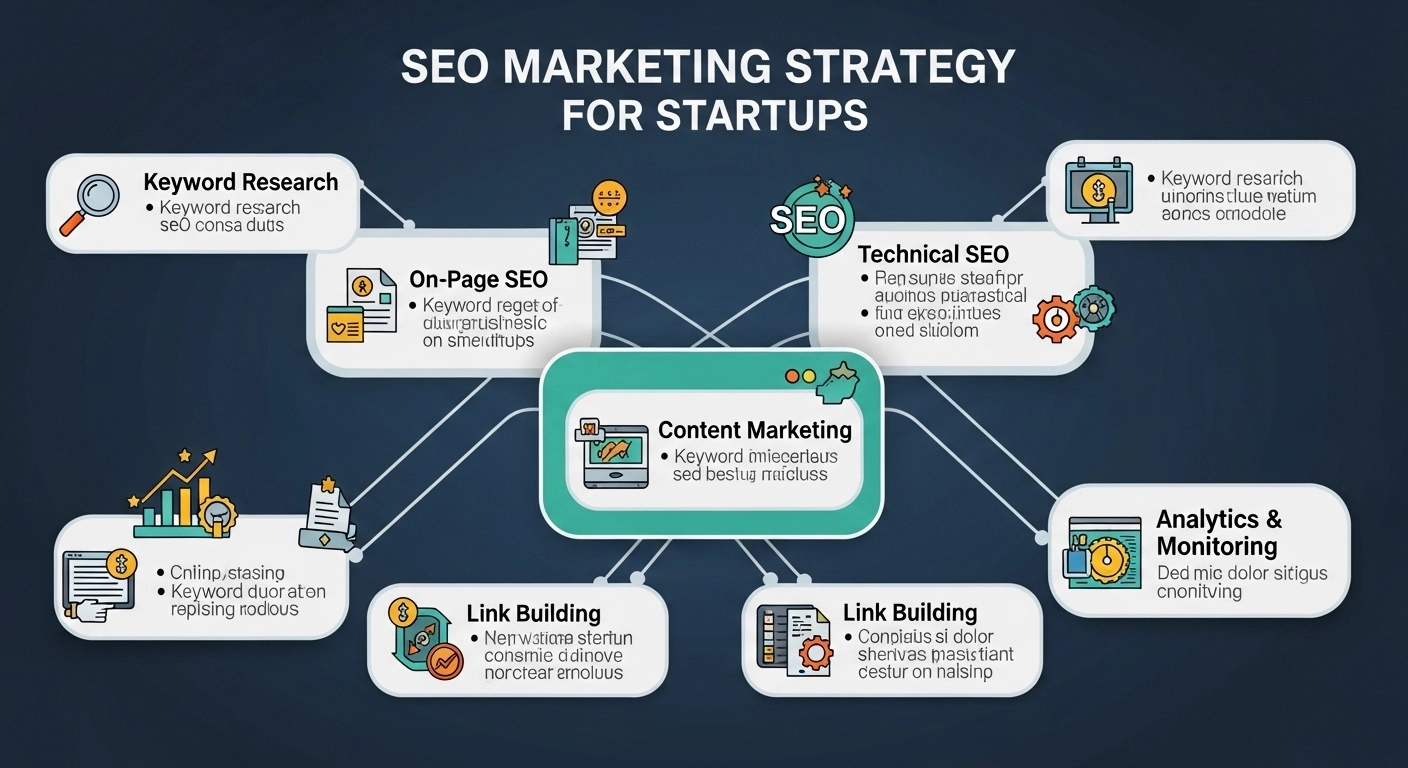
Launching a startup is exciting—but getting people to find your business online can be challenging. Paid ads can be expensive, especially when you’re just starting out. That’s where SEO (Search Engine Optimization) becomes one of the most powerful marketing tools for startups.
A strong SEO marketing strategy for startups helps your business appear in search results when potential customers are looking for solutions. Done right, SEO brings consistent traffic, builds credibility, and reduces long-term marketing costs.
This guide will walk you through a clear, practical SEO strategy that startups can use to grow organically.
Why SEO Matters for Startups
Startups usually operate with limited budgets. SEO allows you to compete with bigger brands without spending heavily on advertising.
Here’s why SEO is essential for early-stage companies:
- Organic traffic is free and sustainable
- Builds brand authority and trust
- Attracts high-intent users
- Improves long-term marketing ROI
- Supports content marketing and growth
When someone searches for a solution your startup offers, SEO helps ensure your website appears in those results.
Step 1: Start with Smart Keyword Research
Every successful SEO strategy begins with understanding what your audience is searching for.
Instead of targeting extremely competitive keywords, startups should focus on long-tail keywords and search intent.
Example:
Broad keyword
“SEO tools”
Better startup keyword
“best SEO tools for small startups”
Tools you can use for keyword research include:
- Google Keyword Planner
- Ubersuggest
- Ahrefs
- SEMrush
- Google autocomplete suggestions
Look for keywords with:
- Decent search volume
- Lower competition
- Clear user intent
These keywords give startups a better chance to rank.
Step 2: Understand Search Intent
Ranking is not just about keywords. Google wants to show results that match the user’s intent.
There are four main types of search intent:
Informational – users want to learn
Example: “what is technical SEO”
Navigational – users want a specific site
Example: “Ahrefs login”
Commercial – users are comparing options
Example: “best CRM for startups”
Transactional – users are ready to buy
Example: “buy project management software”
Your startup content should target informational and commercial keywords to attract potential customers early in the decision process.
Step 3: Build a Content Strategy
Content is the foundation of startup SEO.
High-quality content helps you rank for more keywords and build authority in your niche.
Types of content startups should create include:
- Educational blog posts
- Step-by-step guides
- Product comparison articles
- Case studies
- Tutorials
- Industry insights
Example:
If your startup sells marketing software, you could create posts like:
- “How startups can build a marketing funnel”
- “Best marketing tools for early-stage companies”
- “Startup growth strategies that actually work”
The goal is to solve real problems your audience searches for online.
Step 4: Focus on On-Page SEO
On-page SEO ensures that your content is optimized so search engines understand it.
Key elements include:
Title Tags
Your title should include your main keyword and be compelling enough to get clicks.
Example:
SEO Marketing Strategy for Startups: 10 Proven Growth Tactics
Meta Descriptions
Write short summaries that encourage users to visit your page.
Headings (H1, H2, H3)
Organize content clearly using headings. This improves readability and SEO.
Internal Links
Link to other relevant pages on your website to help search engines crawl your content.
Image Optimization
Use descriptive file names and alt text for images.
Step 5: Improve Technical SEO
Technical SEO ensures your website works well for both users and search engines.
Important factors include:
- Fast website loading speed
- Mobile-friendly design
- Secure HTTPS connection
- Clear site structure
- XML sitemap
- Proper indexing in Google Search Console
Even great content struggles to rank if the technical foundation is weak.
Step 6: Build High-Quality Backlinks
Backlinks remain one of the strongest ranking factors in SEO.
For startups, earning backlinks can dramatically improve search visibility.
Effective strategies include:
- Guest posting on industry blogs
- Publishing data-driven research
- Creating shareable guides
- Collaborating with influencers
- Getting featured in startup directories
Focus on quality links from relevant websites, not random backlinks.
Step 7: Create Topic Clusters
Modern SEO rewards topical authority.
Instead of publishing random articles, build topic clusters around your main subject.
Example cluster for a marketing startup:
Pillar page:
“Complete Guide to Startup Marketing”
Supporting articles:
- Social media marketing for startups
- SEO marketing strategy for startups
- Email marketing tips for new businesses
- Content marketing for SaaS startups
This structure helps search engines understand your expertise.
Step 8: Track and Improve Performance
SEO is not a one-time task. It requires continuous improvement.
Track your results using tools like:
- Google Analytics
- Google Search Console
- Ahrefs or SEMrush
Important metrics include:
- Organic traffic
- Keyword rankings
- Click-through rate (CTR)
- Conversion rate
Regular analysis helps you discover what content performs best.
Common SEO Mistakes Startups Should Avoid
Many startups struggle with SEO because of avoidable mistakes.
Common issues include:
- Targeting keywords that are too competitive
- Publishing thin or low-quality content
- Ignoring technical SEO
- Not building backlinks
- Inconsistent publishing
Avoiding these mistakes will give your startup a significant advantage.
Frequently Asked Questions
How long does SEO take to work for startups?
SEO usually takes 3 to 6 months to show noticeable results. However, the long-term benefits often outweigh short-term marketing channels.
Should startups focus on SEO or paid ads?
Ideally, both. Paid ads generate quick traffic, while SEO builds sustainable long-term growth.
How many blog posts should a startup publish?
Consistency matters more than volume. Publishing 2–4 high-quality articles per month can produce strong results over time.
Is SEO expensive for startups?
SEO can be very cost-effective compared to paid advertising. The main investment is time and high-quality content creation.
Final Thoughts
A smart SEO marketing strategy for startups can transform how your business grows online.
Instead of relying only on paid traffic, SEO helps you attract potential customers who are already searching for what you offer.
Focus on:
- Targeted keyword research
- Valuable content creation
- Strong on-page optimization
- Technical website health
- Consistent backlink building
Over time, these efforts compound into sustainable organic growth
