
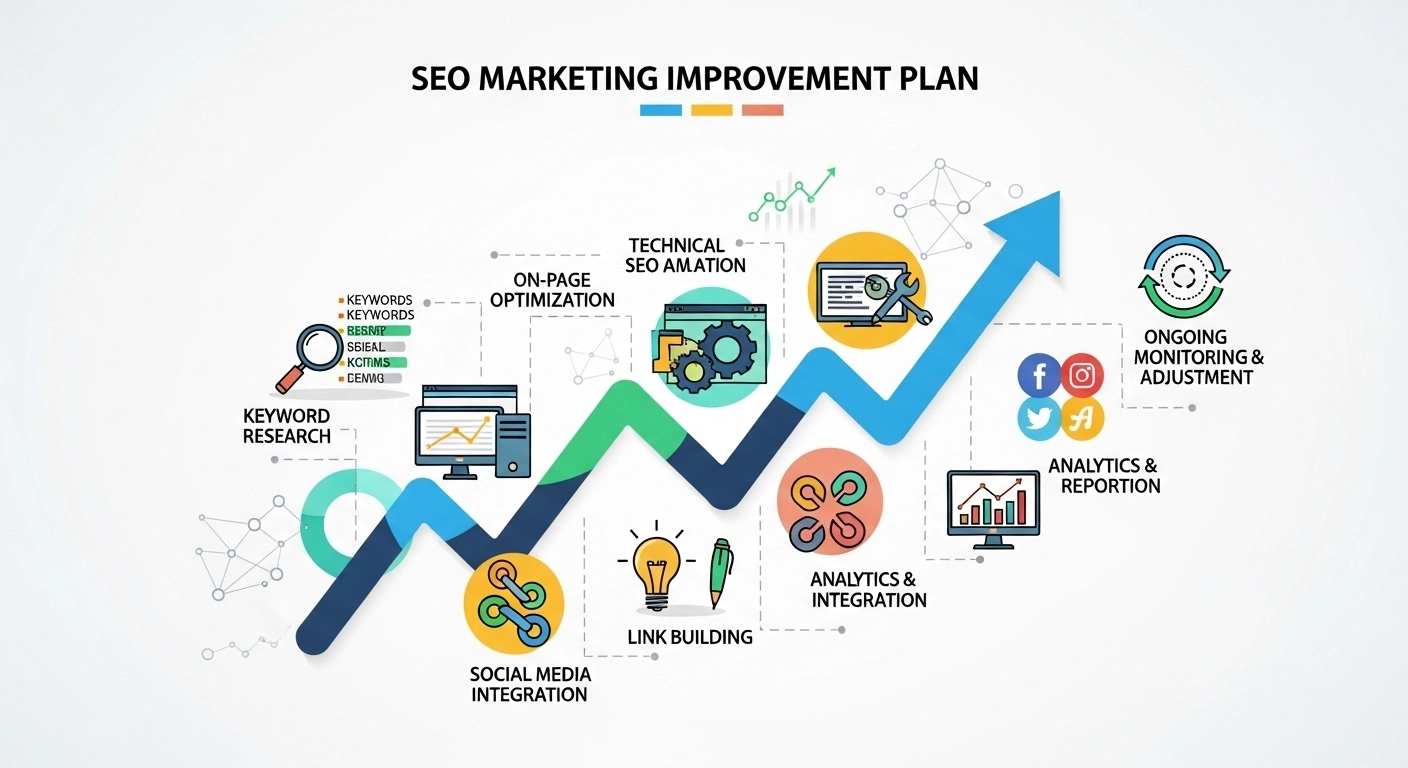
Search engine optimization is never a one-time task. Algorithms change, competitors improve, and user behavior evolves. That’s why every website needs a clear SEO marketing improvement plan—a structured strategy to analyze performance, fix weaknesses, and steadily grow organic traffic.
Whether you run a blog, an online store, or a service website, this guide will walk you through a practical SEO improvement plan you can implement today.
Why an SEO Marketing Improvement Plan Matters
Many websites publish content and hope for rankings. But without a strategy, results are inconsistent.
A well-structured SEO improvement plan helps you:
- Increase organic traffic
- Improve search rankings
- Fix technical SEO problems
- Create content that matches search intent
- Convert visitors into leads or customers
Instead of guessing what works, you follow a data-driven approach.
Step 1: Start With a Complete SEO Audit
Before improving anything, understand where your site currently stands.
An SEO audit identifies issues that may be limiting your performance.
Check these areas:
Technical SEO
- Page speed
- Mobile friendliness
- Broken links
- Indexing issues
- XML sitemap and robots.txt
On-Page SEO
- Title tags and meta descriptions
- Heading structure
- Keyword placement
- Internal links
Content Quality
- Thin content
- Outdated pages
- Duplicate content
Backlinks
- Quality of referring domains
- Toxic or spam links
Example:
If a page loads in 5 seconds, improving speed to under 2 seconds can significantly boost rankings and user engagement.
Step 2: Improve Keyword Strategy
A common SEO mistake is targeting keywords that are too competitive or not aligned with search intent.
Focus on:
Long-tail keywords
These are more specific and easier to rank for.
Example:
Instead of targeting
“SEO marketing”
Target
“SEO marketing improvement plan for small businesses”
Search intent
Understand what the user actually wants:
- Informational
- Commercial
- Transactional
- Navigational
Matching content to intent dramatically improves rankings.
Step 3: Optimize Existing Content
Many websites already have content that can perform better with small improvements.
Update pages by:
- Adding missing keywords naturally
- Improving headings and structure
- Updating statistics and examples
- Adding internal links
- Improving readability
Example:
If an article is ranking on page 2 of Google, improving the content depth and adding internal links can push it to page 1.
Content updates are often faster than creating new pages.
Step 4: Strengthen On-Page SEO
On-page optimization helps search engines understand your content.
Key elements to improve:
Title tags
Include the main keyword near the beginning.
Example:
SEO Marketing Improvement Plan: 10 Proven Strategies for Growth
Meta descriptions
Write clear descriptions that encourage clicks.
Headings
Use logical structure:
- H1 for main topic
- H2 for sections
- H3 for subpoints
Internal linking
Link related pages to strengthen topical authority.
Example:
A blog about “SEO improvement plan” could link to posts about keyword research, technical SEO, and content optimization.
Step 5: Build Topical Authority
Search engines prefer websites that cover a topic deeply.
Create content clusters around your main topic.
Example cluster for SEO:
Pillar page:
SEO Marketing Improvement Plan
Supporting articles:
- Keyword research strategies
- On-page SEO checklist
- Technical SEO audit guide
- Link building strategies
- SEO content writing tips
Internal links connect these articles together.
This structure signals expertise and improves rankings.
Step 6: Improve Website Performance
Technical performance strongly affects SEO.
Focus on:
Page speed
Optimize images, use caching, and reduce unnecessary scripts.
Mobile optimization
Most searches happen on mobile devices.
Core Web Vitals
Improve:
- Loading speed
- Visual stability
- Interaction responsiveness
Better performance improves both rankings and user experience.
Step 7: Build High-Quality Backlinks
Backlinks remain one of the strongest ranking signals.
Focus on quality over quantity.
Effective link building methods:
- Guest blogging
- Digital PR
- Creating shareable content
- Industry partnerships
- Resource page outreach
Example:
A detailed SEO guide or original research study naturally attracts backlinks from other websites.
Step 8: Track Results and Adjust Strategy
SEO improvement is an ongoing process.
Track performance using tools like:
- Google Search Console
- Google Analytics
- Rank tracking tools
Monitor:
- Organic traffic
- Keyword rankings
- Click-through rate
- Conversion rates
Use this data to refine your strategy and focus on what works.
Common SEO Mistakes to Avoid
Even strong strategies fail if common mistakes occur.
Avoid:
- Keyword stuffing
- Publishing thin content
- Ignoring technical SEO
- Buying spam backlinks
- Not updating old content
SEO success comes from consistency and quality.
FAQ: SEO Marketing Improvement Plan
What is an SEO marketing improvement plan?
An SEO marketing improvement plan is a structured strategy used to analyze and improve a website’s search engine performance. It includes audits, keyword optimization, content improvements, technical fixes, and link building.
How long does SEO improvement take?
Most SEO improvements take 3–6 months to show noticeable results. However, technical fixes and content updates can sometimes improve rankings faster.
What is the fastest way to improve SEO?
The fastest wins usually come from:
- Updating existing content
- Fixing technical errors
- Improving internal linking
These changes can boost rankings without creating new content.
How often should SEO be updated?
SEO should be reviewed every 3–6 months. Regular audits help identify new opportunities and prevent performance drops.
Final Thoughts
An effective SEO marketing improvement plan is not about quick tricks or shortcuts. It’s about building a strong foundation: quality content, solid technical performance, strategic keywords, and trustworthy backlinks.
Websites that consistently improve these areas gradually dominate search results and attract steady organic traffic.
