
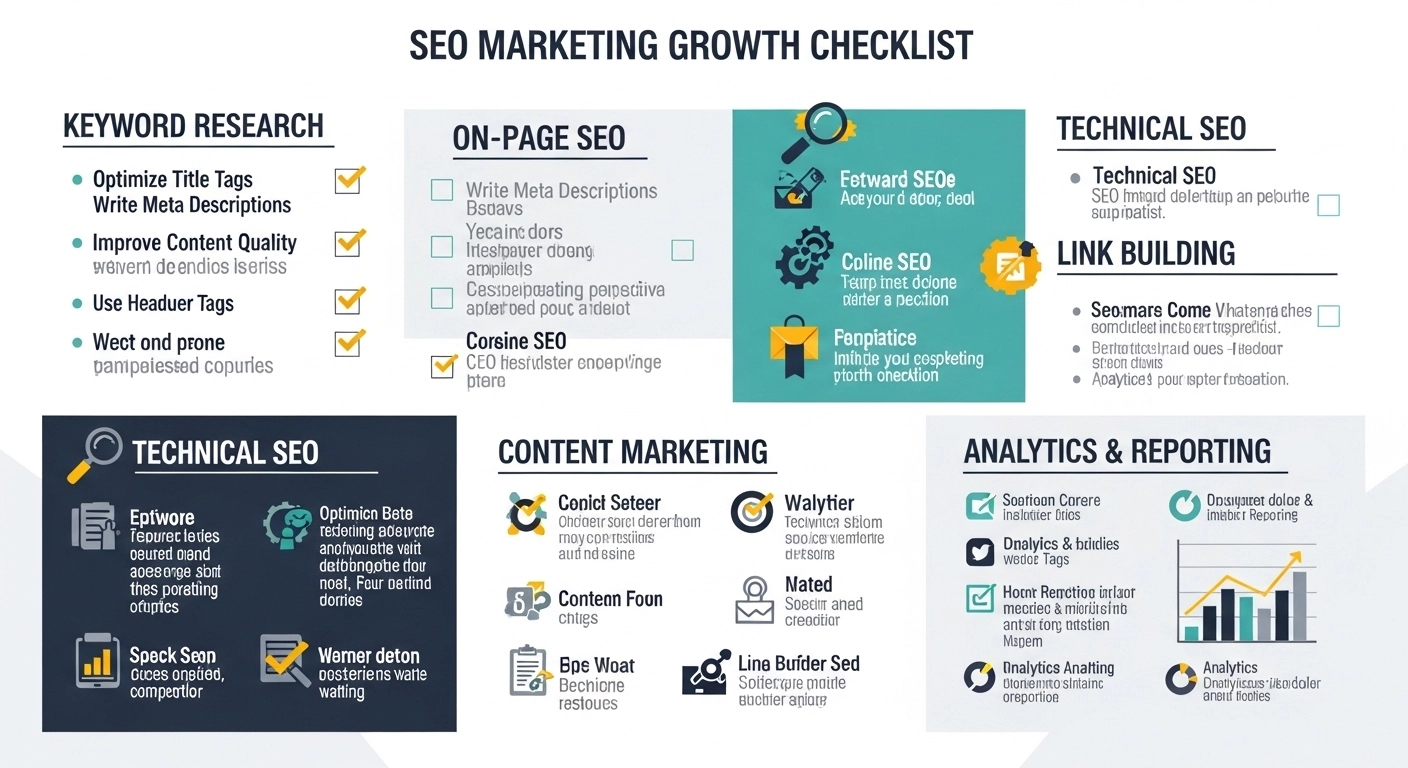
Search engine optimization isn’t just about ranking for a few keywords. Real SEO growth comes from building a system that consistently improves visibility, traffic, and conversions.
Whether you’re running a blog, an online store, or a business website, having a clear SEO marketing growth checklist helps you focus on the activities that actually move rankings and revenue.
This guide walks through a simple, practical checklist you can use to grow your SEO step-by-step.
Why an SEO Growth Checklist Matters
Many websites struggle with SEO because they jump between tactics without a strategy.
A checklist keeps your efforts organized and ensures you cover the core pillars of SEO:
- Technical SEO
- Content optimization
- Keyword strategy
- Authority building
- Performance tracking
When these pieces work together, search engines trust your site more—and rankings improve.
The Complete SEO Marketing Growth Checklist
1. Set Clear SEO Goals
Before optimizing anything, define what growth means for your business.
Examples of SEO goals:
- Increase organic traffic by 40% in 6 months
- Rank on page one for 10 high-intent keywords
- Grow blog traffic to 10,000 visitors per month
- Increase organic leads by 25%
Clear goals help you measure progress and adjust strategy.
2. Perform a Technical SEO Audit
Search engines must be able to crawl and understand your website.
Check these technical basics:
- Fast page load speed
- Mobile-friendly design
- Secure HTTPS connection
- XML sitemap submitted to Google
- Clean URL structure
- No broken links or crawl errors
Tools like Google Search Console or Screaming Frog can quickly identify technical issues.
Example:
If your page takes 6 seconds to load, improving speed alone can boost rankings and reduce bounce rates.
3. Build a Strong Keyword Strategy
Keyword research is the foundation of SEO marketing growth.
Focus on:
- Long-tail keywords with clear search intent
- Low-competition opportunities
- Topic clusters around core themes
For example, instead of targeting only “SEO marketing”, build content around related searches like:
- SEO marketing strategy
- SEO growth tips
- SEO checklist for beginners
- SEO audit guide
- Content SEO optimization
This approach builds topical authority.
4. Optimize On-Page SEO
Each page should be optimized for both readers and search engines.
Key on-page elements include:
Title Tag
Your title should include the main keyword and be compelling.
Example:
SEO Marketing Growth Checklist: 12 Steps to Increase Organic Traffic
Meta Description
Write a clear summary that encourages clicks.
Headings (H1, H2, H3)
Use headings to organize the content and include related keywords naturally.
Internal Links
Link to relevant pages on your website to help users and search engines navigate your content.
5. Create High-Quality SEO Content
Content is still the biggest driver of organic growth.
Focus on creating content that:
- Answers real search questions
- Is longer and more helpful than competitors
- Uses examples and clear explanations
- Includes visuals, lists, and structured sections
For example:
A detailed guide like “SEO Checklist for New Websites” can rank for dozens of related keywords.
Consistency matters more than volume. Publishing 2 strong articles per week is often better than posting daily low-quality content.
6. Use the Topic Cluster Model
Search engines favor websites that demonstrate authority on a topic.
The pillar + cluster model works well:
Pillar Page
A comprehensive guide covering a broad topic.
Cluster Articles
Supporting articles that link back to the pillar page.
Example structure:
Pillar Page
SEO Marketing Guide
Cluster Posts
- Keyword research guide
- On-page SEO checklist
- Technical SEO audit
- Link building strategy
This structure strengthens rankings across all related keywords.
7. Improve Internal Linking
Internal links help distribute authority across your site.
Best practices:
- Link to relevant articles naturally
- Use descriptive anchor text
- Connect older content to new posts
Example:
If you publish an article about SEO content writing, link it to posts about keyword research and on-page SEO.
This improves indexing and keeps users on your site longer.
8. Build High-Quality Backlinks
Backlinks remain one of the strongest ranking factors.
Effective link building strategies include:
- Guest posting on industry blogs
- Creating shareable resources
- Publishing data studies
- Digital PR outreach
- Listing your business in reputable directories
Example:
A well-researched article can attract backlinks from blogs, marketing sites, and online publications.
Quality matters far more than quantity.
9. Optimize for Search Intent
Google ranks pages that match user intent.
Common types of intent include:
Informational
“How to improve SEO rankings”
Commercial
“Best SEO tools”
Transactional
“Buy SEO software”
Make sure your content matches what users expect when searching.
For example, a checklist article should provide actionable steps—not just theory.
10. Track SEO Performance
You cannot grow what you don’t measure.
Track these metrics regularly:
- Organic traffic
- Keyword rankings
- Click-through rate (CTR)
- Backlinks growth
- Conversion rate from organic traffic
Useful tools include:
- Google Search Console
- Google Analytics
- Ahrefs or SEMrush
Monthly tracking helps identify what’s working and what needs improvement.
11. Update Existing Content
Refreshing old content is one of the fastest ways to boost rankings.
Update pages by:
- Adding new statistics or examples
- Expanding sections with deeper insights
- Improving headings and readability
- Updating keywords
Example:
Updating a blog post from 2023 with new SEO strategies can quickly increase traffic.
12. Focus on User Experience
Google increasingly rewards websites that provide a great user experience.
Key factors include:
- Easy navigation
- Fast loading pages
- Clear layout and formatting
- Mobile optimization
If users stay longer on your site and explore more pages, rankings often improve naturally.
Quick SEO Marketing Growth Checklist
Here’s a simple summary you can follow:
- Define clear SEO goals
- Run a technical SEO audit
- Perform keyword research
- Optimize on-page SEO
- Publish high-quality content
- Use pillar pages and topic clusters
- Strengthen internal linking
- Build high-quality backlinks
- Match search intent
- Track SEO performance
- Update old content regularly
- Improve user experience
Following this checklist consistently can drive steady organic growth.
FAQ: SEO Marketing Growth
How long does SEO growth take?
Most websites start seeing measurable SEO improvements within 3 to 6 months. Competitive industries may take longer.
What is the most important SEO factor?
High-quality content combined with strong backlinks and solid technical SEO usually has the biggest impact on rankings.
How often should I publish SEO content?
Consistency matters more than volume. Many successful websites publish 1–3 well-researched articles per week.
Can small websites compete in SEO?
Yes. By targeting long-tail keywords and building topical authority, smaller websites can outrank larger competitors.
Conclusion
SEO growth doesn’t happen by accident. It’s the result of a clear strategy, consistent optimization, and valuable content.
By following this SEO marketing growth checklist—improving technical SEO, building a smart keyword strategy, publishing helpful content, and earning quality backlinks—you create a system that drives long-term organic traffic.
Start with a few steps today, stay consistent, and your rankings will steadily improve.
