
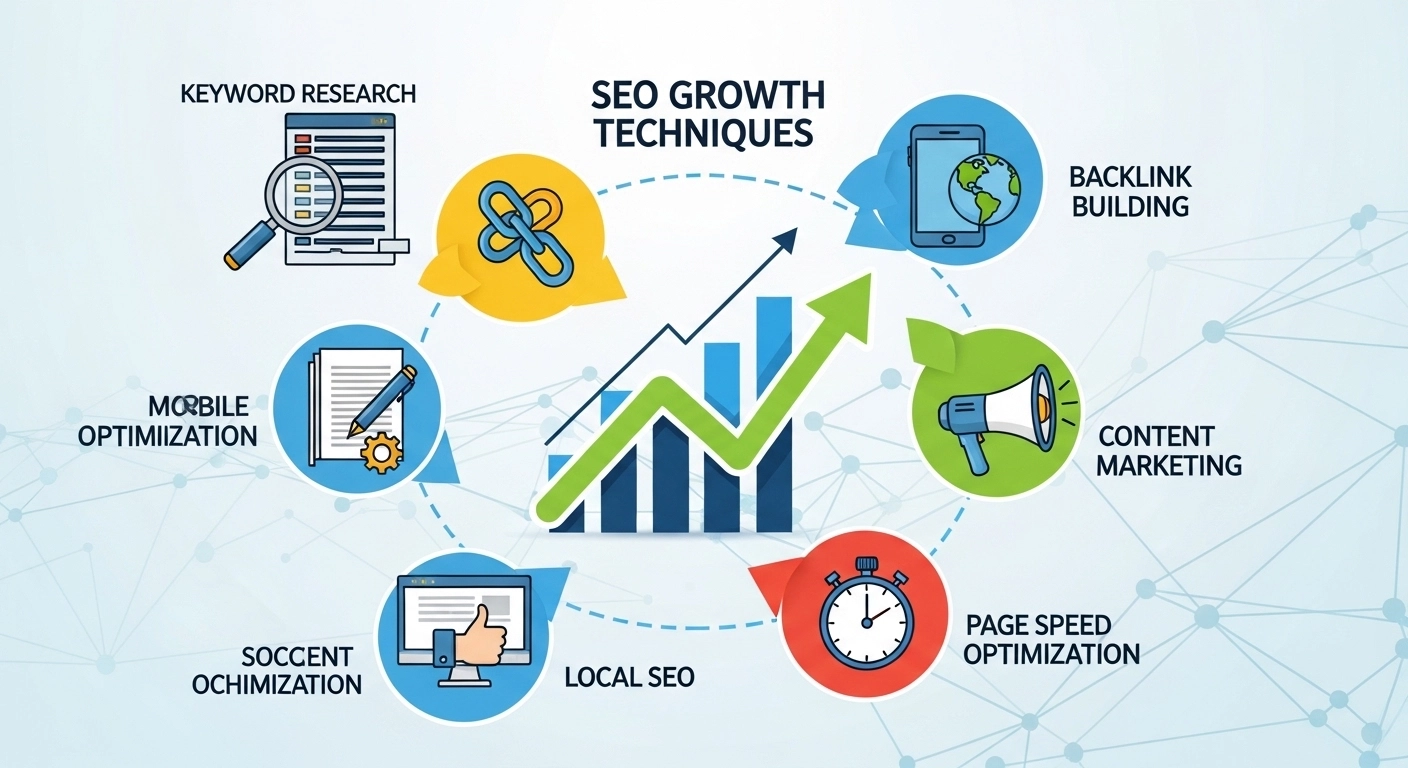
Search engine optimization is not just about ranking for a few keywords anymore. Modern SEO is about building a strong, trustworthy website that consistently attracts the right audience.
If you want sustainable organic traffic, you need smart SEO growth techniques that combine content, technical improvements, and authority building.
This guide explains proven strategies used by successful websites to grow their search traffic and stay competitive.
1. Focus on Search Intent First
Before creating any content, understand why people are searching for a keyword.
Search intent usually falls into four categories:
- Informational – Users want to learn something
- Navigational – Users are looking for a specific website
- Commercial – Users are comparing options
- Transactional – Users are ready to buy
If your content matches the user’s intent, Google is more likely to rank it higher.
Example:
If someone searches “best SEO tools for beginners”, they expect a list with comparisons—not a general article about SEO.
Tip:
Always analyze the top 10 Google results before writing content.
2. Build Topical Authority with Content Clusters
Google prefers websites that demonstrate expertise in a specific topic.
Instead of publishing random articles, create topic clusters.
A cluster usually includes:
- One pillar page covering a broad topic
- Multiple supporting articles targeting related keywords
- Internal links connecting all pages
Example cluster:
Pillar Page:
Complete Guide to SEO
Supporting Posts:
- Keyword research guide
- On-page SEO checklist
- Technical SEO basics
- Link building strategies
This structure helps search engines understand your expertise and improves rankings across the entire topic.
3. Target Long-Tail Keywords
Long-tail keywords are more specific phrases with lower competition.
They usually have:
- Lower keyword difficulty
- Higher conversion rates
- Easier ranking opportunities
Example:
Short keyword
SEO tips
Long-tail keyword
SEO tips for small business websites
A new website can grow faster by targeting long-tail keywords first, then moving to more competitive terms later.
4. Optimize On-Page SEO Properly
On-page optimization remains one of the most powerful SEO growth techniques.
Key elements to optimize:
Title tag
Include your main keyword naturally.
Headings (H1, H2, H3)
Structure your content clearly for both users and search engines.
Meta description
Write compelling summaries that increase click-through rate.
Images
Add alt text and compress images for faster loading.
Internal links
Connect related content to improve crawling and engagement.
Well-optimized pages help search engines understand your content faster and rank it more accurately.
5. Improve Website Speed and Technical SEO
Technical SEO ensures your website is easy for search engines to crawl and index.
Important factors include:
- Fast page loading speed
- Mobile-friendly design
- Secure HTTPS connection
- Clean URL structure
- XML sitemap submission
- Fixing broken links
A slow or poorly structured website can block your SEO growth even if your content is excellent.
6. Earn High-Quality Backlinks
Backlinks remain one of the strongest ranking signals.
However, quality matters far more than quantity.
Effective ways to earn backlinks include:
- Guest posting on relevant blogs
- Publishing original research or data
- Creating shareable guides and infographics
- Building relationships with industry websites
Example:
A detailed guide like “SEO Checklist for Beginners” often attracts natural backlinks because other websites reference it as a resource.
7. Update and Refresh Existing Content
Many websites ignore their old articles, but updating them can quickly boost rankings.
Content updates may include:
- Adding new statistics
- Improving readability
- Expanding sections with deeper insights
- Updating outdated screenshots or tools
- Adding new internal links
Google favors fresh, accurate content, especially in competitive niches.
8. Optimize for Featured Snippets
Featured snippets appear at the top of Google results and can significantly increase traffic.
To improve your chances:
- Answer questions clearly in short paragraphs
- Use bullet lists for steps
- Include tables when comparing information
- Add FAQ sections
Example snippet format:
Question: What is SEO?
Answer: SEO is the process of optimizing a website to improve its visibility in search engine results and attract organic traffic.
9. Use Data to Improve Your Strategy
SEO growth depends on continuous analysis.
Essential tools include:
- Google Search Console
- Google Analytics
- Keyword research tools
- Site audit tools
Track important metrics like:
- Organic traffic growth
- Keyword rankings
- Click-through rate
- Page engagement
These insights help you adjust your strategy and focus on what works.
Frequently Asked Questions
What are SEO growth techniques?
SEO growth techniques are strategies used to increase a website’s organic traffic, search rankings, and visibility. These include keyword research, content optimization, technical SEO improvements, and link building.
How long does SEO growth take?
SEO usually takes 3 to 6 months to show significant results. The timeline depends on competition, content quality, and the authority of the website.
Are backlinks still important for SEO?
Yes. High-quality backlinks from relevant websites remain one of the most important ranking factors for search engines.
What is the fastest way to grow SEO traffic?
The fastest approach is targeting low-competition long-tail keywords, publishing high-quality content, and optimizing on-page SEO properly.
Final Thoughts
SEO growth does not happen overnight. It requires consistent effort, strategic content creation, and technical optimization.
By focusing on search intent, content clusters, long-tail keywords, and high-quality backlinks, you can build a website that steadily grows in search rankings and attracts the right audience.
If you apply these SEO growth techniques consistently, your website can become a powerful source of long-term organic traffic.
Start today:
Audit your website, identify your best keyword opportunities, and publish your next optimized article. Your future search traffic depends on the actions you take now.
