
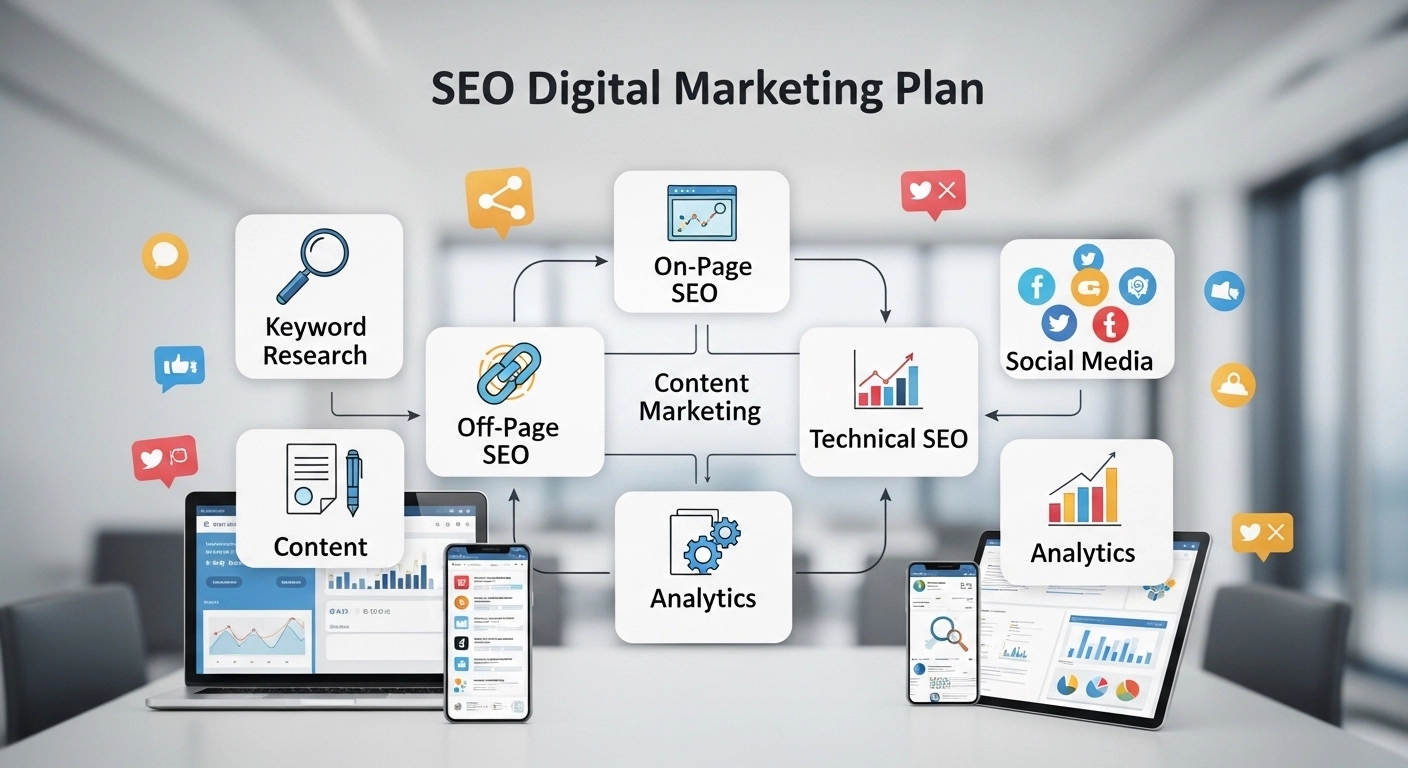
If you want your website to attract consistent traffic, generate leads, and build long-term visibility, you need more than random SEO tactics. You need a clear SEO digital marketing plan.
A well-structured plan connects search engine optimization, content marketing, technical improvements, and data tracking into one strategy. Instead of guessing what might work, you follow a roadmap that helps your website grow steadily in search results.
In this guide, you’ll learn how to create an SEO digital marketing plan step by step, with practical examples you can apply immediately.
What Is an SEO Digital Marketing Plan?
An SEO digital marketing plan is a structured strategy that helps a business increase visibility in search engines like Google. It outlines how you will attract, engage, and convert users through organic search.
A strong plan typically includes:
- Keyword research
- Content strategy
- On-page SEO optimization
- Technical SEO improvements
- Link-building strategies
- Performance tracking
Think of it as a blueprint for organic growth. Instead of publishing content randomly, every action supports a clear goal.
Why an SEO Plan Matters
Many websites fail to grow because they publish content without direction. A structured SEO plan helps you:
1. Target the Right Audience
SEO research shows what people are searching for and how they search.
2. Create Better Content
Instead of guessing topics, you produce content based on real demand.
3. Improve Search Rankings
Optimized pages are easier for search engines to understand and rank.
4. Build Long-Term Traffic
Unlike paid ads, SEO can generate traffic for months or years.
Step 1: Define Your SEO Goals
Before doing keyword research or writing content, clarify your goals.
Common SEO goals include:
- Increasing organic traffic
- Generating leads or sales
- Building brand awareness
- Growing blog readership
Example
If you run an online marketing blog, your goal might be:
Increase organic traffic by 40% within 6 months through SEO content.
Clear goals help measure success later.
Step 2: Perform Keyword Research
Keyword research reveals what your audience searches for online. These keywords guide your content strategy.
Focus on three types of keywords:
Primary Keywords
Main topics you want to rank for.
Example: SEO digital marketing plan
Long-Tail Keywords
More specific searches with less competition.
Example:
- how to create an SEO marketing plan
- SEO strategy for small business
Search Intent Keywords
Keywords that match user goals like learning or buying.
Tools often used for research include keyword planners, SEO tools, and search engine suggestions.
Step 3: Create a Content Strategy
Content is the core of any SEO plan. Your goal is to publish helpful, optimized content that answers real questions.
A strong content strategy includes:
- Blog posts
- Guides and tutorials
- Case studies
- Product pages
- Comparison articles
Example Content Plan
Week 1
Beginner SEO guide
Week 2
Keyword research tutorial
Week 3
On-page SEO checklist
Week 4
Technical SEO basics
Publishing consistently signals to search engines that your site is active and valuable.
Step 4: Optimize On-Page SEO
On-page SEO ensures every page is optimized for search engines and users.
Key elements include:
SEO Titles
Include the main keyword naturally.
Meta Descriptions
Encourage users to click in search results.
Headings (H1, H2, H3)
Structure your content for readability.
Internal Links
Connect related pages on your website.
Image Optimization
Use descriptive file names and alt text.
When done correctly, on-page SEO helps search engines understand the topic of your page.
Step 5: Improve Technical SEO
Technical SEO focuses on how your website performs behind the scenes.
Important technical factors include:
- Website speed
- Mobile friendliness
- Secure HTTPS connection
- Clean URL structure
- XML sitemap
- Proper indexing
For example, if your site loads slowly, users may leave before reading your content. Faster websites often rank better and provide a better user experience.
Step 6: Build Authority With Backlinks
Backlinks are links from other websites pointing to your content. Search engines view them as signals of trust and authority.
Effective link-building methods include:
- Guest blogging
- Creating shareable guides
- Digital PR outreach
- Resource link building
For example, if a respected marketing blog links to your article, it strengthens your credibility in search rankings.
Step 7: Track and Measure Performance
An SEO plan should always include tracking and analysis.
Key metrics to monitor include:
- Organic traffic
- Keyword rankings
- Click-through rate
- Bounce rate
- Conversions
Reviewing performance helps you identify what works and what needs improvement.
For example, if a blog post ranks on page two of search results, updating the content might push it onto page one.
Example of a Simple SEO Digital Marketing Plan
Here is a basic framework many businesses follow.
Month 1
Keyword research and website audit
Month 2
Publish SEO-optimized blog content
Month 3
Improve technical SEO and internal linking
Month 4
Start backlink outreach and guest posting
Month 5 and beyond
Update existing content and scale publishing
This structured approach creates steady growth over time.
Common SEO Mistakes to Avoid
Even a good plan can fail if common mistakes occur.
Avoid these issues:
Publishing low-quality content
Ignoring search intent
Keyword stuffing
Slow website speed
Lack of internal linking
Not updating old content
SEO success usually comes from consistent improvements rather than quick tricks.
Frequently Asked Questions
What is included in an SEO digital marketing plan?
A typical SEO plan includes keyword research, content creation, on-page optimization, technical improvements, backlink strategies, and performance tracking.
How long does SEO take to show results?
Most SEO strategies begin showing noticeable results within 3 to 6 months, depending on competition and content quality.
Is SEO better than paid advertising?
SEO and paid advertising serve different purposes. SEO builds long-term organic traffic, while ads provide immediate visibility.
Can small businesses benefit from SEO?
Yes. In fact, SEO is one of the most cost-effective marketing strategies for small businesses looking to grow online.
Conclusion
An effective SEO digital marketing plan is not just about ranking higher in search results. It’s about building a sustainable system that attracts the right audience, delivers valuable content, and converts visitors into customers.
By focusing on keyword research, strategic content, technical optimization, and performance tracking, you can create a long-term growth engine for your website.
The key is consistency. Small improvements made regularly can lead to major results over time.
Start building your SEO digital marketing plan today, publish valuable content consistently, and watch your organic traffic grow.
