
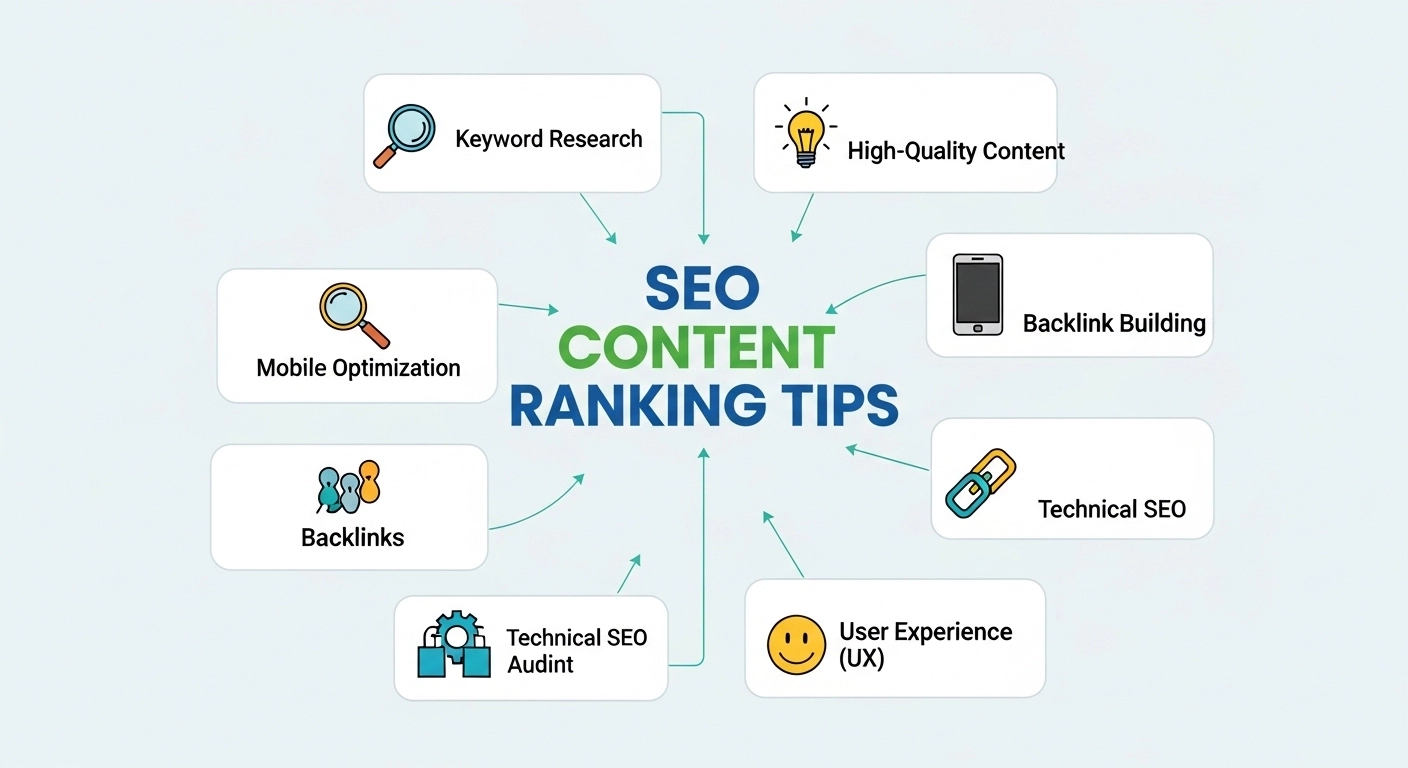
Ranking content on Google is no longer about simply adding a few keywords to an article. Modern SEO focuses on helpful content, strong structure, and clear search intent. If your content solves a problem better than competing pages, search engines reward it with higher rankings.
In this guide, you’ll learn practical SEO content ranking tips you can apply immediately to improve visibility, increase organic traffic, and create content that both readers and search engines trust.
1. Start With Search Intent, Not Just Keywords
Before writing any article, ask one simple question:
What does the searcher actually want?
Most searches fall into four categories:
- Informational: “What is SEO?”
- Navigational: “Ahrefs login”
- Commercial: “Best SEO tools”
- Transactional: “Buy SEO software”
If someone searches “SEO content ranking tips,” they want actionable advice they can apply immediately.
Example
Bad approach:
Write a generic article explaining what SEO means.
Better approach:
Provide step-by-step ranking strategies, examples, and actionable tips.
Matching search intent is one of the most important ranking factors today.
2. Do Smart Keyword Research
Good SEO content targets the right keywords, not just popular ones.
Look for:
- Primary keyword (main topic)
- Long-tail keywords
- Related semantic keywords
- Questions people ask
Example keyword cluster
Primary keyword:
SEO content ranking tips
Related keywords:
- how to rank SEO content
- SEO writing tips
- on-page SEO for content
- content optimization strategies
- improve Google rankings
These related phrases help search engines understand your topic more clearly.
3. Write a Strong SEO Title
Your title influences both rankings and clicks.
A good SEO title should:
- Include the main keyword
- Be clear and specific
- Promise value
- Stay under ~60 characters
Example Titles
Good:
- 10 SEO Content Ranking Tips That Actually Work
- SEO Content Optimization: 12 Tips to Rank Faster
- How to Rank Your Content on Google in 2026
Avoid vague titles like:
“SEO Guide for Content.”
Specific titles perform better.
4. Structure Your Content for Easy Reading
Search engines prefer content that is organized and easy to scan.
Use:
- Clear H2 and H3 headings
- Short paragraphs
- Bullet points
- Numbered lists
- Internal sections
Example Structure
H1: SEO Content Ranking Tips
H2: Keyword Research
H2: On-Page SEO Optimization
H2: Internal Linking Strategy
H2: Content Quality Signals
This structure helps both readers and search engines understand your page.
5. Optimize Your On-Page SEO
Once your content is written, optimize it properly.
Key on-page elements include:
Title tag
Include your main keyword near the beginning.
Meta description
Write a compelling summary that encourages clicks.
Headings
Use H2 and H3 headings with related keywords.
Image optimization
- Add descriptive filenames
- Use keyword-rich alt text
Internal links
Link to other relevant pages on your website.
Example
If you have a post about keyword research, link to it inside your SEO article. This strengthens your site structure.
6. Focus on High-Quality, Helpful Content
Google’s algorithm rewards helpful content that solves real problems.
Your content should:
- Answer the main question clearly
- Provide practical steps
- Include examples
- Cover the topic completely
Thin content rarely ranks.
Instead of writing 500 words, aim for complete coverage of the topic.
Quality always beats length.
7. Improve Content Depth With Semantic SEO
Search engines analyze topic relevance, not just keywords.
To strengthen your article, include related concepts like:
- search intent
- content optimization
- keyword clusters
- internal linking
- user experience
- content quality signals
This technique is called semantic SEO and helps Google understand the full context of your topic.
8. Use Internal Linking Strategically
Internal links help Google:
- Discover pages
- Understand relationships
- distribute ranking power
Example internal linking structure:
Pillar page: SEO Guide
Cluster pages:
- Keyword research guide
- On-page SEO tips
- Technical SEO checklist
- Content ranking strategies
This model is known as the pillar and cluster strategy.
It helps build topical authority, which improves rankings across your entire website.
9. Optimize for User Experience
User signals influence rankings more than many people realize.
Focus on:
- Fast page loading speed
- Mobile-friendly design
- Clean layout
- Easy navigation
- Readable font size
If visitors stay longer and interact with your content, search engines interpret that as valuable content.
10. Update Content Regularly
SEO content is not “publish once and forget.”
Updating content can significantly improve rankings.
Update:
- statistics
- examples
- screenshots
- links
- new strategies
Refreshing content tells search engines your page is still relevant and current.
Frequently Asked Questions
How long should SEO content be?
There is no perfect length, but most high-ranking articles are 1,200–2,500 words because they cover topics more thoroughly.
How many keywords should I use?
Focus on one main keyword and several related terms. Avoid keyword stuffing. Write naturally.
How long does it take for SEO content to rank?
New content can take a few weeks to several months to rank, depending on competition, site authority, and backlinks.
Is content still important for SEO?
Yes. Content remains one of the strongest ranking factors because search engines aim to deliver helpful answers to users.
Final Thoughts
Ranking content on Google requires more than inserting keywords into a blog post. The most successful SEO pages combine search intent, strong structure, helpful information, and smart optimization.
To recap the most important SEO content ranking tips:
- Understand search intent
- Target the right keywords
- Write clear, structured content
- Optimize on-page SEO elements
- Build internal links
- Focus on helpful, high-quality information
- Update content regularly
When you consistently apply these strategies, your content becomes easier for search engines to understand—and much more likely to rank.
