
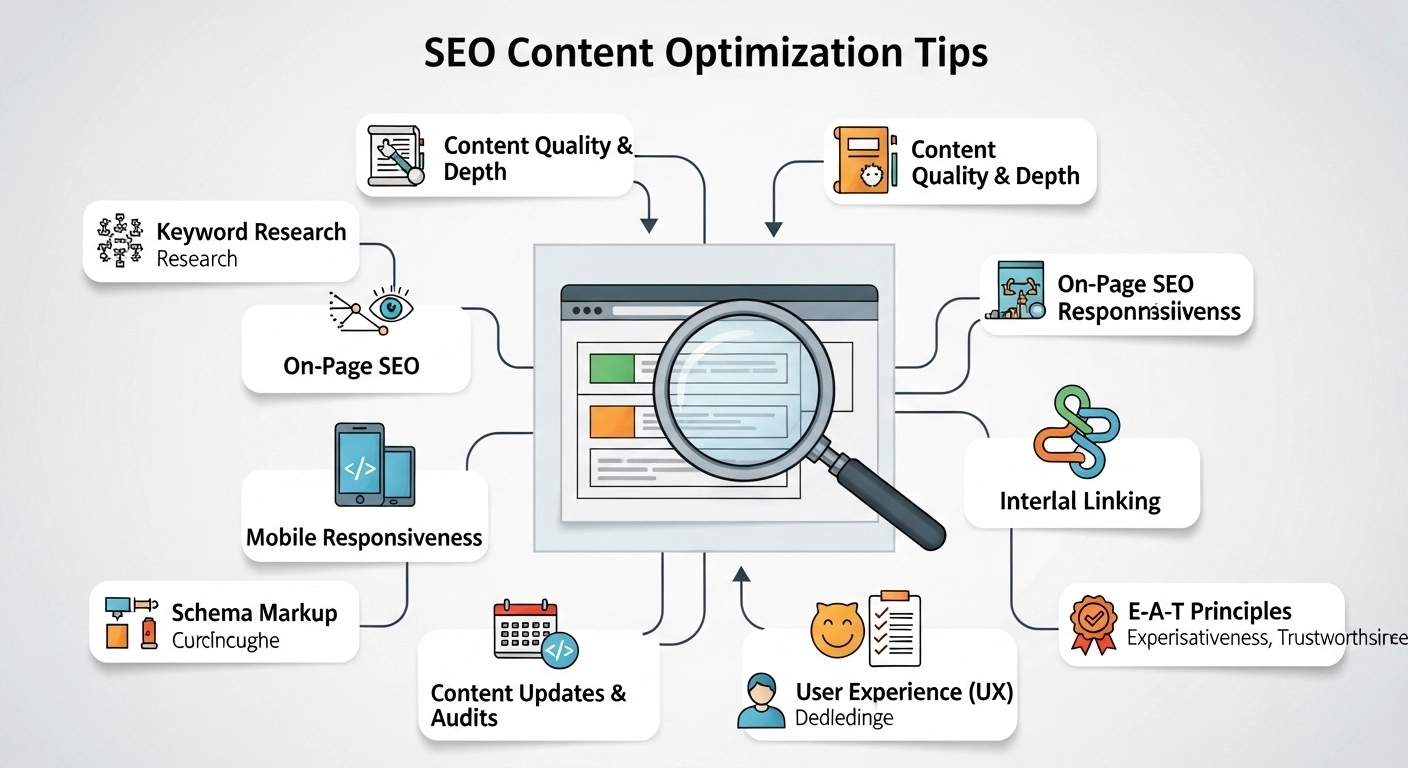
Creating content is easy. Creating content that ranks on Google and brings consistent traffic is the real challenge. That’s where SEO content optimization comes in.
SEO optimization is not just about adding keywords. It’s about creating useful, structured, and search-friendly content that both readers and search engines understand.
In this guide, you’ll learn practical SEO content optimization tips that can help your articles rank higher, attract more clicks, and keep readers engaged.
Understand Search Intent First
Before writing or optimizing any content, identify why people search for the keyword.
Search intent usually falls into four categories:
- Informational – users want to learn something
- Navigational – users want a specific website
- Commercial – users compare options
- Transactional – users want to buy
For example, the keyword “SEO content optimization tips” has informational intent. Readers want advice, strategies, and examples.
When your content matches search intent, Google is much more likely to rank it.
Do Smart Keyword Research
Good optimization starts with choosing the right keywords.
Instead of targeting only one keyword, include related search terms naturally in your content.
Examples related to this topic include:
- optimize content for SEO
- on-page SEO tips
- SEO writing techniques
- content optimization strategy
- improve blog SEO
These semantic keywords help search engines fully understand the topic.
A simple approach is to search your keyword on Google and check:
- “People Also Ask”
- Related searches
- Top ranking articles
These reveal what users want to know.
Write a Clear and Strong Title
Your title is the first ranking signal and the first thing users see.
A strong SEO title should:
- Include the main keyword
- Be clear and specific
- Promise value
Example:
Weak title:
Tips for SEO
Better title:
SEO Content Optimization Tips: How to Improve Rankings and Traffic
Good titles improve both SEO and click-through rate.
Optimize Your Headings Structure
Search engines use headings to understand your content structure.
Use a logical hierarchy:
- H1 – main title
- H2 – main sections
- H3 – subtopics
Example structure:
H1: SEO Content Optimization Tips
H2: Understand Search Intent
H2: Keyword Research
H2: Improve Content Structure
H3: Use Short Paragraphs
H3: Add Bullet Lists
A clean structure makes content easier to read and easier to rank.
Focus on Content Quality and Depth
Google rewards high-quality, helpful content.
To improve content quality:
Explain the topic clearly
Answer common questions
Provide examples
Include practical tips readers can apply
For example:
Instead of writing:
“Use internal links for SEO.”
Explain it:
“Link to other relevant articles on your website. For example, a blog post about SEO tools can link to a guide on keyword research.”
This adds value and context.
Improve Readability
Even the best information fails if the content is hard to read.
Improve readability by:
- Writing short paragraphs (2–4 lines)
- Using simple language
- Adding lists and subheadings
- Avoiding long complex sentences
Online readers usually scan content, so structure matters.
Optimize Meta Title and Meta Description
Your meta title and description influence search result clicks.
A good meta description should:
- Include the keyword naturally
- Be under about 160 characters
- Encourage users to click
Example:
Learn the best SEO content optimization tips to improve rankings, increase traffic, and create search-friendly content that Google loves.
Even though meta descriptions are not a direct ranking factor, they increase CTR, which can improve performance.
Use Internal Linking
Internal links help both users and search engines navigate your site.
Benefits include:
- Distributing page authority
- Improving crawlability
- Keeping visitors on your site longer
Example:
If you mention keyword research, link to another guide on your website that explains it in detail.
This creates a content ecosystem that strengthens SEO.
Optimize Images
Images improve engagement, but they should also be optimized for search.
Best practices include:
- Use descriptive file names
- Add alt text
- Compress images for faster loading
Example:
Instead of:
image1.jpg
Use:
seo-content-optimization-checklist.jpg
Search engines rely on these signals to understand images.
Improve Page Speed
Page speed is an important ranking factor.
Slow pages increase bounce rates and hurt SEO performance.
Simple ways to improve speed:
- Compress images
- Use a fast hosting provider
- Enable caching
- Minimize heavy scripts
Faster websites provide better user experience and better rankings.
Keep Content Fresh
Search engines prefer updated and relevant content.
Regularly update articles by:
- Adding new information
- Updating statistics
- Expanding sections
- Improving outdated advice
Even small updates can boost rankings significantly.
Simple SEO Content Optimization Checklist
Before publishing, review this checklist:
Keyword in the title
Keyword in the first paragraph
Clear headings structure
Short readable paragraphs
Internal links added
Images optimized
Meta description written
Content answers search intent
This simple process can dramatically improve SEO performance.
FAQ
What is SEO content optimization?
SEO content optimization is the process of improving content so that search engines can better understand it and rank it higher in search results.
How many keywords should I use in an article?
Focus on one main keyword and several related keywords. Use them naturally instead of repeating the same phrase too often.
Does content length matter for SEO?
Longer content often ranks better because it covers topics in depth. However, quality and usefulness are more important than word count.
How often should I update SEO content?
Review and update important articles every 6–12 months to keep them accurate and competitive.
Conclusion
SEO content optimization is about creating valuable content and presenting it in a way search engines can easily understand.
When you combine search intent, smart keyword use, clear structure, strong readability, and internal linking, your content has a much better chance of ranking higher.
Start applying these SEO content optimization tips to your blog posts today. Even small improvements can lead to higher rankings, more traffic, and better engagement.
Next step: Review one of your existing articles and optimize it using the strategies from this guide. Consistent optimization is what turns good content into top-ranking content.
