
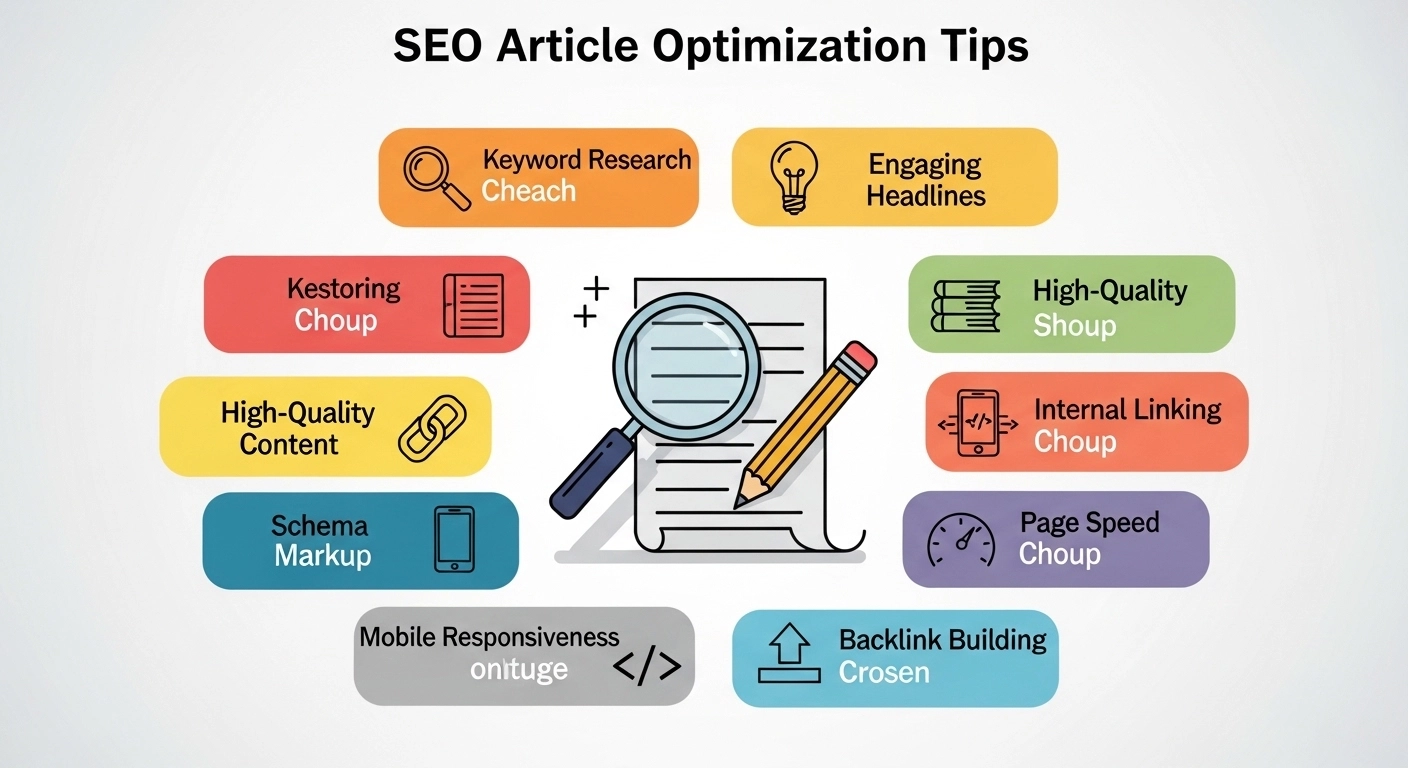
If you publish blog posts but they don’t show up on Google, the problem is usually article optimization. Writing good content is important, but optimizing it for search engines and readers is what helps it rank.
Search engines today focus on search intent, content quality, structure, and user experience. When your article satisfies these factors, it has a much better chance of appearing on the first page.
In this guide, you’ll learn practical SEO article optimization tips that bloggers, marketers, and website owners use to improve rankings and traffic.
Start With Search Intent
Before writing an article, understand what the reader actually wants.
Search intent generally falls into four categories:
- Informational – The user wants to learn something
- Navigational – The user wants a specific website
- Commercial – The user is comparing options
- Transactional – The user wants to buy or sign up
For example, someone searching “SEO article optimization tips” wants actionable advice they can apply immediately. That means your article should focus on clear strategies, examples, and steps.
Tip: Look at the top 10 results on Google to see what kind of content already ranks.
Do Smart Keyword Research
Keywords help search engines understand your content.
Instead of using only one keyword, include related terms and phrases naturally throughout the article.
Examples of related terms for this topic:
- SEO content optimization
- on-page SEO tips
- optimize blog posts for search
- SEO writing techniques
- content SEO strategy
Where to place keywords:
- Title
- URL
- Introduction
- Headings (H2, H3)
- Image alt text
- Meta description
The key is natural placement, not repetition.
Write a Strong SEO Title
Your title is one of the most important ranking factors.
A good SEO title should be:
- Clear
- Keyword focused
- Interesting for readers
Example:
Weak title:
Tips for Writing Articles
Optimized title:
SEO Article Optimization Tips: 10 Ways to Rank Higher on Google
Aim for 50–60 characters so the full title appears in search results.
Optimize Headings for Structure
Headings make your content easier to read and help search engines understand the topic.
Use a clear structure:
H1 – Article title
H2 – Main sections
H3 – Subtopics
Example structure:
H1: SEO Article Optimization Tips
H2: Start With Search Intent
H2: Keyword Research
H2: Optimize Headings
H2: Improve Readability
This structure improves both SEO and user experience.
Write for Readability
Even the best SEO strategy fails if the content is hard to read.
Improve readability by:
- Using short paragraphs
- Writing simple sentences
- Adding bullet points
- Using clear headings
Good SEO content should feel easy and natural, not complicated.
Example:
Hard to read:
A long paragraph filled with multiple complex ideas and very long sentences that make readers lose focus quickly.
Better:
Break ideas into short, focused paragraphs.
Optimize Internal Links
Internal links help search engines understand your website structure and distribute authority across pages.
For example:
If you have an article about keyword research, link to it from your SEO article.
Example anchor text:
“Learn more about advanced keyword research strategies.”
Benefits of internal linking:
- Improves crawling
- Keeps users on your site longer
- Strengthens topic authority
Use Images and Optimize Them
Images improve engagement and make content easier to understand.
But they also need SEO optimization.
Best practices:
- Use descriptive file names
- Add keyword-focused alt text
- Compress images for fast loading
Example:
File name:
seo-article-optimization-tips.png
Alt text:
SEO article optimization tips checklist
Improve Page Speed
Page speed is an important ranking factor.
Slow websites create a poor user experience and increase bounce rates.
Ways to improve speed:
- Compress images
- Use fast hosting
- Enable caching
- Reduce unnecessary plugins
A fast page helps both SEO and user satisfaction.
Optimize Meta Descriptions
Meta descriptions don’t directly affect rankings, but they improve click-through rates.
A good meta description should:
- Include the main keyword
- Explain the value of the article
- Stay under 160 characters
Example:
Learn the best SEO article optimization tips to improve rankings, increase traffic, and create content that performs better in Google search.
Update and Improve Content Regularly
SEO is not a one-time task.
Google prefers fresh and updated content.
Ways to update articles:
- Add new statistics
- Improve sections
- Add new internal links
- Expand helpful information
Updating old posts can often increase rankings quickly.
Simple SEO Optimization Checklist
Before publishing an article, confirm these points:
✔ Keyword in the title
✔ Clear headings (H1, H2, H3)
✔ Short paragraphs
✔ Internal links added
✔ Images optimized
✔ Meta description written
✔ Content answers search intent
Following this checklist can dramatically improve your results.
Frequently Asked Questions
What is SEO article optimization?
SEO article optimization is the process of improving a blog post so it ranks higher in search engines. This includes keyword placement, headings, internal links, readability, and technical improvements.
How many keywords should be used in an article?
Focus on one main keyword and several related keywords. Use them naturally instead of repeating the same phrase.
What is the ideal blog post length for SEO?
Most SEO experts recommend 1,000–2,000 words, but the best length depends on how completely you answer the topic.
Do internal links help SEO?
Yes. Internal links help search engines crawl your website and help users discover more content.
Conclusion
Writing content is easy. Optimizing it for search engines is the real skill.
When you focus on search intent, keyword research, structured headings, readability, internal linking, and page speed, your articles become much more competitive in search results.
The goal isn’t just ranking — it’s creating useful content that people actually want to read.
If you apply these SEO article optimization tips consistently, you’ll build stronger content, attract more organic traffic, and grow your website faster.
Next step:
Start by optimizing one of your existing blog posts today. Even small improvements can lead to noticeable ranking gains.
