
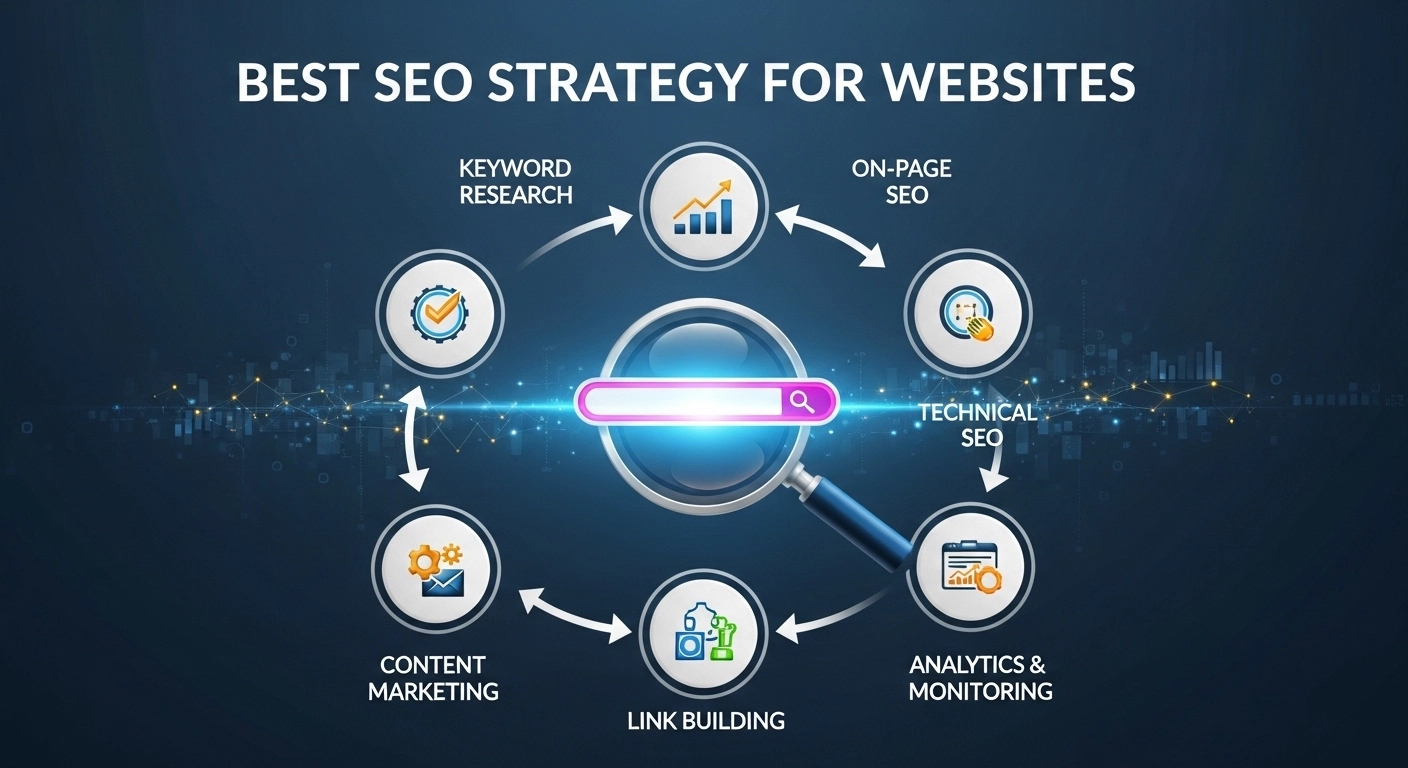
Search engine optimization keeps evolving. What worked a few years ago doesn’t always work today. In 2026, successful SEO is no longer just about keywords or backlinks—it’s about helping users find exactly what they need while proving your website is trustworthy and valuable.
If you want your website to rank higher on Google, attract consistent traffic, and grow your online presence, you need a modern SEO strategy. This guide explains the best SEO strategies for websites in 2026, using simple steps and real examples you can apply immediately.
Understand Search Intent First
One of the biggest SEO changes in recent years is search intent. Google now focuses on why a user is searching, not just what they type.
There are four main types of search intent:
- Informational – Users want information (example: “how SEO works”).
- Navigational – Users want a specific website (example: “Facebook login”).
- Commercial – Users are researching products or services.
- Transactional – Users are ready to buy.
Your content must match the intent behind the search.
Example
If someone searches “best SEO tools,” they expect:
- Comparisons
- Pros and cons
- Pricing information
If your article only explains what SEO tools are, it won’t rank well.
Focus on High-Quality Content
In 2026, content quality matters more than ever. Google’s systems evaluate whether your content is helpful, original, and written for real people.
Good SEO content should:
- Answer the user’s question clearly
- Provide practical value
- Include real examples
- Be easy to read
- Be updated regularly
Avoid writing content just to include keywords. Instead, create content that solves a real problem.
Example
Instead of writing:
“SEO tips SEO tips SEO tips for ranking website.”
Write something useful like:
“How to improve website ranking in 30 days using simple SEO techniques.”
Use the Pillar Page and Topic Cluster Strategy
Modern SEO relies on topical authority.
Instead of publishing random blog posts, successful websites organize content into topic clusters.
How it works
Create one pillar page that covers a large topic.
Example pillar page:
- “Complete Guide to SEO”
Then create supporting articles like:
- On-page SEO checklist
- Keyword research guide
- Technical SEO audit
- Link building strategies
- SEO tools for beginners
All these articles link back to the pillar page.
This structure helps search engines understand that your website is an authority on the topic.
Do Smart Keyword Research
Keyword research is still important, but the strategy has changed.
In 2026, focus on:
- Long-tail keywords
- Low competition keywords
- Question-based searches
- Semantic keywords
Good keyword tools include:
- Google Keyword Planner
- Ahrefs
- SEMrush
- Ubersuggest
Example
Instead of targeting:
“SEO”
Target:
“best SEO strategy for small business websites”
Long-tail keywords are easier to rank for and bring more targeted traffic.
Optimize On-Page SEO
On-page SEO helps search engines understand your content.
A simple formula for on-page optimization is:
Title + Headings + Keyword + Images + Internal Links
Important elements
Title Tag
Your title should include the main keyword and be attractive.
Example:
Best SEO Strategy for Websites in 2026 (Complete Guide)
Meta Description
Write a short description that encourages users to click.
Headings
Use clear headings like:
H1 – Main title
H2 – Main sections
H3 – Subtopics
Images
Add optimized images with descriptive alt text.
Internal Links
Link to other pages on your website to improve navigation and SEO.
Improve Website Speed and Technical SEO
A fast, technically healthy website ranks better.
Important technical factors include:
- Fast loading speed
- Mobile-friendly design
- Secure HTTPS connection
- Clean website structure
- XML sitemap
- Proper indexing
You can check your site using tools like:
- Google PageSpeed Insights
- Google Search Console
- Screaming Frog
Even a 1-second speed improvement can significantly improve rankings and conversions.
Build High-Quality Backlinks
Backlinks are still one of the strongest ranking signals.
However, quality matters much more than quantity.
Focus on earning links from:
- Authority blogs
- Industry websites
- News publications
- Relevant directories
Good link-building strategies include:
- Guest posting
- Publishing original research
- Creating helpful guides
- Digital PR
Avoid spammy backlinks. Low-quality links can harm your rankings.
Optimize for User Experience (UX)
Google increasingly measures how users interact with your website.
Important UX signals include:
- Time on page
- Bounce rate
- Page navigation
- Mobile usability
Improve user experience by:
- Using short paragraphs
- Adding visuals
- Making content easy to scan
- Using clear headings
- Avoiding intrusive ads
A better user experience usually leads to higher rankings and better engagement.
Use Structured Data (Schema Markup)
Structured data helps search engines understand your content better.
It can also create rich results in Google search, such as:
- FAQ results
- Star ratings
- Product details
- Event information
Common schema types include:
- Article schema
- FAQ schema
- Product schema
- Review schema
Adding structured data can improve click-through rates and visibility.
Update Content Regularly
SEO is not a one-time task.
Search engines prefer fresh and updated content.
Review your content every few months and update:
- Statistics
- Examples
- Screenshots
- Links
- New SEO strategies
Even small updates can improve rankings.
Frequently Asked Questions
What is the most important SEO factor in 2026?
The most important factor is high-quality, helpful content that matches search intent. Google prioritizes content that truly solves users’ problems.
How long does SEO take to work?
SEO usually takes 3 to 6 months to show strong results. Competitive industries may take longer.
Is SEO still worth it in 2026?
Yes. SEO remains one of the best long-term digital marketing strategies because it generates free, consistent traffic from search engines.
Do backlinks still matter for SEO?
Yes. Backlinks are still a major ranking factor, but quality links from trusted websites are far more important than large numbers of low-quality links.
Conclusion
SEO in 2026 is about strategy, quality, and user experience. Websites that focus on helpful content, strong technical foundations, and genuine authority will continue to rank higher in search engines.
To recap, the best SEO strategy includes:
- Understanding search intent
- Creating high-quality content
- Using topic clusters and pillar pages
- Performing smart keyword research
- Optimizing on-page SEO
- Improving technical performance
- Building quality backlinks
- Enhancing user experience
When these elements work together, your website becomes more visible, trustworthy, and valuable to both users and search engines.
