
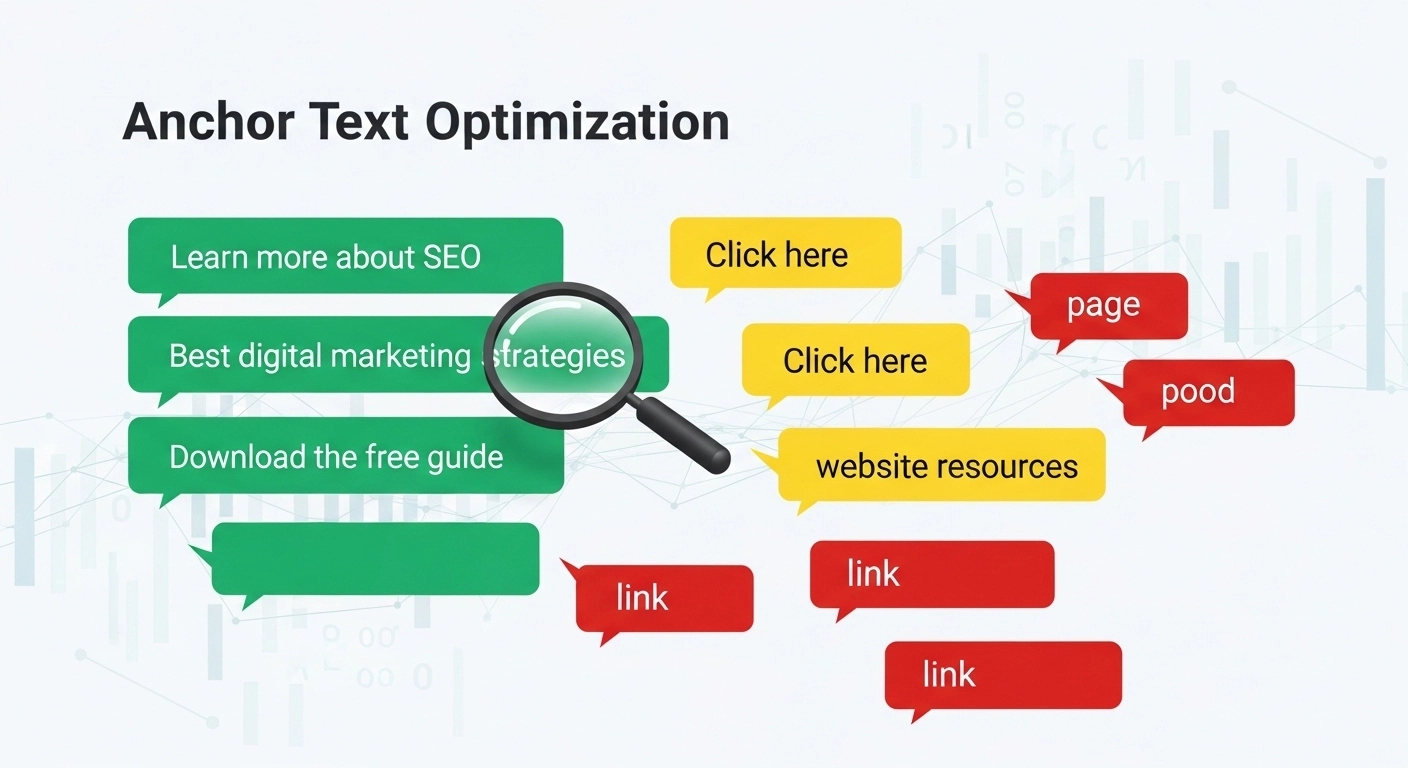
Anchor text optimization is one of the most overlooked yet powerful parts of SEO. When done correctly, it helps search engines understand your content, improves rankings, and builds stronger site authority. When done poorly, it can confuse crawlers or even trigger ranking issues.
In this guide, you’ll learn what anchor text optimization is, why it matters, and how to use it strategically in real SEO workflows.
What Is Anchor Text Optimization?
Anchor text is the clickable text in a hyperlink. For example:
Learn more about SEO strategies
Here, “SEO strategies” is the anchor text.
Anchor text optimization is the process of improving and diversifying these clickable texts so that search engines clearly understand:
- What the linked page is about
- How pages on your site are connected
- Whether your links look natural or manipulative
Search engines like Google use anchor text as a ranking signal, but it must be used carefully.
Why Anchor Text Matters for SEO
Well-optimized anchor text helps search engines interpret context. It acts like a “label” for the page you’re linking to.
Here’s what it impacts:
1. Better Keyword Understanding
If multiple pages link to your article using relevant anchor text, it reinforces topical relevance.
2. Improved Internal Linking Structure
Strong internal linking improves crawling and indexing, especially for large sites like those built on WordPress.
3. Higher Rankings for Target Pages
Search engines use anchor text signals to determine what a page should rank for.
4. Stronger User Experience
Good anchor text helps readers understand where a link will take them before clicking.
Types of Anchor Text (With Examples)
Using only one type of anchor text is a mistake. A healthy SEO profile uses variation.
1. Exact Match
Uses the exact target keyword.
Example:
👉 “anchor text optimization guide”
2. Partial Match
Includes the keyword with extra words.
Example:
👉 “guide to anchor text optimization strategies”
3. Branded Anchor
Uses your brand name.
Example:
👉 “Visit OpenAI SEO blog”
4. Generic Anchor
Non-descriptive text.
Example:
👉 “click here” or “read more”
5. Naked URL
Just the link itself.
Example:
👉 https://example.com
6. LSI / Contextual Anchor
Related semantic terms.
Example:
👉 “internal linking best practices”
Best Practices for Anchor Text Optimization
1. Keep It Natural
Write for humans first. If it sounds forced, it probably is.
Bad:
best SEO anchor text optimization anchor text optimization guide SEO
Good:
Learn how to improve your SEO with smarter anchor text strategies.
2. Avoid Over-Optimization
Repeating exact match anchors too often can look manipulative to search engines.
Instead, mix:
- branded anchors
- partial matches
- natural phrases
3. Use Descriptive Text
Always tell users what they are clicking.
Instead of:
click here
Use:
explore our SEO keyword research guide
4. Optimize Internal Links First
Your internal links are fully under your control. Use them wisely to strengthen important pages.
For example, a blog post about SEO tools should link to your keyword research article using contextual anchors.
5. Audit Your Anchor Profile
Tools like Google Search Console can help you analyze link performance and identify issues in your linking structure.
6. Match Anchor Text With Content Intent
Your anchor text should match the page topic closely—but not exactly every time.
If the page is about “SEO audits,” use variations like:
- SEO website analysis
- technical SEO review
- site audit checklist
Common Anchor Text Mistakes
Avoid these if you want stable rankings:
- Using the same exact keyword everywhere
- Overusing “money keywords” in backlinks
- Ignoring internal linking structure
- Using irrelevant or misleading anchors
- Stuffing keywords unnaturally into links
Anchor Text Optimization Strategy (Simple Workflow)
Here’s a practical way to do it:
- Identify your target page
- Choose 3–5 keyword variations
- Mix anchor types (exact, partial, branded)
- Add internal links across related content
- Monitor performance regularly
- Adjust based on ranking movement
This keeps your SEO profile natural and scalable.
FAQ: Anchor Text Optimization
What is anchor text in SEO?
Anchor text is the clickable text in a hyperlink that tells users and search engines what the linked page is about.
Is exact match anchor text still important?
Yes, but it should be used in moderation. Overuse can lead to penalties or ranking drops.
How many anchor text variations should I use?
Ideally, use 3–6 variations per target keyword for natural link diversity.
Does internal linking help SEO?
Yes. Internal links help distribute authority and improve indexing across your site.
Can anchor text hurt SEO?
Yes, if it is over-optimized, spammy, or irrelevant to the linked content.
Conclusion
Anchor text optimization is not about stuffing keywords—it’s about creating clarity, context, and connection between your pages. When you use it correctly, it strengthens your internal linking structure, improves search visibility, and helps search engines better understand your content.
Focus on natural variation, user-friendly wording, and strategic linking, and you’ll see long-term SEO benefits.
