
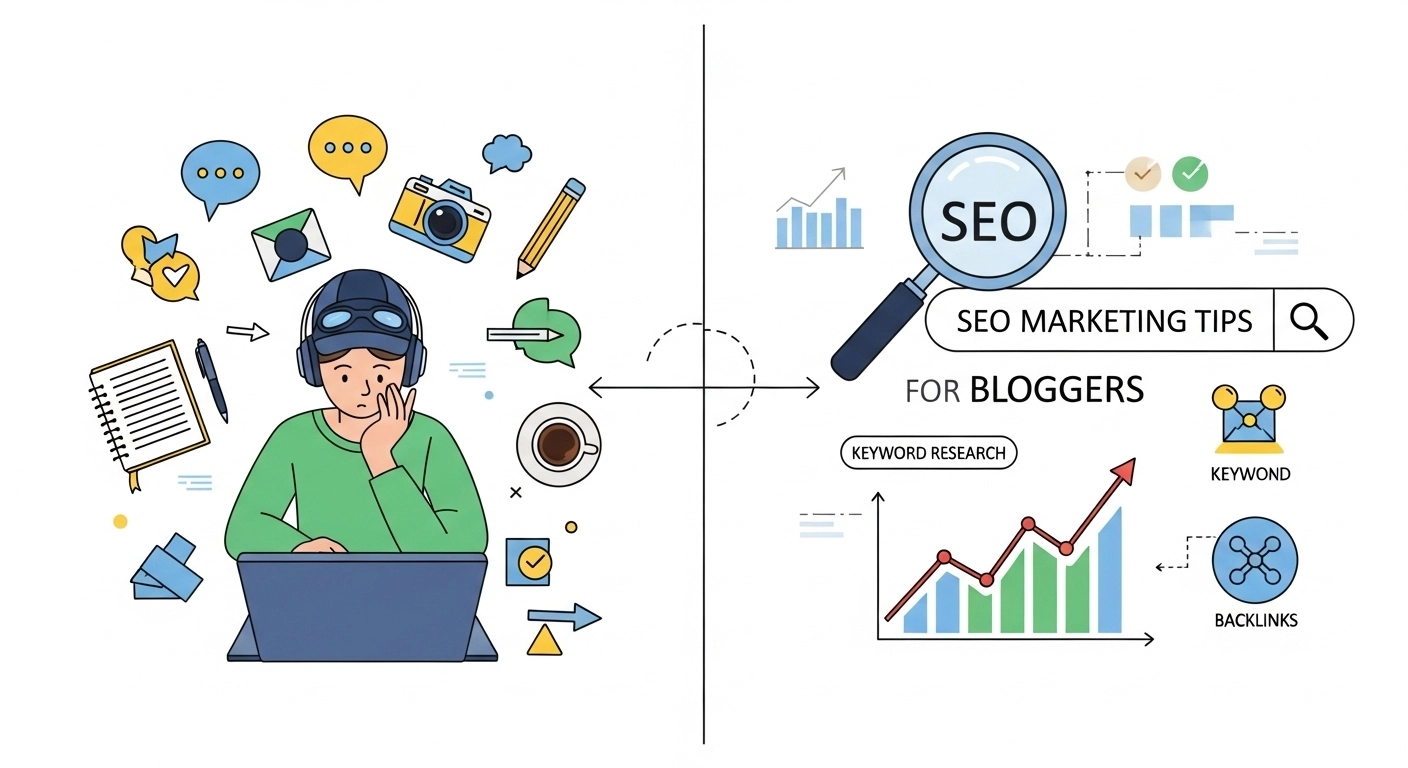
Blogging is no longer just about writing great content. If you want your blog to attract readers consistently, you need a smart SEO marketing strategy. SEO (Search Engine Optimization) helps your content get discovered on Google and other search engines, turning casual visitors into loyal readers. In this guide, we’ll cover everything you need to know about SEO marketing for bloggers, with practical tips you can implement today.
Why SEO Marketing Matters for Bloggers
Imagine spending hours writing an insightful blog post, only for it to get lost in the vast sea of the internet. That’s where SEO comes in. By optimizing your content, you increase your chances of:
- Higher search rankings – Appear on the first page of Google for relevant queries.
- More organic traffic – Attract readers who are already searching for topics you cover.
- Long-term growth – SEO efforts compound over time, bringing steady visitors without ongoing ad spend.
- Better engagement – Users who find your blog through search are more likely to stay and explore.
SEO marketing isn’t just a technical task—it’s a key growth tool for bloggers serious about building an audience.
Key Components of SEO Marketing for Bloggers
1. Keyword Research: Target the Right Audience
Start by finding the terms your audience is searching for. Use tools like Google Keyword Planner, Ahrefs, or SEMrush to identify:
- High-intent keywords – Phrases indicating readers want solutions, like “best blogging tools for beginners.”
- Long-tail keywords – Specific queries like “how to grow traffic on a food blog” that are easier to rank for.
Integrate these keywords naturally in your titles, headings, and content. Avoid forcing them—Google favors readability and context.
2. On-Page SEO: Optimize Every Post
On-page SEO ensures search engines understand your content. Focus on:
- Title tags and meta descriptions – Craft compelling, keyword-rich titles and summaries.
- Header tags (H1, H2, H3) – Organize content with clear headings for both readers and SEO.
- Internal linking – Connect new posts to older relevant articles to boost site structure.
- Alt text for images – Describe images to improve accessibility and image search traffic.
Example: A travel blogger writing about Paris could use H2s like “Best Cafés in Paris” and link internally to a post about “Top 10 Paris Attractions.”
3. Content Strategy: Quality Over Quantity
Search engines reward helpful, original content. To boost your SEO:
- Focus on problem-solving content that answers readers’ questions.
- Update old posts regularly to keep them relevant.
- Mix text, images, videos, and infographics to improve engagement.
Remember, a 2,000-word post that fully answers a question often ranks higher than multiple shorter, scattered posts.
4. Technical SEO: Make Your Blog Search-Friendly
Technical SEO ensures your blog runs smoothly and is easy for search engines to crawl:
- Fast page speed – Compress images, use caching, and optimize hosting.
- Mobile-friendly design – Over half of web traffic comes from mobile devices.
- Clean URLs – Use simple, readable URLs like /seo-tips-for-bloggers instead of /post?id=123.
- Sitemap and robots.txt – Guide search engines to your content efficiently.
A technically sound blog keeps both readers and Google happy.
5. Off-Page SEO: Build Authority and Backlinks
Backlinks signal credibility to search engines. For bloggers:
- Collaborate with other bloggers for guest posts.
- Share your content on social media to attract natural links.
- Join niche forums or communities to provide value and link back to your posts.
High-quality backlinks are more important than sheer quantity—they show search engines your blog is trustworthy.
SEO Marketing Tools for Bloggers
Some essential tools to streamline your SEO efforts:
- Google Analytics & Search Console – Track traffic, keywords, and indexing issues.
- Ahrefs / SEMrush – Conduct keyword research and competitor analysis.
- Yoast SEO / Rank Math – Optimize WordPress blogs for on-page SEO.
- Canva / Grammarly – Improve visuals and writing quality.
These tools make SEO manageable even for solo bloggers.
Common SEO Marketing Mistakes Bloggers Make
- Ignoring keyword research – Writing without understanding what readers search for.
- Overstuffing keywords – Makes content unnatural and can hurt rankings.
- Neglecting mobile optimization – Mobile-unfriendly blogs lose traffic fast.
- Not updating old posts – Outdated content loses relevance and rankings.
Avoiding these pitfalls helps your blog grow sustainably.
FAQ: SEO Marketing for Bloggers
Q: How long does it take for SEO to show results?
A: Typically, 3–6 months for noticeable organic traffic growth, depending on competition and consistency.
Q: Can I do SEO without technical knowledge?
A: Yes. Plugins like Yoast SEO or Rank Math make it beginner-friendly, but basic technical understanding helps.
Q: Should I focus on keywords or content quality?
A: Both. Keywords help you get found, while quality keeps readers engaged and returning.
Conclusion: Start Optimizing Today
SEO marketing is essential for bloggers who want more visibility, traffic, and growth. By combining keyword research, on-page optimization, technical best practices, and quality content, you can build a blog that consistently attracts readers and ranks well in search engines.
Take action today: Audit your blog, optimize your top posts, and create a content plan around high-value keywords. Your future audience is searching—make sure they find you.
