
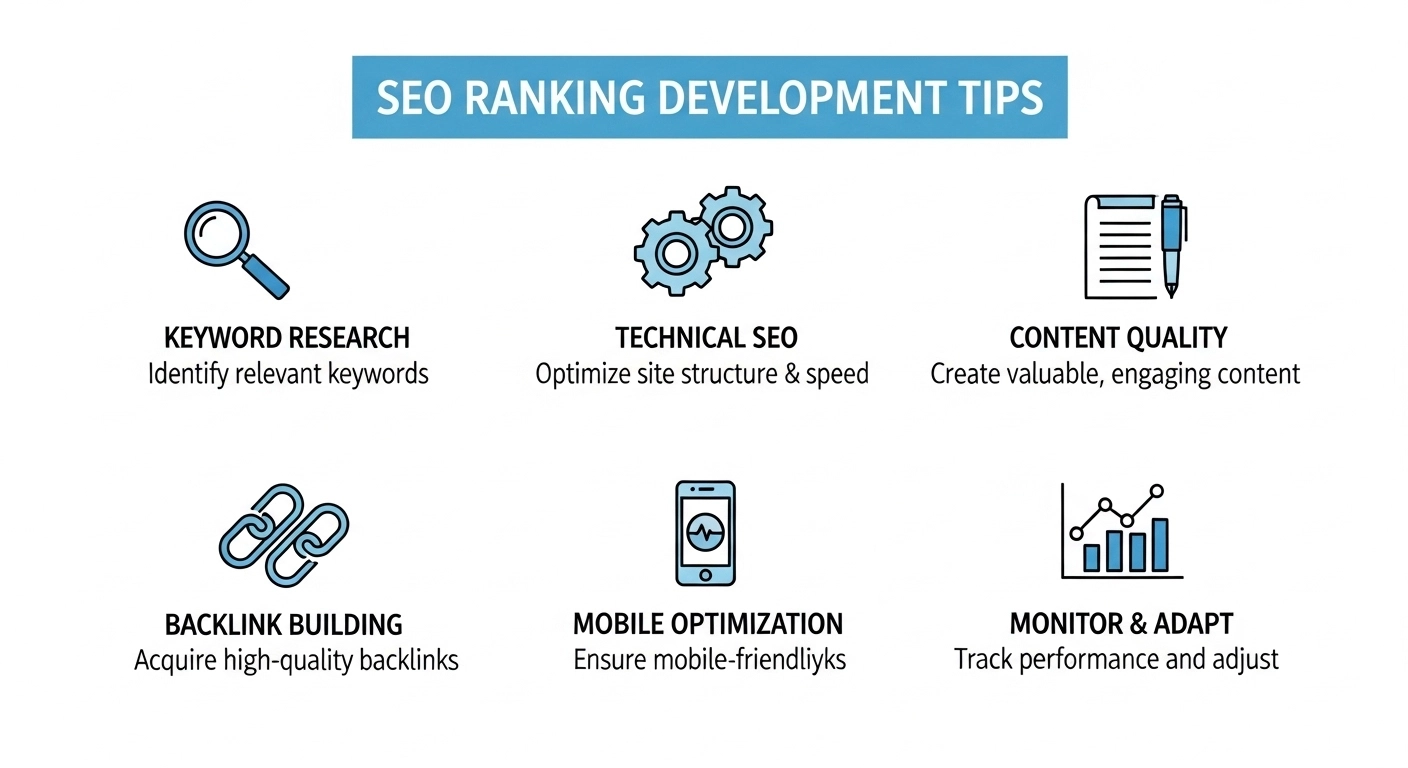
Getting your website to rank higher on Google isn’t about tricks or shortcuts. Modern SEO is about building a strong, helpful, and technically sound website that search engines and users both trust.
If you’re trying to improve your search visibility, the right SEO ranking development strategy can steadily move your pages toward the top of search results.
In this guide, you’ll learn practical SEO tips that help websites grow rankings, increase organic traffic, and build long-term authority.
1. Start With Smart Keyword Research
Every successful SEO strategy begins with understanding what people are searching for.
Instead of targeting broad, highly competitive keywords, focus on long-tail keywords that match user intent.
For example:
Bad keyword:
- “SEO”
Better keyword:
- “SEO ranking development tips for beginners”
Tools you can use for keyword research include:
- Google Keyword Planner
- Ahrefs
- SEMrush
- Ubersuggest
Look for keywords that have:
- Moderate search volume
- Low to medium competition
- Clear search intent
These keywords are easier to rank for and often convert better.
2. Match Search Intent Perfectly
Google’s main goal is to deliver the most relevant result for every search.
Before writing content, search your keyword on Google and analyze the top 10 results. Ask yourself:
- Are the results guides, lists, or tutorials?
- Are they short posts or long in-depth articles?
- What questions are they answering?
For example, if the top results are how-to guides, your content should also be a detailed step-by-step guide.
Matching search intent is one of the most important SEO ranking factors today.
3. Write High-Quality, Helpful Content
Content quality is the foundation of SEO ranking development.
Google favors content that is:
- Clear and easy to read
- Helpful and informative
- Well structured
- Updated regularly
Instead of writing for search engines, write for people first.
Use this simple structure:
- Clear headline
- Introduction
- Subheadings (H2, H3)
- Short paragraphs
- Bullet points
- Examples
- Conclusion
The easier your content is to read, the longer users stay on your page — which improves SEO signals.
4. Optimize On-Page SEO Elements
Even great content needs proper optimization.
Important on-page SEO elements include:
Title Tag
Your title should include the main keyword and encourage clicks.
Example:
10 SEO Ranking Development Tips That Actually Work
Meta Description
A good meta description improves click-through rate.
Example:
“Learn proven SEO ranking development tips to improve Google rankings, increase traffic, and grow your website authority.”
Headings
Use clear heading structure:
- H1 → main title
- H2 → main sections
- H3 → subpoints
Keyword Placement
Use your keyword naturally in:
- Title
- First paragraph
- Headings
- Image alt text
- URL
Avoid overusing it.
5. Improve Website Speed and Performance
Page speed is a confirmed ranking factor.
Slow websites increase bounce rate and hurt SEO performance.
Ways to improve speed:
- Compress images
- Use a fast hosting provider
- Enable caching
- Use a CDN
- Minimize unnecessary plugins
A fast website improves both user experience and search rankings.
6. Build Strong Internal Links
Internal linking helps Google understand your website structure.
It also keeps visitors on your site longer.
Example:
If you have a post about keyword research, link it to your article about SEO ranking tips.
Good internal linking:
- Distributes page authority
- Helps search engines crawl pages
- Improves user navigation
Aim to link 2–5 relevant pages within each article.
7. Earn High-Quality Backlinks
Backlinks remain one of the most powerful ranking signals.
A backlink is when another website links to your content.
Ways to build backlinks:
- Guest blogging
- Creating shareable guides
- Publishing original research
- Building relationships with bloggers
- Listing your site in relevant directories
Focus on quality over quantity. A few strong backlinks from trusted websites can significantly improve rankings.
8. Optimize for Mobile Users
Most searches now happen on mobile devices.
Google uses mobile-first indexing, which means it evaluates your mobile site first.
Make sure your website:
- Loads quickly on mobile
- Uses responsive design
- Has readable text
- Has easy navigation
A mobile-friendly site improves both SEO and user experience.
9. Update Content Regularly
Fresh content helps maintain rankings.
Update older posts by:
- Adding new information
- Updating statistics
- Improving headings
- Adding images
- Expanding sections
Sometimes a simple content update can boost rankings dramatically.
10. Track and Improve Your SEO Performance
SEO is not a one-time task. You must track results and improve continuously.
Important tools include:
- Google Search Console
- Google Analytics
- Ahrefs
- SEMrush
Monitor key metrics such as:
- Organic traffic
- Keyword rankings
- Click-through rate
- Bounce rate
Use the data to refine your strategy.
Frequently Asked Questions (FAQ)
How long does SEO take to improve rankings?
SEO usually takes 3 to 6 months to show noticeable results, depending on competition, content quality, and backlinks.
What is the most important SEO ranking factor?
High-quality content that matches search intent is one of the most important factors for ranking success.
Are backlinks still important for SEO?
Yes. Backlinks remain a major ranking signal because they show that other websites trust your content.
How many keywords should I target in one article?
Focus on one main keyword and several related keywords or phrases that support the topic.
Conclusion
Improving search rankings isn’t about quick tricks — it’s about building a strong SEO foundation.
When you combine smart keyword research, high-quality content, strong on-page optimization, fast website performance, and authoritative backlinks, your rankings can steadily grow over time.
The most successful websites focus on helping users first and optimizing for search engines second.
