
If your website isn’t getting consistent traffic from search engines, the problem usually isn’t a lack of content — it’s a lack of SEO traffic optimization strategy.
Publishing articles alone doesn’t guarantee visitors. You need a system that helps search engines understand your content and shows users that your page is the best answer to their query.
This guide breaks down a simple, practical SEO traffic strategy you can start using today to increase organic traffic and improve rankings.
What Is an SEO Traffic Optimization Strategy?
An SEO traffic optimization strategy is the process of improving your website so it ranks higher in search engines and attracts more targeted visitors.
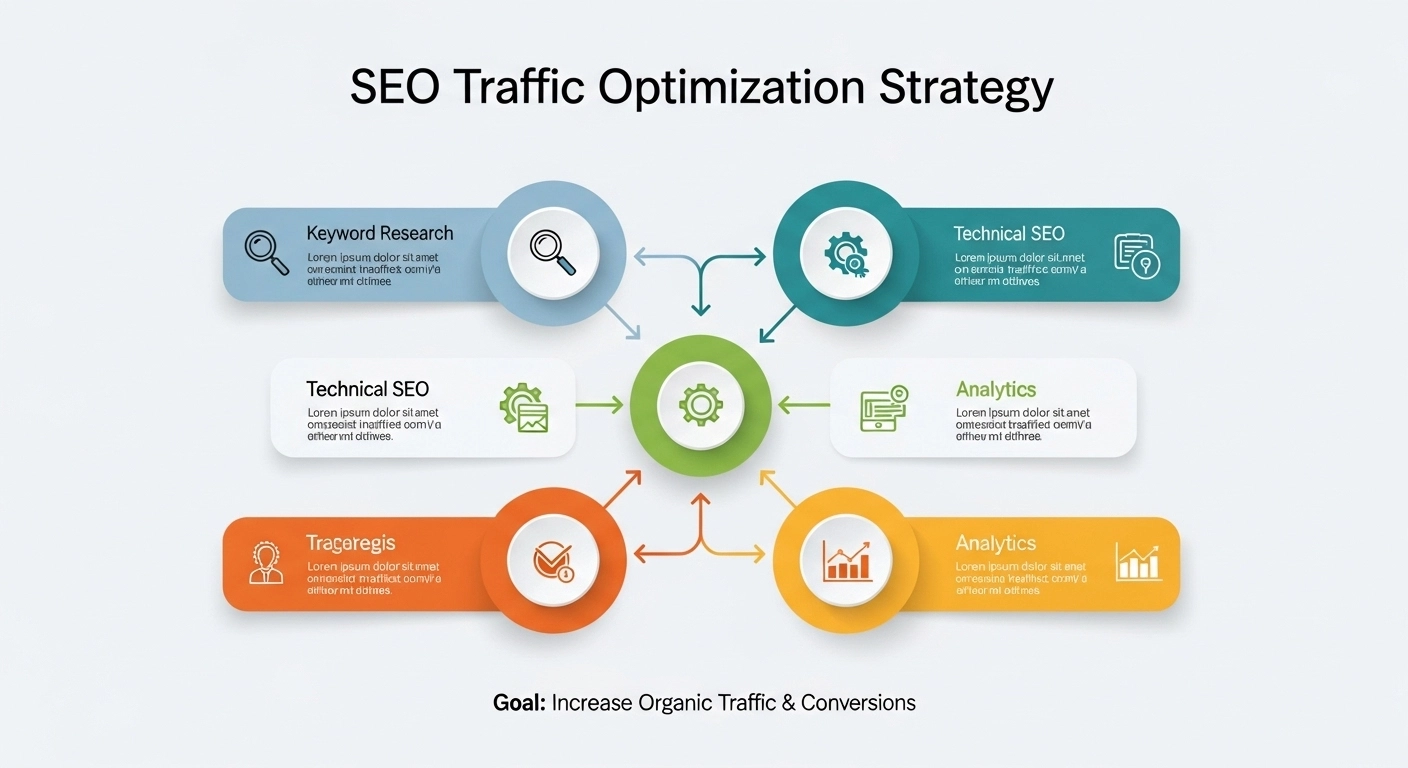
It involves optimizing multiple elements such as:
- Keyword research
- Content quality
- On-page SEO
- Technical SEO
- Internal linking
- User experience
When these elements work together, your website becomes easier for search engines to understand and easier for users to trust.
The result: more visibility, more clicks, and more organic traffic.
Step 1: Start With Smart Keyword Research
Every SEO strategy begins with understanding what people are searching for.
Instead of targeting broad, competitive keywords, focus on long-tail keywords that match real search intent.
Example:
Broad keyword
SEO strategy
Better keyword
SEO traffic optimization strategy for beginners
Long-tail keywords are valuable because they:
- Have lower competition
- Target a specific audience
- Convert better
Use tools like Google Autocomplete, keyword research platforms, and competitor analysis to discover opportunities.
Step 2: Create Content That Matches Search Intent
Search engines prioritize content that perfectly answers the user’s question.
There are four common search intents:
Informational – learning something
Example: how SEO works
Navigational – looking for a specific site
Example: Google Search Console login
Commercial – researching before buying
Example: best SEO tools
Transactional – ready to take action
Example: buy SEO services
Your content must match the intent behind the keyword.
For example, someone searching “SEO traffic optimization strategy” wants a clear guide with actionable steps — not just a definition.
Step 3: Optimize Your On-Page SEO
On-page SEO helps search engines understand your content.
Key elements to optimize include:
Title Tag
Your title should include the target keyword and encourage clicks.
Example:
SEO Traffic Optimization Strategy: 7 Proven Ways to Increase Organic Traffic
Headings (H1, H2, H3)
Break content into clear sections so readers and search engines can easily scan the page.
Meta Description
Write a compelling summary that improves click-through rate.
Image Optimization
Use descriptive file names and alt text that relate to your topic.
Internal Links
Link to related pages on your website to improve structure and help search engines discover more content.
Step 4: Build Topical Authority
Search engines favor websites that cover a topic in depth.
Instead of publishing random articles, organize your content into topic clusters.
Example cluster:
Pillar page
SEO Traffic Optimization Strategy
Supporting content
Keyword research guide
On-page SEO checklist
Technical SEO basics
Internal linking strategy
SEO tools for beginners
Link these articles together. This signals to search engines that your website is an authority on the topic.
Step 5: Improve Technical SEO
Even great content struggles if your site has technical problems.
Focus on these essential areas:
Site speed
Fast websites rank better and keep visitors engaged.
Mobile optimization
Most searches now happen on mobile devices.
Secure connection (HTTPS)
Security is a ranking factor.
Clean site structure
Use simple URLs and organized navigation.
XML sitemap and indexing
Submit your site to Google Search Console to help search engines crawl your pages.
Step 6: Optimize for Click-Through Rate (CTR)
Ranking on page one is important, but getting the click is even more important.
Ways to improve CTR include:
- Writing compelling titles
- Using numbers or power words
- Adding structured headings
- Creating strong meta descriptions
Example title:
Bad: SEO Strategy Guide
Better: 9 SEO Traffic Optimization Strategies That Actually Work
Small improvements in CTR can significantly increase traffic without improving rankings.
Step 7: Update and Refresh Existing Content
Many websites lose traffic because content becomes outdated.
Refreshing older pages can quickly improve rankings.
Update:
- Statistics
- Examples
- Internal links
- Images
- Content structure
Adding new sections or answering new questions can make your page more valuable than competing content.
Common SEO Traffic Mistakes to Avoid
Even good websites lose traffic because of these mistakes:
Publishing content without keyword research
Ignoring search intent
Poor internal linking
Slow website speed
Thin or low-quality articles
Not updating old content
Avoiding these issues alone can significantly improve your organic traffic.
FAQ: SEO Traffic Optimization Strategy
How long does it take to see SEO traffic results?
SEO usually takes 3 to 6 months to show noticeable improvements. However, optimized pages with low competition keywords can rank faster.
What is the fastest way to increase SEO traffic?
The fastest methods include updating existing content, targeting long-tail keywords, and improving click-through rates.
Is content still important for SEO?
Yes. High-quality content remains one of the strongest ranking factors because it helps search engines understand your expertise and value.
Do backlinks still matter for SEO?
Backlinks are still important. They act as signals of trust and authority, helping search engines determine which pages deserve higher rankings.
Final Thoughts
A successful SEO traffic optimization strategy is not about tricks or shortcuts. It’s about creating helpful content, structuring your website correctly, and continuously improving the user experience.
When you combine:
- smart keyword research
- high-quality content
- strong on-page SEO
- solid technical foundations
- internal linking
your website becomes easier to discover, easier to trust, and far more likely to rank.
SEO is a long-term investment — but when done right, it becomes one of the most reliable sources of online traffic.
Start optimizing today, and your future traffic will thank you.
