
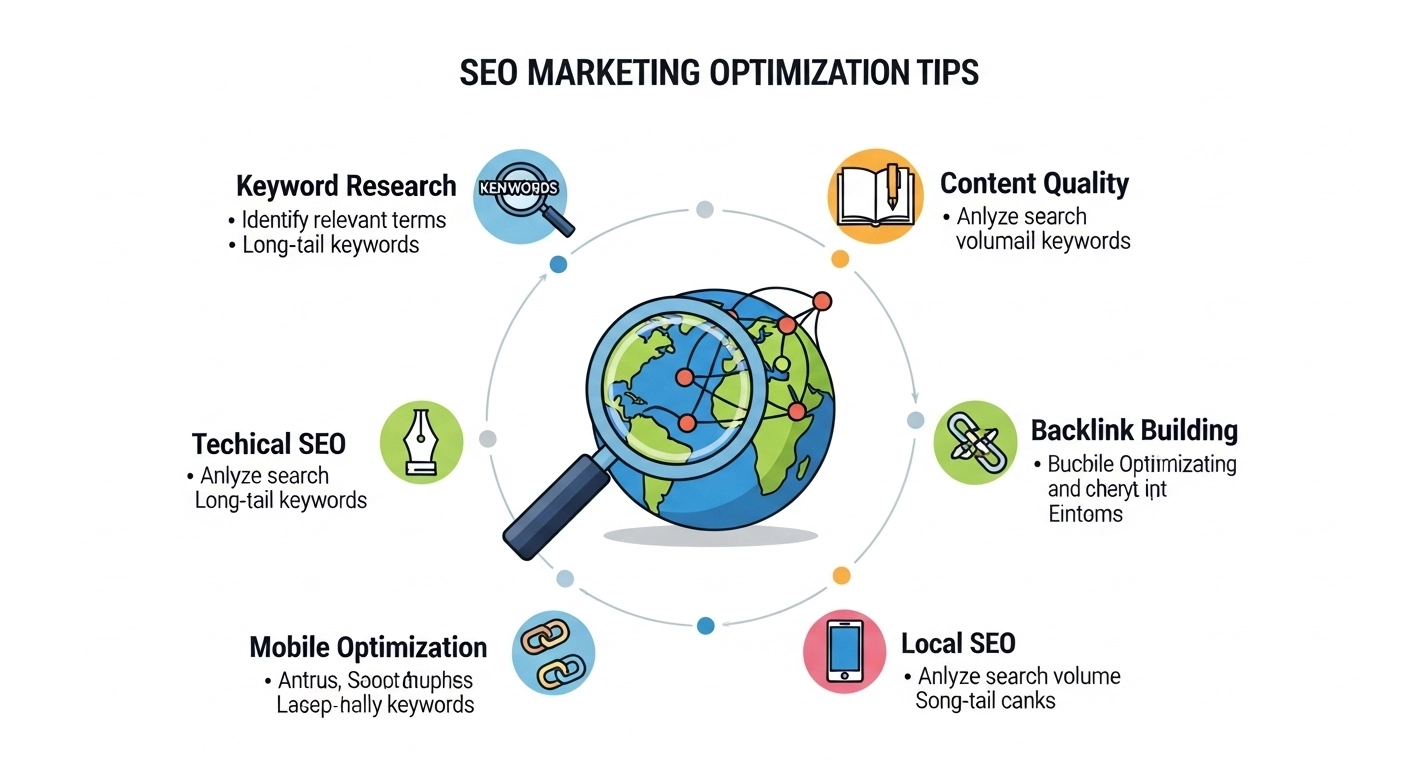
Search engines have become smarter, competition is tougher, and users expect fast, helpful content. If your website isn’t optimized correctly, even great content can remain invisible.
The good news: effective SEO marketing optimization doesn’t require complicated tricks. It requires the right strategy, consistent improvements, and a focus on user experience.
This guide explains the most effective SEO marketing optimization tips you can apply today to improve rankings, increase organic traffic, and grow your online presence.
1. Start With Smart Keyword Research
Every successful SEO strategy begins with understanding what people are searching for.
Keyword research helps you discover the phrases your target audience types into search engines. Instead of guessing topics, you create content based on real demand.
Focus on:
- Long-tail keywords (more specific search phrases)
- Search intent
- Keywords with moderate competition
For example:
Instead of targeting “SEO”, try targeting phrases like:
- SEO marketing optimization tips
- SEO tips for beginners
- how to improve SEO ranking
These keywords are easier to rank for and attract users who are ready to learn or take action.
Helpful tools include:
- Google Keyword Planner
- Ahrefs
- SEMrush
- Ubersuggest
2. Understand Search Intent Before Writing
Search intent means why someone is searching.
Google ranks pages that best match the user’s goal.
The four main types of search intent are:
Informational:
Users want knowledge. Example: “what is SEO”
Navigational:
Users want a specific website. Example: “Facebook login”
Commercial:
Users are comparing options. Example: “best SEO tools”
Transactional:
Users are ready to buy. Example: “buy SEO course online”
For a keyword like SEO marketing optimization tips, the intent is informational. Readers want practical advice they can apply immediately.
So your content should teach, explain, and guide—not sell aggressively.
3. Optimize Your Title Tag and Meta Description
Your title tag is one of the strongest ranking factors and also affects click-through rate.
A good SEO title should:
- Include the main keyword
- Be clear and compelling
- Stay under 60 characters
Example:
Good Title:
SEO Marketing Optimization Tips: 12 Ways to Improve Rankings
Meta descriptions don’t directly impact rankings, but they help convince users to click.
Example:
Learn practical SEO marketing optimization tips to improve search rankings, boost traffic, and grow your website with proven strategies.
4. Structure Content With Clear Headings
Search engines scan your content structure to understand the topic.
Use headings like this:
- H1: Main title
- H2: Main sections
- H3: Subsections
Example structure:
H1: SEO Marketing Optimization Tips
H2: Keyword Research Strategy
H2: On-Page SEO Optimization
H2: Technical SEO Improvements
This structure improves readability for both users and search engines.
5. Improve On-Page SEO Elements
On-page SEO refers to optimizations made directly on your web pages.
Important elements include:
Keyword placement
Include your main keyword in:
- Title
- First paragraph
- Headings
- URL
- Image alt text
But keep the language natural.
Content quality
Google prioritizes helpful, original, and complete content.
Aim to:
- Answer the user’s question fully
- Provide examples
- Add actionable advice
Internal linking
Link to related pages on your website. This helps search engines discover content and keeps users engaged longer.
Example:
If you write about keyword research, link to another article explaining on-page SEO techniques.
6. Focus on Website Speed and Performance
A slow website frustrates users and hurts rankings.
Improving speed can significantly boost SEO performance.
Key improvements include:
- Compress images
- Use fast hosting
- Enable browser caching
- Minimize CSS and JavaScript
Tools to test speed:
- Google PageSpeed Insights
- GTmetrix
- Lighthouse
Fast websites create better user experiences and reduce bounce rates.
7. Optimize for Mobile Users
More than half of all searches happen on mobile devices.
Google uses mobile-first indexing, meaning it primarily evaluates the mobile version of your site.
Your website should:
- Be responsive on all devices
- Have readable text without zooming
- Load quickly on mobile networks
- Use simple navigation
A mobile-friendly site improves rankings and user satisfaction.
8. Build High-Quality Backlinks
Backlinks remain one of the most powerful ranking signals.
When other websites link to your content, search engines treat it as a vote of confidence.
Effective ways to earn backlinks include:
- Writing guest posts
- Creating useful guides and resources
- Publishing original research or data
- Outreach to relevant blogs
Quality matters more than quantity. A few strong links from reputable sites can outperform dozens of weak links.
9. Update and Refresh Old Content
SEO is not a one-time task.
Updating existing content can significantly improve rankings.
You can:
- Add new statistics
- Improve readability
- Expand sections with more details
- Update outdated information
- Add new internal links
Search engines favor fresh and accurate content.
10. Track Performance With Analytics
You cannot improve what you do not measure.
Use analytics tools to track how your SEO efforts perform.
Important metrics include:
- Organic traffic
- Keyword rankings
- Click-through rate
- Bounce rate
- Conversion rate
Useful tools:
- Google Analytics
- Google Search Console
- Ahrefs
- SEMrush
These insights help you refine your strategy and focus on what works.
Frequently Asked Questions
What is SEO marketing optimization?
SEO marketing optimization is the process of improving a website so it ranks higher in search engine results and attracts more organic traffic.
It includes keyword research, on-page optimization, technical improvements, content creation, and link building.
How long does SEO take to show results?
SEO usually takes 3 to 6 months to show noticeable improvements. Competitive industries may take longer.
Consistent optimization and high-quality content accelerate results.
Is SEO better than paid advertising?
SEO and paid advertising serve different purposes.
SEO builds long-term organic traffic, while paid ads generate immediate visibility. Many successful businesses use both strategies together.
What is the most important SEO factor?
There is no single factor, but the most important elements include:
- High-quality content
- Relevant keywords
- Strong backlinks
- Good user experience
- Fast website performance
Conclusion
SEO marketing optimization is not about shortcuts or tricks. It’s about creating valuable content, improving user experience, and helping search engines understand your website.
By focusing on keyword research, search intent, on-page optimization, technical performance, and backlinks, you can steadily increase rankings and organic traffic.
SEO success comes from consistency. Small improvements made regularly can produce powerful long-term results.
