
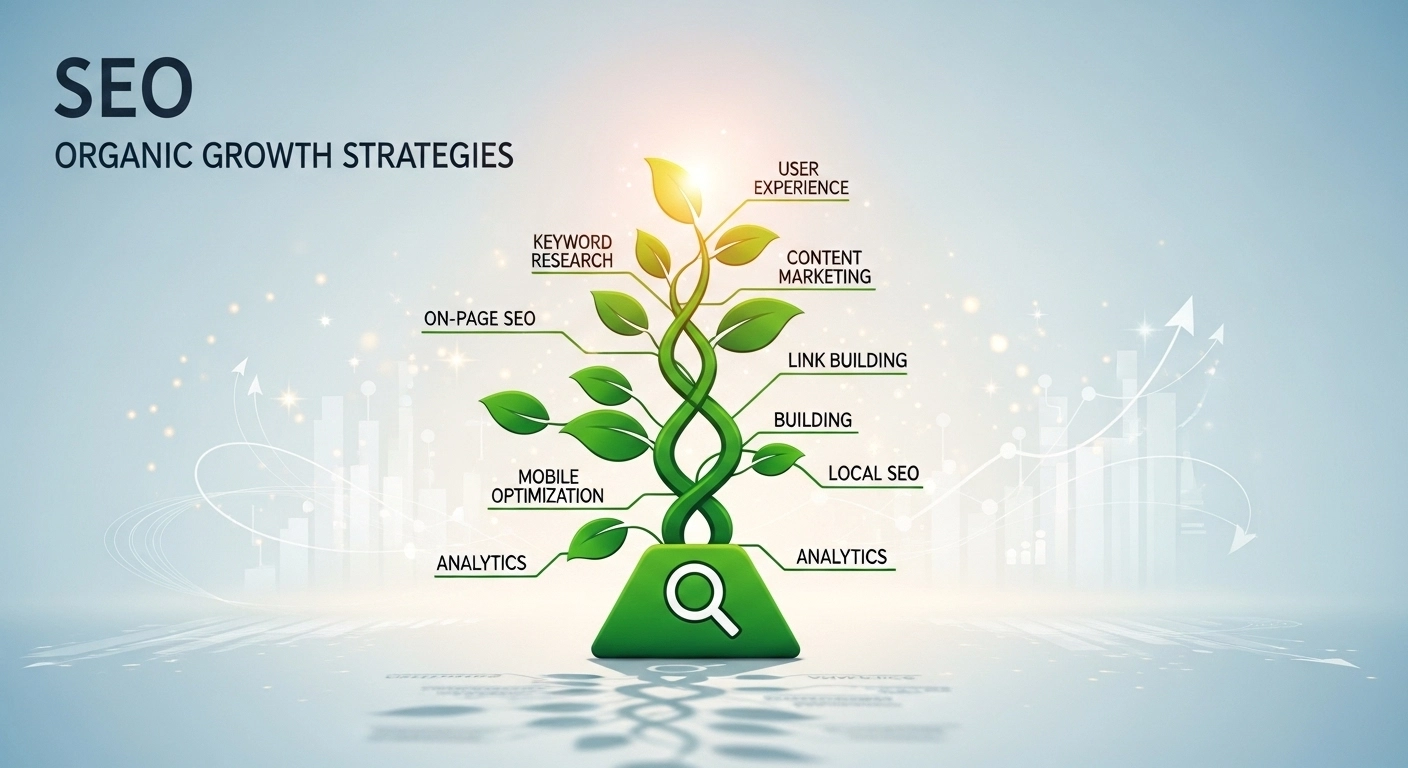
Organic traffic is the most valuable traffic a website can get. It comes from people who actively search for information, products, or solutions on search engines like Google. When your website ranks naturally in search results, you can attract visitors consistently without paying for ads.
This guide explains the most effective SEO organic growth strategies you can use to increase search visibility, drive qualified traffic, and build long-term online authority.
What Is Organic Growth in SEO?
Organic growth in SEO means increasing your website traffic through unpaid search engine results. Instead of relying on ads, you improve your website so search engines trust it and show it to users searching for related topics.
Organic growth usually comes from:
- High-quality content
- Proper keyword targeting
- Strong website structure
- Technical optimization
- Authority and backlinks
Unlike paid ads, organic traffic builds long-term value. A well-optimized page can bring visitors for months or even years.
1. Focus on Smart Keyword Research
Keyword research is the foundation of every SEO strategy. If you target the wrong keywords, even great content will struggle to rank.
Start by identifying search terms your audience is already using.
Examples of good keyword types include:
- Long-tail keywords (e.g., best SEO tools for beginners)
- Question keywords (how to improve organic traffic)
- Problem-based searches (why my website is not ranking)
Practical Example
Instead of targeting a broad keyword like:
SEO
Try targeting:
SEO organic growth strategies for small businesses
Long-tail keywords usually have lower competition and higher conversion rates.
2. Create High-Quality, Helpful Content
Search engines reward content that truly helps users. Your content should answer questions, solve problems, and provide real value.
Good SEO content should:
- Fully answer the search query
- Be easy to read
- Include examples
- Provide actionable advice
- Be structured with headings
Content Formats That Drive Organic Growth
- Step-by-step guides
- Tutorials
- Case studies
- List articles
- Comparison posts
- Industry insights
The goal is simple: be the best result for the search query.
3. Build Topical Authority
Topical authority means covering a subject deeply instead of writing random posts.
A powerful strategy is the pillar and cluster model.
Example Structure
Pillar Page
SEO Strategies Guide
Supporting Content
- Keyword research guide
- On-page SEO checklist
- Technical SEO basics
- Link building strategies
- Content optimization tips
Internal links connect these articles, helping search engines understand your expertise.
Websites that build topical authority often rank faster and higher.
4. Optimize On-Page SEO Elements
On-page SEO helps search engines understand what your content is about.
Important elements include:
SEO Title
Your title should include the main keyword and attract clicks.
Example:
10 SEO Organic Growth Strategies That Actually Work
Headings
Use clear headings like H2 and H3 to organize your content.
Meta Description
Write a short summary encouraging users to click your result.
Internal Links
Link to other helpful pages on your website.
Image Optimization
Use descriptive file names and alt text.
These small improvements can significantly improve rankings.
5. Improve Website Speed and Technical SEO
A slow or poorly structured website hurts organic growth.
Key technical SEO factors include:
- Fast page loading speed
- Mobile-friendly design
- Secure HTTPS connection
- Clean URL structure
- Proper indexing
- XML sitemap
Google prioritizes websites that offer a smooth user experience.
Tools like website speed testers and search console reports can help identify issues quickly.
6. Earn High-Quality Backlinks
Backlinks remain one of the strongest ranking signals in SEO. When reputable websites link to your content, search engines see it as a vote of confidence.
Effective link-building strategies include:
- Guest posting on industry blogs
- Creating shareable research or guides
- Publishing original data
- Digital PR outreach
- Resource page links
Focus on quality over quantity. A few strong backlinks can outperform dozens of weak ones.
7. Optimize for Search Intent
Search intent means understanding what the user actually wants when typing a query.
There are four main types:
- Informational (learn something)
- Navigational (find a specific website)
- Commercial (research products)
- Transactional (ready to buy)
Your content should match the intent behind the keyword.
For example:
Search: SEO organic growth strategies
User intent: Learn practical SEO methods
So the content should focus on actionable strategies, not sales pages.
8. Update and Refresh Old Content
Many websites forget about old posts. But updating content is one of the easiest ways to boost organic traffic.
Content updates may include:
- Adding new statistics
- Improving readability
- Expanding sections
- Updating outdated advice
- Adding internal links
Often, refreshing an existing article can bring quick ranking improvements.
9. Track SEO Performance and Adjust
Organic growth requires continuous monitoring.
Key metrics to track:
- Organic traffic
- Keyword rankings
- Click-through rate
- Bounce rate
- Backlinks
- Page performance
Use analytics and search performance tools to identify what is working and what needs improvement.
SEO is not a one-time task. It is an ongoing optimization process.
Frequently Asked Questions
How long does SEO organic growth take?
Most websites start seeing noticeable results within 3 to 6 months, but competitive industries may take longer. Consistency and quality are key.
What is the most important factor for organic SEO growth?
High-quality content that matches search intent is usually the biggest factor. However, strong technical SEO and backlinks also play important roles.
Are backlinks still important for SEO?
Yes. Backlinks remain one of the strongest ranking signals because they show search engines that your content is trustworthy and valuable.
Can small websites compete with big websites in SEO?
Yes. By targeting long-tail keywords and niche topics, smaller websites can rank faster and attract targeted traffic.
Conclusion
Organic growth through SEO is one of the most powerful ways to build long-term website success. Instead of paying for every visitor, you create valuable content and optimize your website so search engines consistently send you qualified traffic.
The most effective SEO organic growth strategies include smart keyword research, helpful content creation, strong on-page optimization, technical improvements, and earning quality backlinks. When these elements work together, your website becomes a trusted resource in search results.
SEO success does not happen overnight, but with the right strategy and consistent effort, the results can be massive and long-lasting.
Start implementing these strategies today, and your organic traffic will grow steadily over time.
