
Search engines are the main way people discover websites today. Whether you run a blog, an online store, or a business website, showing up in search results can bring consistent traffic and new customers.
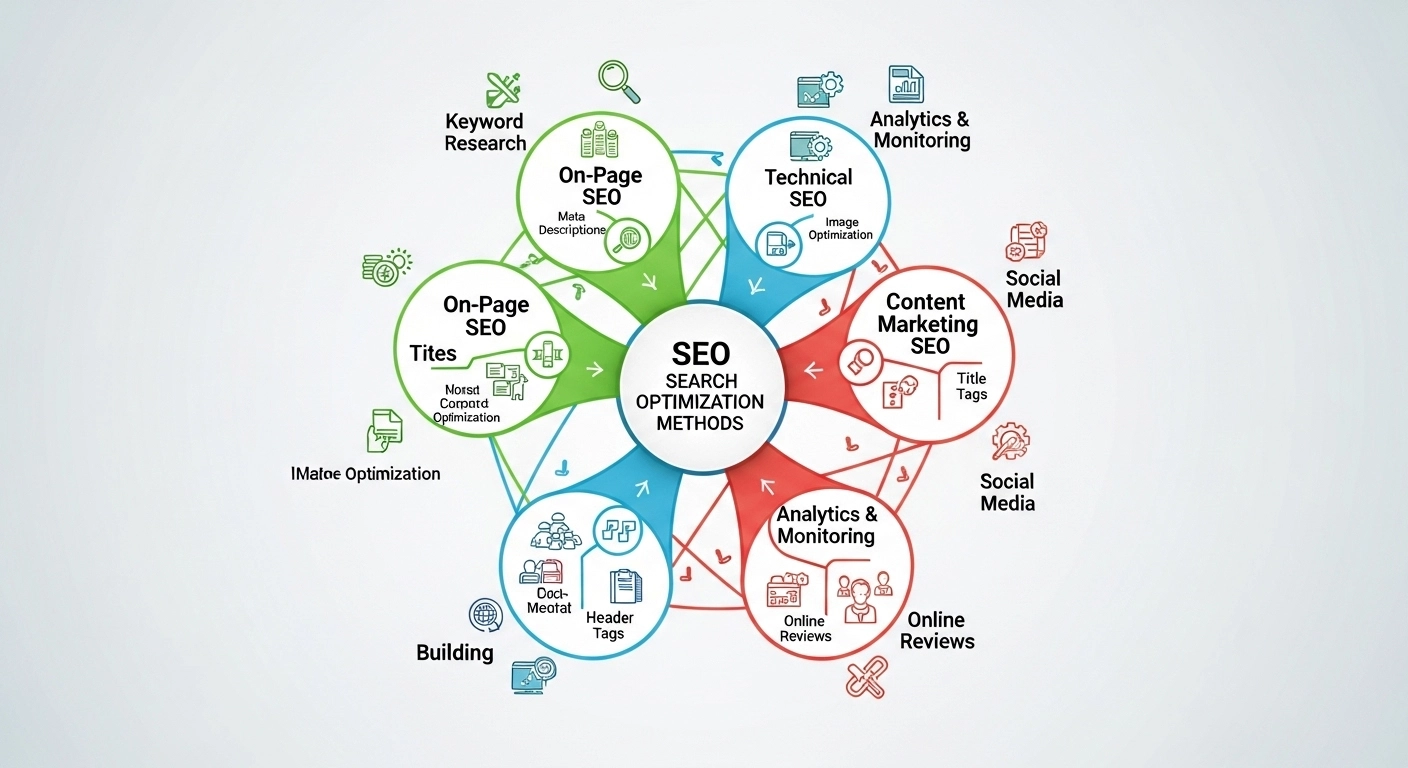
But ranking on search engines doesn’t happen by accident. It requires smart SEO search optimization methods that help search engines understand your content and show it to the right audience.
In this guide, you’ll learn the most effective SEO optimization techniques used by professionals to improve search visibility and grow organic traffic.
1. Keyword Research: The Foundation of SEO
Every successful SEO strategy starts with keyword research.
Keywords are the search phrases people type into Google. If your content targets the right keywords, your chances of ranking increase significantly.
How to do keyword research
Start by identifying terms your audience searches for.
Example:
- “SEO search optimization methods”
- “how to optimize a website for search engines”
- “SEO techniques for beginners”
Use tools such as:
- Google Keyword Planner
- Ubersuggest
- Ahrefs
- SEMrush
Focus on long-tail keywords because they are easier to rank for and often bring more targeted traffic.
Example:
Instead of targeting SEO, target
“SEO search optimization methods for beginners.”
2. On-Page SEO Optimization
On-page SEO refers to everything you optimize directly on your webpage.
Search engines analyze your page structure to understand what your content is about.
Important on-page SEO elements
Title Tag
Your title should include the main keyword and attract clicks.
Example:
SEO Search Optimization Methods: 10 Proven Strategies That Work
Headings (H1, H2, H3)
Use headings to organize content clearly. Search engines use them to understand page structure.
Meta Description
A compelling meta description increases click-through rate from search results.
Example:
Learn the most effective SEO search optimization methods to boost rankings, increase organic traffic, and grow your website.
Keyword Placement
Include your keyword naturally in:
- Title
- First paragraph
- Headings
- Image alt text
- URL
Avoid overusing keywords. Natural writing works best.
3. High-Quality Content Creation
Content is the heart of SEO.
Search engines prioritize content that provides real value to readers.
What makes SEO content effective
- Clear answers to search queries
- Easy-to-read formatting
- Practical examples
- Updated and accurate information
- Internal links to related content
For example, if someone searches “SEO search optimization methods,” they expect:
- SEO strategies
- practical techniques
- actionable tips
If your content satisfies these needs, search engines reward it with better rankings.
4. Technical SEO Improvements
Technical SEO ensures search engines can crawl and index your website properly.
Without technical optimization, even great content may struggle to rank.
Key technical SEO factors
Website Speed
Slow websites lose visitors and rankings.
Ways to improve speed:
- Compress images
- Use caching
- Choose fast hosting
Mobile-Friendly Design
Most searches happen on mobile devices. Your website must work smoothly on phones and tablets.
Secure Website (HTTPS)
Google prefers secure websites. Installing an SSL certificate improves trust and SEO.
Clean URL Structure
Example:
Good URL
example.com/seo-search-optimization-methods
Bad URL
example.com/page?id=7821
5. Internal Linking Strategy
Internal links connect pages within your website.
They help search engines understand your site structure and distribute authority across pages.
Example:
If you have articles about:
- keyword research
- on-page SEO
- technical SEO
Link them together naturally within your content.
Benefits of internal linking:
- Better crawling
- Improved user navigation
- Higher ranking potential
6. Backlink Building (Off-Page SEO)
Backlinks are links from other websites pointing to your content.
Search engines treat backlinks as votes of trust.
The more quality backlinks you have, the stronger your site’s authority becomes.
Effective backlink strategies
- Guest blogging
- Creating shareable content
- Publishing original research
- Building relationships with bloggers
- Getting listed in industry directories
Quality matters more than quantity. A few links from trusted websites are better than many low-quality links.
7. Search Intent Optimization
Search engines prioritize content that matches search intent.
Search intent refers to the reason behind a user’s search.
There are four main types:
Informational
User wants to learn something.
Example: What is SEO?
Navigational
User wants a specific website.
Example: Facebook login
Commercial
User is researching before buying.
Example: Best SEO tools
Transactional
User wants to buy or sign up.
Example: Buy SEO course
Understanding intent helps you create content that meets user expectations and ranks higher.
8. Image and Multimedia Optimization
Visual content improves engagement and SEO.
However, images must be optimized properly.
Best practices:
- Use descriptive file names
- Add alt text with keywords
- Compress images to reduce file size
- Use modern formats like WebP
Example alt text:
SEO search optimization methods infographic
9. Regular Content Updates
Search engines prefer fresh content.
Updating old posts can significantly improve rankings.
Ways to refresh content:
- Add new statistics
- Update outdated information
- Expand sections with new insights
- Improve formatting and readability
A simple update can move a page from page 2 to page 1 of search results.
Frequently Asked Questions
What are SEO search optimization methods?
SEO search optimization methods are strategies used to improve a website’s visibility in search engine results. These include keyword research, on-page optimization, technical SEO, content creation, and backlink building.
How long does SEO take to work?
SEO usually takes 3 to 6 months to show noticeable results. However, competitive keywords may take longer depending on your industry and competition.
What is the most important SEO factor?
High-quality content combined with proper keyword targeting remains the most important factor for ranking well in search engines.
Can beginners learn SEO?
Yes. With the right guidance and consistent practice, beginners can learn SEO and improve website rankings over time.
Conclusion
Improving search rankings requires a combination of strategies, not just one technique. The most successful websites use a mix of keyword research, high-quality content, technical optimization, internal linking, and strong backlinks.
When these SEO search optimization methods work together, they create a powerful foundation for long-term organic traffic.
SEO is not a one-time task—it’s an ongoing process. The more consistently you optimize your content and website, the stronger your search visibility becomes.
