
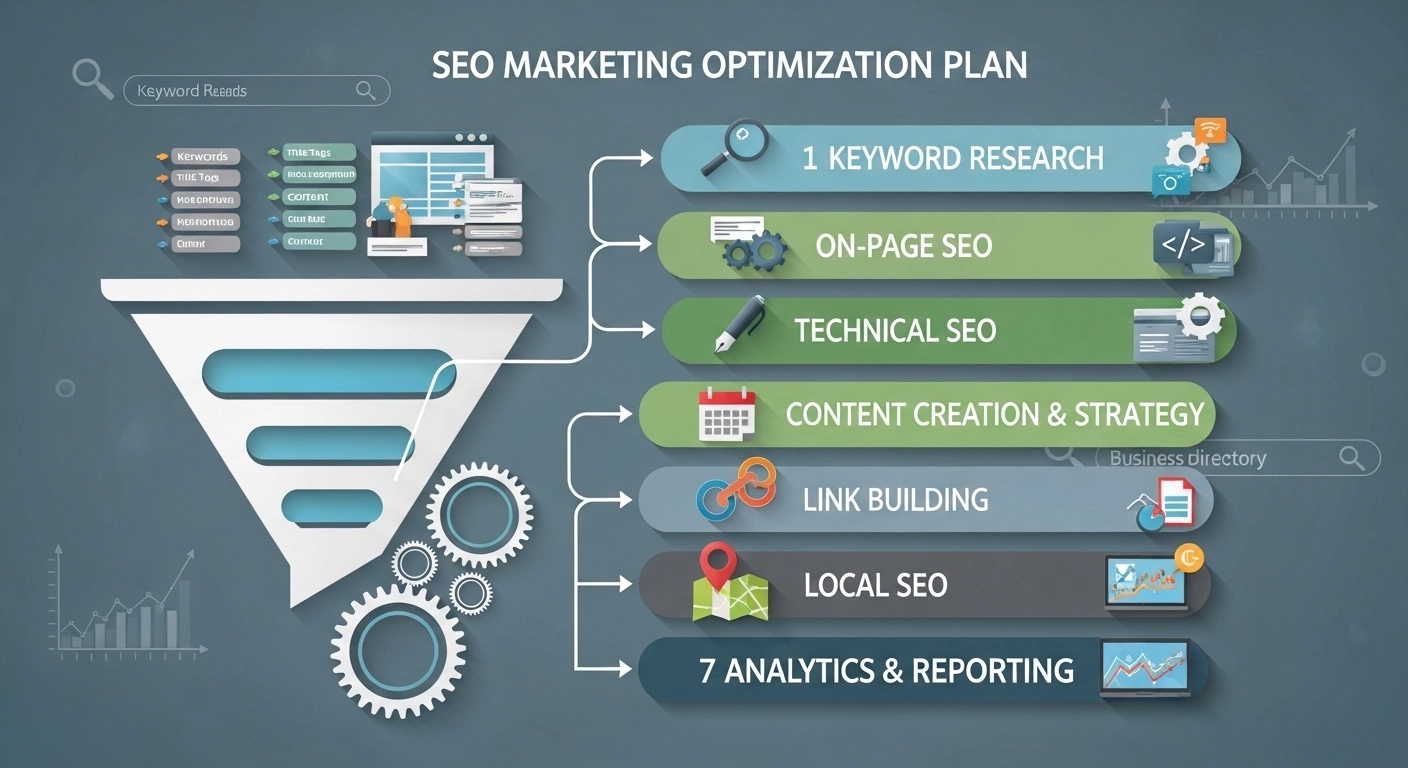
Search engines are often the biggest source of long-term, free traffic for a website. But ranking consistently on Google doesn’t happen by accident. It requires a clear SEO marketing optimization plan—a structured strategy that improves your website’s visibility, attracts the right audience, and converts visitors into customers.
In this guide, you’ll learn exactly how to create and execute an effective SEO plan that works in today’s search environment.
What Is an SEO Marketing Optimization Plan?
An SEO marketing optimization plan is a step-by-step strategy designed to improve a website’s rankings in search engines. It combines technical improvements, keyword research, content creation, and link building to increase organic traffic.
Instead of randomly publishing content, this plan helps you focus on:
- The right keywords
- The right audience
- The right content structure
- The right technical improvements
The result: higher search rankings and consistent traffic growth.
Why an SEO Optimization Plan Matters
Without a clear SEO plan, most websites struggle to rank—even if they publish great content.
A structured SEO strategy helps you:
Increase organic traffic
Improve website authority
Reach people actively searching for your services
Build long-term visibility in search engines
Generate leads and sales without relying on ads
In short, SEO becomes predictable rather than guesswork.
Step 1: Define Your SEO Goals
Before doing any optimization, decide what success looks like.
Common SEO goals include:
- Increasing organic traffic
- Ranking for specific keywords
- Generating leads or sales
- Building topical authority in your niche
- Improving conversion rates
For example, an online store might aim to increase organic traffic by 40% within 12 months through product page optimization and content marketing.
Clear goals make your SEO efforts measurable.
Step 2: Perform Keyword Research
Keyword research is the foundation of every SEO marketing optimization plan.
You need to understand what your audience is searching for.
Focus on three main types of keywords:
Informational Keywords
People looking for answers.
Example:
“How to improve website SEO”
Commercial Keywords
Users comparing products or services.
Example:
“Best SEO tools for small business”
Transactional Keywords
Users ready to buy or take action.
Example:
“Hire SEO consultant”
Long-tail keywords are especially powerful because they are easier to rank for and often convert better.
Example:
Instead of targeting “SEO marketing”, try “SEO marketing plan for small business.”
Step 3: Create an SEO Content Strategy
Content is the engine that drives organic traffic.
Your SEO plan should include a structured content system, often called the pillar and cluster model.
Pillar Content
A comprehensive guide on a broad topic.
Example:
“Complete Guide to SEO Marketing”
Cluster Content
Supporting articles targeting related subtopics.
Examples:
- Keyword research strategy
- On-page SEO checklist
- Technical SEO audit guide
- Internal linking best practices
Each cluster article links back to the pillar page, helping search engines understand the site’s topical authority.
Step 4: Optimize On-Page SEO
Once content is created, it must be properly optimized.
Key on-page SEO elements include:
Title Tags
Include your primary keyword naturally.
Example:
“SEO Marketing Optimization Plan: Step-by-Step Strategy”
Headings (H1, H2, H3)
Use clear headings to organize content.
Meta Descriptions
Write compelling summaries to improve click-through rates.
Internal Links
Link related pages together to help search engines crawl your site.
Image Optimization
Use descriptive file names and alt text.
Example:
seo-marketing-strategy-plan.png
These small optimizations significantly improve rankings.
Step 5: Improve Technical SEO
Technical SEO ensures search engines can properly crawl and index your site.
Focus on:
Fast website loading speed
Mobile-friendly design
Secure HTTPS connection
Clean site structure
XML sitemap submission
Fixing broken links
Tools like Google Search Console and site audit software help identify technical issues quickly.
A technically healthy website performs much better in search results.
Step 6: Build High-Quality Backlinks
Backlinks remain one of the strongest ranking signals.
A good SEO optimization plan includes ethical link building strategies such as:
Guest posting on industry blogs
Publishing original research or case studies
Creating shareable resources and guides
Digital PR and outreach
Getting listed in relevant directories
The key is quality over quantity. A few strong links from trusted websites are far more valuable than hundreds of low-quality ones.
Step 7: Track and Measure SEO Performance
SEO is not a one-time task. Continuous tracking is essential.
Important metrics include:
Organic traffic
Keyword rankings
Click-through rate (CTR)
Bounce rate
Conversion rate
Backlink growth
Use tools like Google Analytics and Search Console to monitor performance and identify opportunities for improvement.
Regular optimization keeps your SEO strategy effective.
Example of a Simple SEO Marketing Plan
Here’s what a basic 90-day SEO plan might look like:
Month 1
- Keyword research
- Technical SEO audit
- Competitor analysis
Month 2
- Publish 6–10 optimized articles
- Improve internal linking
- Optimize existing pages
Month 3
- Start link building
- Update content
- Monitor rankings and traffic
Following a structured timeline keeps SEO progress consistent.
Common SEO Mistakes to Avoid
Many websites fail to rank because of simple mistakes.
Avoid these common problems:
Targeting overly competitive keywords
Publishing thin or low-quality content
Ignoring technical SEO issues
Overusing keywords (keyword stuffing)
Not updating old content
SEO works best when the focus stays on user value and search intent.
Frequently Asked Questions
What is the main goal of an SEO marketing optimization plan?
The main goal is to increase a website’s visibility in search engines so it can attract targeted organic traffic and generate more leads or sales.
How long does SEO take to show results?
Most websites start seeing noticeable results within 3–6 months, though competitive industries may take longer.
What is the most important part of SEO?
High-quality content that matches search intent is one of the most important factors, supported by strong technical SEO and backlinks.
Do small businesses need an SEO plan?
Yes. A well-structured SEO strategy helps small businesses compete online and attract customers without relying heavily on paid advertising.
Final Thoughts
A strong SEO marketing optimization plan transforms random marketing efforts into a focused growth strategy. By combining keyword research, high-quality content, on-page optimization, technical improvements, and link building, you create a system that consistently attracts organic traffic.
SEO is not about quick wins—it’s about building long-term visibility and authority.
