
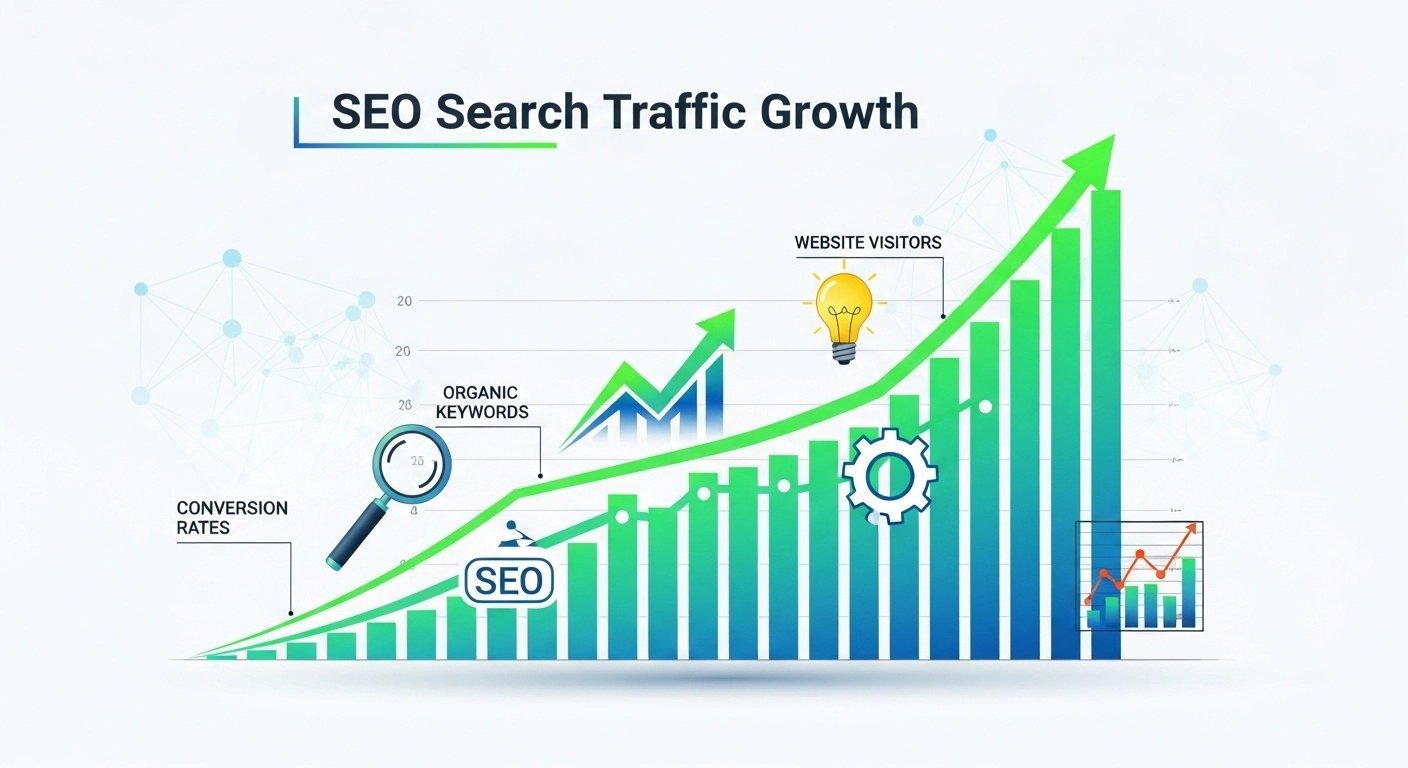
Growing website traffic from search engines is one of the most reliable ways to build a sustainable online presence. Unlike paid ads that stop delivering results once the budget ends, SEO search traffic growth compounds over time. When done correctly, it attracts consistent, high-quality visitors who are actively searching for what you offer.
In this guide, you’ll learn the strategies that actually increase organic search traffic—without shortcuts, outdated tricks, or complicated jargon.
What Is SEO Search Traffic Growth?
SEO search traffic growth refers to the increase in visitors coming to your website through search engines like Google. These visitors arrive after searching for relevant keywords and clicking on your website in the search results.
Organic traffic grows when your site:
- Ranks higher for important keywords
- Appears for more search queries
- Improves click-through rates in search results
- Publishes content that matches search intent
In simple terms:
Better rankings + better content + better user experience = more organic traffic
Why SEO Traffic Growth Matters
Organic search traffic is valuable because it brings people who are already looking for solutions.
Benefits include:
- Consistent long-term traffic
- Higher trust compared to ads
- Lower customer acquisition cost
- More qualified visitors
- Strong brand authority
For example, a blog post ranking for a keyword like “best email marketing tools” can bring thousands of visitors every month without additional advertising costs.
Step 1: Start With Smart Keyword Research
Traffic growth begins with understanding what people search for.
Focus on finding keywords that have:
- Clear search intent
- Moderate search volume
- Lower competition
- Relevance to your audience
Instead of targeting broad keywords like:
SEO
Try targeting long-tail keywords such as:
- SEO checklist for beginners
- how to improve Google rankings
- SEO tips for small business websites
Long-tail keywords are easier to rank for and often convert better because they reflect specific user intent.
Tools commonly used for keyword research include Google Keyword Planner, Ahrefs, SEMrush, and Ubersuggest.
Step 2: Create Content That Matches Search Intent
One of the biggest reasons pages fail to rank is misaligned search intent.
Before writing content, analyze the top Google results and ask:
- Are they blog posts?
- Tutorials?
- Product pages?
- Lists or comparisons?
If users search “SEO checklist”, they expect a step-by-step guide.
If they search “best SEO tools”, they expect a comparison list.
Matching search intent improves rankings and user satisfaction.
Step 3: Optimize On-Page SEO
Once the content is written, proper on-page optimization helps search engines understand it.
Important elements include:
Title Tag
Your title should include the main keyword and encourage clicks.
Example:
SEO Search Traffic Growth: 12 Proven Ways to Increase Organic Visitors
Headings (H1, H2, H3)
Break the article into clear sections using keyword-related headings.
Meta Description
A compelling description improves click-through rates.
Example:
Learn proven strategies to grow SEO search traffic, improve rankings, and attract consistent organic visitors.
Internal Links
Link to other relevant pages on your website to improve crawlability and engagement.
Image Optimization
Use descriptive filenames and alt text to help search engines understand visuals.
Step 4: Build Topic Authority
Google favors websites that cover a subject deeply.
Instead of writing random posts, create topic clusters.
Example SEO content cluster:
- SEO basics for beginners
- On-page SEO guide
- Technical SEO audit checklist
- Keyword research strategies
- Link building techniques
All these articles link to a pillar page, creating a strong topical authority signal.
This structure improves rankings across multiple related keywords.
Step 5: Improve Technical SEO
Even great content can struggle if technical SEO is poor.
Key technical factors include:
- Fast page loading speed
- Mobile-friendly design
- Secure HTTPS connection
- Clean site structure
- XML sitemap
- Proper indexing in Google Search Console
Google’s Core Web Vitals also influence rankings, particularly for competitive keywords.
Step 6: Earn High-Quality Backlinks
Backlinks remain one of the strongest ranking signals.
When reputable websites link to your content, search engines view your site as trustworthy.
Effective ways to earn backlinks include:
- Guest blogging
- Publishing original research
- Creating helpful guides
- Digital PR campaigns
- Resource link building
For example, a detailed SEO checklist often earns links from marketing blogs referencing it as a resource.
Step 7: Update and Refresh Old Content
Many websites overlook a simple strategy: updating existing pages.
Refreshing content can dramatically increase search traffic.
Update pages by:
- Adding new statistics
- Expanding sections
- Improving headings
- Updating outdated examples
- Adding internal links
Google often rewards updated content with higher rankings.
Step 8: Track SEO Performance
You can’t grow traffic without measuring results.
Key metrics to monitor include:
- Organic traffic
- Keyword rankings
- Click-through rate
- Indexed pages
- Bounce rate
- Conversions from organic traffic
Tools like Google Search Console and Google Analytics provide valuable insights into how users find and interact with your site.
Common Mistakes That Slow SEO Traffic Growth
Many websites struggle with SEO because of avoidable mistakes.
Common issues include:
- Publishing thin content
- Ignoring search intent
- Targeting overly competitive keywords
- Poor internal linking
- Slow website speed
- Inconsistent content publishing
Avoiding these problems alone can significantly improve organic performance.
Frequently Asked Questions
How long does SEO traffic growth take?
SEO usually takes 3–6 months to show meaningful results, though competitive niches may take longer. Consistent content and optimization accelerate growth.
What type of content brings the most organic traffic?
Educational content such as how-to guides, tutorials, and comparison articles typically perform best because they directly answer user questions.
Is backlink building still important for SEO?
Yes. High-quality backlinks remain a major ranking factor and help search engines evaluate website authority.
How often should I publish SEO content?
Consistency matters more than frequency. Publishing one high-quality article per week is more effective than publishing many low-quality posts.
Conclusion: Build Sustainable SEO Traffic
SEO search traffic growth is not about shortcuts. It comes from consistent content creation, strategic keyword targeting, strong technical foundations, and valuable information that helps users.
When these elements work together, your website gradually becomes a trusted resource in search engines.
Start by researching the right keywords, publishing helpful content, optimizing every page, and building authority within your niche. Over time, these efforts compound and lead to steady organic growth.
