
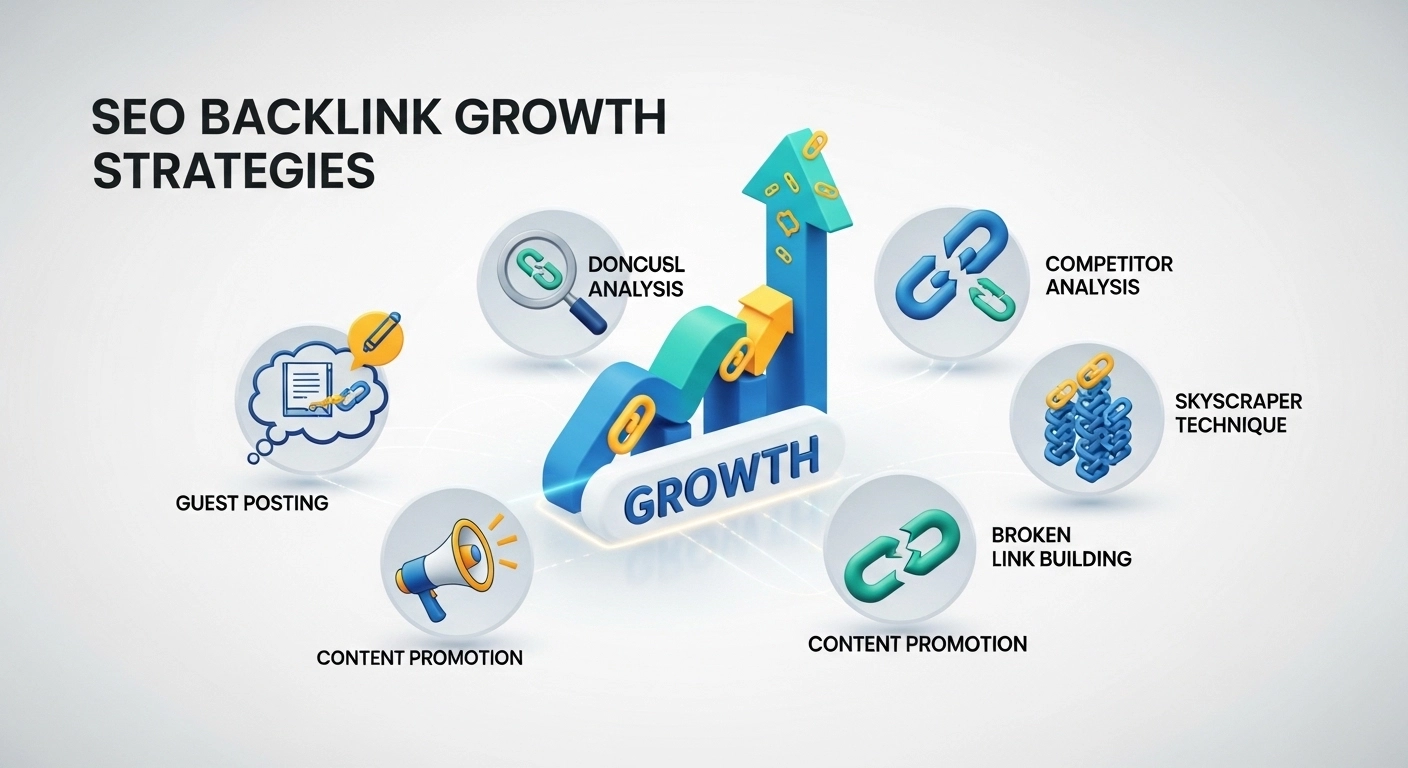
Backlinks remain one of the strongest ranking signals in search engine optimization. When reputable websites link to your content, search engines interpret it as a vote of confidence. The more high-quality backlinks your website earns, the stronger your domain authority and the better your chances of ranking higher in search results.
But backlink growth is no longer about quantity. Modern SEO focuses on earning relevant, authoritative, and natural links through smart strategies and valuable content.
This guide explains the most effective SEO backlink growth strategies you can use to steadily build authority and increase organic traffic.
Why Backlinks Still Matter for SEO
Search engines use backlinks to understand three important signals:
- Authority – Trusted websites linking to you improve your credibility.
- Relevance – Links from niche-related sites strengthen topical relevance.
- Popularity – More quality links signal that your content is valuable.
However, low-quality or spammy links can harm rankings. Successful backlink growth requires strategic, ethical link building methods.
1. Create Link-Worthy Content
The strongest backlink strategy starts with content that people naturally want to reference.
Focus on creating:
- Original research and data studies
- Comprehensive guides
- Case studies with real results
- Expert roundups
- Statistics pages
- Industry reports
For example, if you publish “The Complete 2026 SEO Checklist”, bloggers and marketers may link to it as a reference in their own articles.
Content that solves a real problem attracts organic backlinks over time.
2. Use Guest Blogging the Right Way
Guest posting remains one of the most reliable backlink growth strategies when done correctly.
Instead of publishing on random websites, focus on:
- Relevant industry blogs
- Websites with real traffic
- Sites with strong domain authority
- Platforms that allow contextual links
Example:
If you run a digital marketing blog, writing a guest post about “Local SEO for Small Businesses” on a marketing website allows you to naturally link back to a related guide on your site.
Quality guest posts build both authority and referral traffic.
3. Build Relationships With Industry Websites
Backlinks grow faster when you build real connections in your industry.
Ways to do this include:
- Collaborating with bloggers
- Participating in expert interviews
- Joining podcast discussions
- Contributing quotes to articles
- Networking on LinkedIn and industry communities
When people know your expertise, they are far more likely to mention and link to your content.
SEO today is as much about relationships as it is about technical optimization.
4. Use the Skyscraper Technique
The Skyscraper Technique focuses on improving existing popular content and earning links from sites that already link to similar resources.
Steps:
- Find content with many backlinks.
- Create a better, updated version.
- Reach out to websites linking to the old content.
For example, if a blog post titled “SEO Tips for 2022” has many backlinks, you can create “50 Advanced SEO Strategies for 2026” and offer it as an updated resource.
Because the content is better and newer, many websites are willing to update their links.
5. Fix Broken Links on Other Websites
Broken link building is one of the easiest ways to earn backlinks.
Process:
- Find pages in your niche with broken external links.
- Create or use similar content on your website.
- Contact the website owner and suggest your link as a replacement.
This helps the website fix an issue while giving you a high-quality backlink.
It is a win-win strategy for both parties.
6. Get Listed in Resource Pages
Many websites maintain curated resource pages listing useful tools, guides, or educational content.
Examples include:
- Marketing tools lists
- Blogging resources
- SEO learning hubs
- Startup tools directories
If your content genuinely adds value, you can reach out and request inclusion.
Because these pages exist specifically to link to helpful resources, they often provide highly relevant backlinks.
7. Use Digital PR and Data-Driven Content
Digital PR is becoming one of the fastest ways to build high-authority backlinks.
Effective approaches include:
- Publishing unique industry statistics
- Creating surveys or studies
- Sharing expert insights with journalists
- Providing commentary on trending topics
News websites and bloggers often cite data-backed content, which can generate dozens of natural backlinks.
8. Leverage Internal Linking to Support Backlinks
While external backlinks build authority, internal linking distributes that authority across your website.
For example:
If a blog post earns strong backlinks, link it internally to other important pages such as:
- Product pages
- Service pages
- Pillar articles
This spreads ranking power and improves overall site SEO performance.
9. Monitor Competitor Backlinks
Analyzing competitor backlinks can reveal powerful link opportunities.
Look for:
- Websites linking to multiple competitors
- Guest posting opportunities
- Resource pages
- Industry directories
If a site already links to similar businesses or content, it may also be open to linking to your website.
Competitor research often uncovers quick wins for backlink growth.
10. Maintain Consistent Outreach
Backlink growth rarely happens overnight. Consistent outreach is essential.
Best practices include:
- Personalizing outreach emails
- Offering real value in return
- Avoiding mass spam messages
- Following up politely
Building backlinks is a long-term SEO strategy, but steady effort leads to sustainable results.
FAQ: SEO Backlink Growth
What is a backlink in SEO?
A backlink is a hyperlink from one website to another. Search engines treat backlinks as signals that your content is valuable and trustworthy.
How many backlinks does a website need to rank?
There is no fixed number. Rankings depend on the quality, relevance, and authority of the backlinks rather than the quantity alone.
Are backlinks still important for SEO in 2026?
Yes. Backlinks remain one of the top ranking factors because they help search engines evaluate a website’s credibility and popularity.
How long does it take to see results from backlinks?
Most backlink strategies take several weeks to several months to impact rankings, depending on the authority of the linking sites.
What backlinks should be avoided?
Avoid backlinks from:
- Spam websites
- Link farms
- Irrelevant sites
- Paid link schemes
Low-quality links can harm your SEO performance.
Final Thoughts
Backlink growth is one of the most powerful ways to strengthen your SEO strategy. But modern link building focuses on earning links through valuable content, strong relationships, and ethical outreach.
Instead of chasing thousands of links, focus on gaining relevant, high-authority backlinks that improve your credibility and visibility in search engines.
When combined with strong content, technical SEO, and internal linking, the right backlink strategies can significantly increase organic traffic and search rankings.
Start building your backlink strategy today—create valuable content, connect with industry websites, and focus on long-term SEO growth.
VVSEO Backlink Growth Strategies: A Practical Guide to Building Authority in 2026
Backlinks remain one of the strongest ranking signals in search engine optimization. When reputable websites link to your content, search engines interpret it as a vote of confidence. The more high-quality backlinks your website earns, the stronger your domain authority and the better your chances of ranking higher in search results.
But backlink growth is no longer about quantity. Modern SEO focuses on earning relevant, authoritative, and natural links through smart strategies and valuable content.
This guide explains the most effective SEO backlink growth strategies you can use to steadily build authority and increase organic traffic.
Why Backlinks Still Matter for SEO
Search engines use backlinks to understand three important signals:
Authority – Trusted websites linking to you improve your credibility.
Relevance – Links from niche-related sites strengthen topical relevance.
Popularity – More quality links signal that your content is valuable.
However, low-quality or spammy links can harm rankings. Successful backlink growth requires strategic, ethical link building methods.
1. Create Link-Worthy Content
The strongest backlink strategy starts with content that people naturally want to reference.
Focus on creating:
Original research and data studies
Comprehensive guides
Case studies with real results
Expert roundups
Statistics pages
Industry reports
For example, if you publish “The Complete 2026 SEO Checklist”, bloggers and marketers may link to it as a reference in their own articles.
Content that solves a real problem attracts organic backlinks over time.
2. Use Guest Blogging the Right Way
Guest posting remains one of the most reliable backlink growth strategies when done correctly.
Instead of publishing on random websites, focus on:
Relevant industry blogs
Websites with real traffic
Sites with strong domain authority
Platforms that allow contextual links
Example:
If you run a digital marketing blog, writing a guest post about “Local SEO for Small Businesses” on a marketing website allows you to naturally link back to a related guide on your site.
Quality guest posts build both authority and referral traffic.
3. Build Relationships With Industry Websites
Backlinks grow faster when you build real connections in your industry.
Ways to do this include:
Collaborating with bloggers
Participating in expert interviews
Joining podcast discussions
Contributing quotes to articles
Networking on LinkedIn and industry communities
When people know your expertise, they are far more likely to mention and link to your content.
SEO today is as much about relationships as it is about technical optimization.
4. Use the Skyscraper Technique
The Skyscraper Technique focuses on improving existing popular content and earning links from sites that already link to similar resources.
Steps:
Find content with many backlinks.
Create a better, updated version.
Reach out to websites linking to the old content.
For example, if a blog post titled “SEO Tips for 2022” has many backlinks, you can create “50 Advanced SEO Strategies for 2026” and offer it as an updated resource.
Because the content is better and newer, many websites are willing to update their links.
5. Fix Broken Links on Other Websites
Broken link building is one of the easiest ways to earn backlinks.
Process:
Find pages in your niche with broken external links.
Create or use similar content on your website.
Contact the website owner and suggest your link as a replacement.
This helps the website fix an issue while giving you a high-quality backlink.
It is a win-win strategy for both parties.
6. Get Listed in Resource Pages
Many websites maintain curated resource pages listing useful tools, guides, or educational content.
Examples include:
Marketing tools lists
Blogging resources
SEO learning hubs
Startup tools directories
If your content genuinely adds value, you can reach out and request inclusion.
Because these pages exist specifically to link to helpful resources, they often provide highly relevant backlinks.
7. Use Digital PR and Data-Driven Content
Digital PR is becoming one of the fastest ways to build high-authority backlinks.
Effective approaches include:
Publishing unique industry statistics
Creating surveys or studies
Sharing expert insights with journalists
Providing commentary on trending topics
News websites and bloggers often cite data-backed content, which can generate dozens of natural backlinks.
8. Leverage Internal Linking to Support Backlinks
While external backlinks build authority, internal linking distributes that authority across your website.
For example:
If a blog post earns strong backlinks, link it internally to other important pages such as:
Product pages
Service pages
Pillar articles
This spreads ranking power and improves overall site SEO performance.
9. Monitor Competitor Backlinks
Analyzing competitor backlinks can reveal powerful link opportunities.
Look for:
Websites linking to multiple competitors
Guest posting opportunities
Resource pages
Industry directories
If a site already links to similar businesses or content, it may also be open to linking to your website.
Competitor research often uncovers quick wins for backlink growth.
10. Maintain Consistent Outreach
Backlink growth rarely happens overnight. Consistent outreach is essential.
Best practices include:
Personalizing outreach emails
Offering real value in return
Avoiding mass spam messages
Following up politely
Building backlinks is a long-term SEO strategy, but steady effort leads to sustainable results.
FAQ: SEO Backlink Growth
What is a backlink in SEO?
A backlink is a hyperlink from one website to another. Search engines treat backlinks as signals that your content is valuable and trustworthy.
How many backlinks does a website need to rank?
There is no fixed number. Rankings depend on the quality, relevance, and authority of the backlinks rather than the quantity alone.
Are backlinks still important for SEO in 2026?
Yes. Backlinks remain one of the top ranking factors because they help search engines evaluate a website’s credibility and popularity.
How long does it take to see results from backlinks?
Most backlink strategies take several weeks to several months to impact rankings, depending on the authority of the linking sites.
What backlinks should be avoided?
Avoid backlinks from:
Spam websites
Link farms
Irrelevant sites
Paid link schemes
Low-quality links can harm your SEO performance.
Final Thoughts
Backlink growth is one of the most powerful ways to strengthen your SEO strategy. But modern link building focuses on earning links through valuable content, strong relationships, and ethical outreach.
Instead of chasing thousands of links, focus on gaining relevant, high-authority backlinks that improve your credibility and visibility in search engines.
When combined with strong content, technical SEO, and internal linking, the right backlink strategies can significantly increase organic traffic and search rankings.
Start building your backlink strategy today—create valuable content, connect with industry websites, and focus on long-term SEO growth.
