
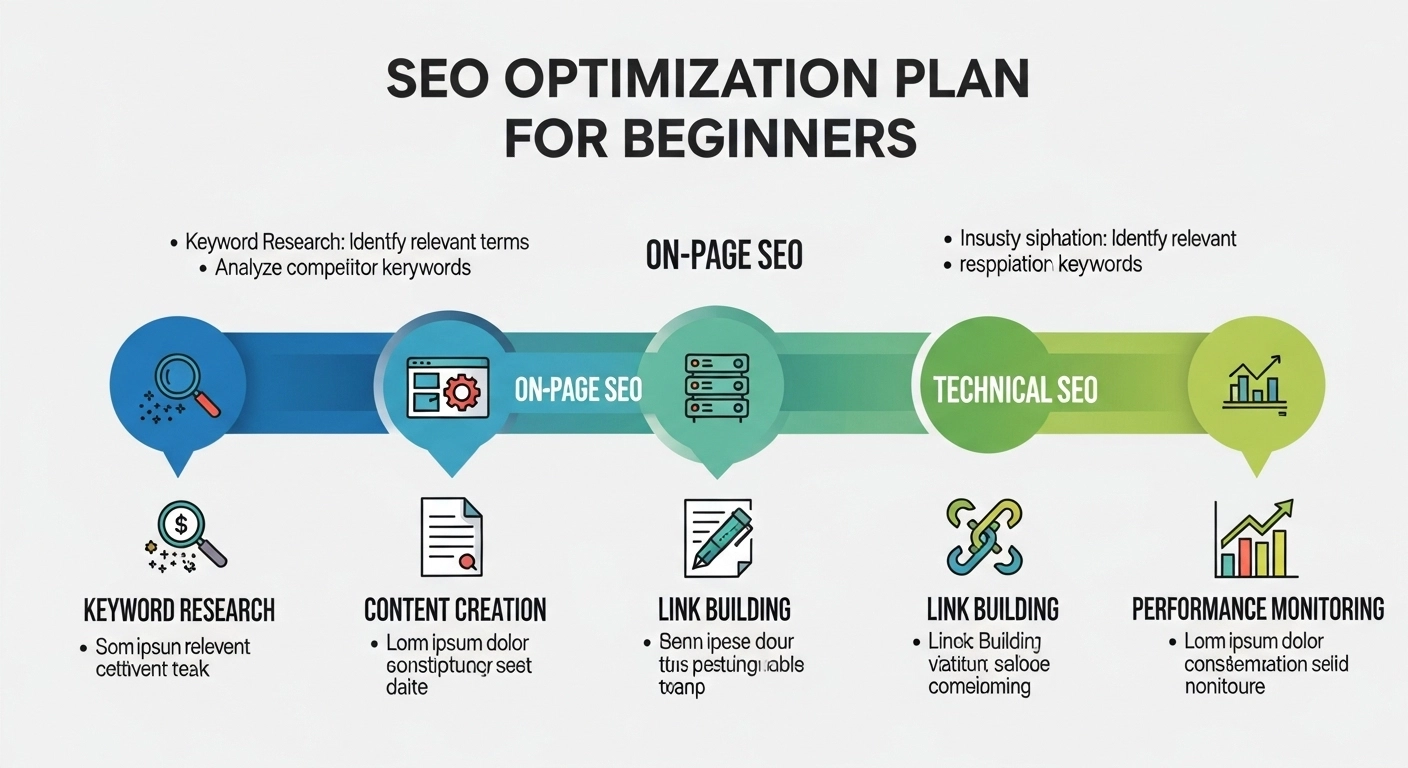
If you’ve just launched a website or blog, you’ve probably heard that SEO (Search Engine Optimization) is the key to getting traffic from Google. But for beginners, SEO often feels confusing and technical.
The truth is simpler: SEO is about helping search engines understand your content and helping users find the answers they need.
This guide will walk you through a clear SEO optimization plan for beginners so you can start improving rankings, increasing traffic, and building a strong online presence.
What Is an SEO Optimization Plan?
An SEO optimization plan is a structured process for improving your website so it appears higher in search engine results.
A good plan focuses on three main areas:
- Keyword research – understanding what people search for
- On-page SEO – optimizing your website pages
- Technical and authority SEO – improving site performance and credibility
When these elements work together, your website becomes easier for search engines to crawl and more valuable for users.
Step-by-Step SEO Optimization Plan for Beginners
1. Start With Keyword Research
Every successful SEO strategy begins with keywords—the phrases people type into Google.
Instead of guessing what users search for, use keyword research tools such as:
- Google Keyword Planner
- Ubersuggest
- Ahrefs
- SEMrush
Example
If you run a digital marketing blog, good beginner keywords might include:
- SEO tips for beginners
- how to learn SEO
- basic SEO checklist
- on-page SEO guide
Focus on long-tail keywords because they are easier to rank for and match search intent better.
Example:
“SEO optimization plan for beginners” is easier to rank than “SEO”.
2. Understand Search Intent
Search intent means why someone searches for a keyword.
There are four common types:
- Informational – learning something
- Navigational – looking for a specific website
- Commercial – researching before buying
- Transactional – ready to buy
For beginner SEO content, most keywords are informational.
Your content should answer questions clearly and provide helpful guidance.
3. Create High-Quality Content
Content is the foundation of SEO.
Google ranks pages that provide useful, relevant, and well-structured information.
Tips for SEO Content
Write clear headings (H1, H2, H3)
Use short paragraphs
Answer the main question early
Add examples and practical steps
Use related keywords naturally
Example Content Structure
Title: SEO Optimization Plan for Beginners
Introduction
Step-by-step strategy
Practical examples
Common mistakes
FAQ section
Conclusion
The goal is simple: help the reader solve a problem.
4. Optimize On-Page SEO
On-page SEO ensures that search engines understand your page.
Key elements include:
SEO Title
Include the main keyword near the beginning.
Example:
SEO Optimization Plan for Beginners: Step-by-Step Guide
Meta Description
Write a short summary (150-160 characters).
Example:
Learn a simple SEO optimization plan for beginners with keyword research, on-page SEO, and ranking strategies.
Headings
Use headings to organize content.
H1: Page title
H2: Main sections
H3: Subtopics
Internal Links
Link to related pages on your website.
Example:
If you have another article about keyword research, link to it.
Internal linking helps search engines crawl your site and improves user experience.
5. Improve Website Speed
Site speed is a confirmed Google ranking factor.
Slow websites cause visitors to leave quickly, which hurts rankings.
Ways to improve speed:
Compress images
Use fast web hosting
Enable caching
Reduce unnecessary plugins
Use a CDN (Content Delivery Network)
A fast website creates a better experience and improves SEO performance.
6. Make Your Website Mobile-Friendly
More than 60% of searches happen on mobile devices.
If your website doesn’t work well on phones, you will lose traffic.
Make sure your website:
Uses responsive design
Has readable text
Loads quickly on mobile
Has easy navigation
Most modern platforms like WordPress already support mobile optimization.
7. Build Website Authority With Backlinks
Backlinks are links from other websites to your site.
Search engines treat backlinks as signals of trust and credibility.
Ways beginners can get backlinks:
Guest blogging
Creating helpful guides
Sharing content on social media
Listing your site in directories
Networking with bloggers
Quality backlinks help search engines see your site as authoritative.
8. Track Your SEO Performance
SEO is not a one-time task. You need to monitor results and improve over time.
Essential tools include:
Google Analytics
Google Search Console
Ahrefs or SEMrush
These tools help you track:
Website traffic
Keyword rankings
Page performance
Indexing issues
By analyzing data, you can adjust your SEO strategy and grow faster.
Common SEO Mistakes Beginners Should Avoid
Many new website owners make mistakes that slow their progress.
Avoid these common issues:
Keyword stuffing
Publishing thin content
Ignoring search intent
Not optimizing titles and headings
Slow website speed
No internal linking
Good SEO focuses on quality, relevance, and user experience.
Simple SEO Checklist for Beginners
Here’s a quick SEO checklist you can follow:
Research keywords before writing content
Write helpful, original articles
Optimize titles and meta descriptions
Use headings and internal links
Improve page speed
Ensure mobile friendliness
Build backlinks
Track performance using analytics
Following this checklist consistently will steadily improve your rankings.
FAQ: SEO Optimization Plan for Beginners
How long does SEO take to work?
SEO usually takes 3 to 6 months to show noticeable results. However, consistent optimization can bring long-term traffic growth.
Is SEO difficult for beginners?
No. SEO becomes easier when you focus on the basics: keyword research, quality content, and good website structure.
Do I need paid tools for SEO?
Not necessarily. Beginners can start with free tools such as Google Search Console, Google Analytics, and Google Keyword Planner.
How many keywords should a page target?
Usually one main keyword and several related keywords work best. This keeps content focused and natural.
Conclusion
An effective SEO optimization plan for beginners doesn’t require complex strategies. The key is consistency and focusing on what search engines value most: helpful content and a great user experience.
Start with keyword research, create high-quality content, optimize your pages, improve site speed, and build backlinks over time.
SEO success rarely happens overnight—but with the right plan, your website can grow steadily and attract valuable organic traffic.
