
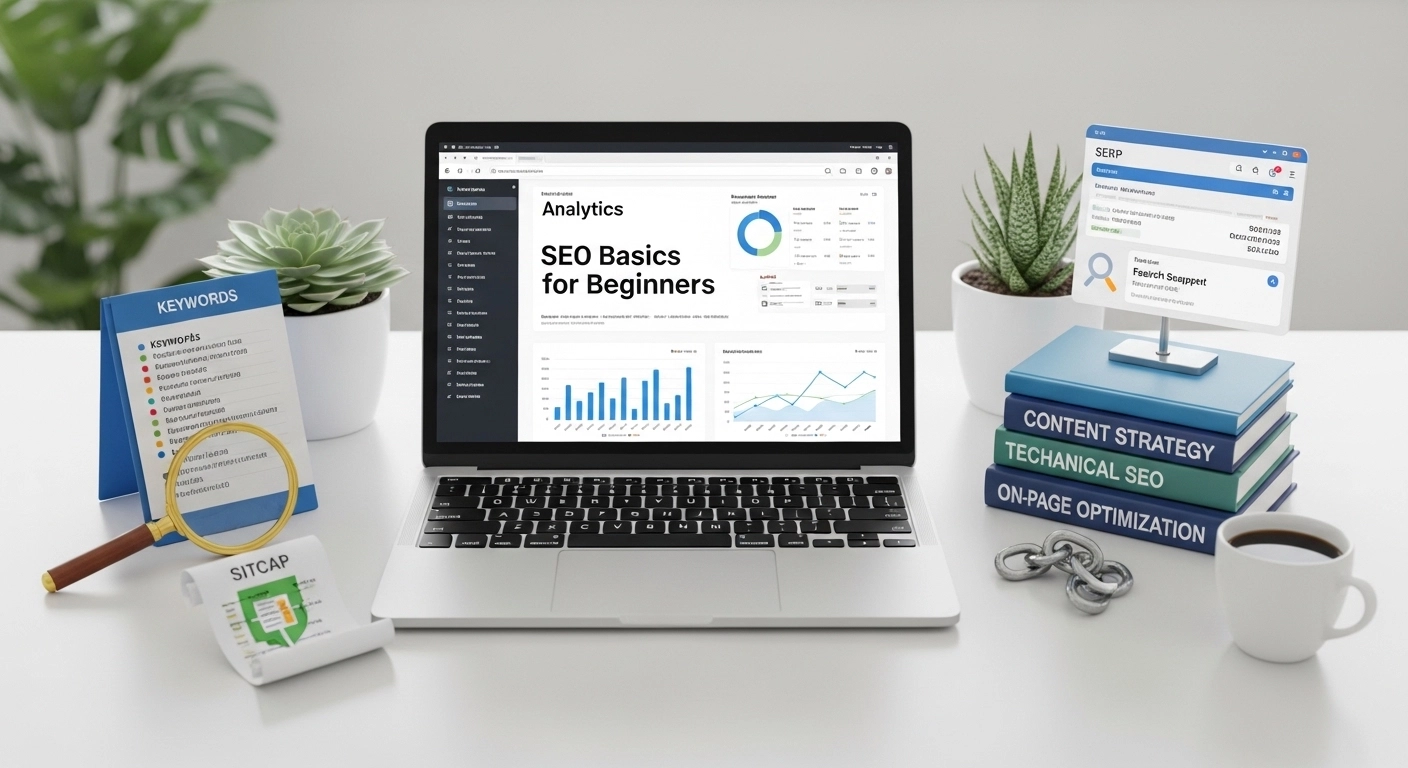
If you want people to find your website on Google, you need Search Engine Optimization (SEO). Without it, even a great website can remain invisible online.
The good news? SEO isn’t as complicated as it sounds.
This guide explains SEO basics for beginners in simple language. You’ll learn what SEO is, how search engines work, and the exact steps you can follow to start getting organic traffic.
What Is SEO?
SEO (Search Engine Optimization) is the process of improving your website so it appears higher in search engine results like Google. The goal is simple: get more people to discover your content, products, or services through organic search.
When someone types a query into Google, the search engine scans billions of pages and ranks the most helpful results. SEO helps your website become one of those results.
Good SEO focuses on three things:
- Helpful content
- Clear website structure
- Positive user experience
Search engines reward websites that provide useful, trustworthy information to users.
How Search Engines Work
To understand SEO, you first need to understand how search engines operate.
Search engines follow three main steps:
1. Crawling
Search engines send bots (called crawlers) to scan websites and discover new pages.
2. Indexing
After crawling, the pages are stored in a massive database called an index.
3. Ranking
When someone searches, the algorithm decides which pages are most relevant and ranks them.
SEO helps search engines understand your content so they can rank it correctly.
Why SEO Is Important
SEO is one of the most powerful ways to grow online because it brings free organic traffic.
Benefits of SEO include:
- More website visitors
- Higher brand credibility
- Long-term traffic growth
- Better user experience
- Increased sales and leads
Unlike ads, SEO traffic can continue for months or years once your page ranks.
The Core Pillars of SEO
SEO is usually divided into three main areas.
1. Keyword Research
Keyword research is the process of finding what people search for online. SEO professionals analyze search terms to understand user demand and create relevant content.
Example keywords:
- SEO basics for beginners
- How to do SEO step by step
- On-page SEO checklist
Simple Keyword Research Method
- Search your topic on Google
- Look at autocomplete suggestions
- Check “People Also Ask” questions
- Use keyword tools for ideas
Long-tail keywords (longer, specific phrases) are easier for beginners to rank for.
2. On-Page SEO
On-page SEO refers to optimizing individual pages on your website.
Important elements include:
Title Tag
Your title should clearly describe the page and include your main keyword.
Example:
SEO Basics for Beginners: Complete Step-by-Step Guide
Headings (H1, H2, H3)
Headings organize your content and help search engines understand your topics.
Meta Description
A short summary that appears in search results and encourages users to click.
Internal Links
Linking to other pages on your website helps search engines understand your site structure.
3. Technical SEO
Technical SEO ensures your website works well for both users and search engines.
Important factors include:
Website Speed
Slow websites lose visitors and rankings.
Mobile-Friendliness
Most searches now happen on smartphones, so your site must work on mobile devices.
Secure Website (HTTPS)
Secure sites build trust and receive a small ranking boost.
Structured Data
Schema markup helps search engines better understand your content.
How to Create SEO-Friendly Content
Content is the heart of SEO.
Search engines prioritize pages that answer users’ questions clearly and completely.
Here are the key rules:
Write for Humans First
Focus on helping readers solve a problem.
Match Search Intent
Search intent means why someone searches for something.
Examples:
| Query | Intent |
| What is SEO | Informational |
| Best SEO tools | Commercial |
| Buy SEO course | Transactional |
Your content must match the intent to rank.
Use Clear Structure
Good SEO articles include:
- Short paragraphs
- Subheadings
- Lists
- Examples
This improves readability and user experience.
The Role of Backlinks
Backlinks are links from other websites pointing to your site.
They act like votes of trust. The more high-quality websites link to you, the more authority your website gains.
Common ways to earn backlinks:
- Guest blogging
- Creating helpful guides
- Publishing research or data
- Networking with other website owners
Simple SEO Strategy for Beginners
If you’re just starting, follow this roadmap:
- Choose a niche topic
- Do keyword research
- Create helpful content
- Optimize on-page SEO
- Improve site speed and mobile experience
- Build backlinks
- Track results with Google Search Console
SEO is not instant. It usually takes 3–6 months to see meaningful results.
But once it works, the traffic is consistent and scalable.
Common SEO Mistakes to Avoid
Many beginners slow their progress with these mistakes:
Keyword Stuffing
Repeating the same keyword too many times can hurt rankings and is considered search engine spam.
Ignoring Search Intent
Even perfectly optimized pages fail if they don’t answer the user’s question.
Publishing Thin Content
Short, shallow articles rarely rank well.
Slow Websites
Users leave quickly if pages take too long to load.
FAQ: SEO Basics for Beginners
What is SEO in simple words?
SEO is the process of improving a website so it appears higher in Google search results and gets more organic visitors.
How long does SEO take to work?
Most websites start seeing results in 3–6 months, depending on competition and content quality.
Can I do SEO without paying?
Yes. Many SEO techniques like content creation, internal linking, and keyword research can be done for free.
What is the most important SEO factor?
Helpful content that matches search intent is the most important factor for ranking.
Final Thoughts
SEO may seem complicated at first, but the basics are straightforward:
- Find the right keywords
- Create helpful content
- Optimize your pages
- Improve technical performance
- Build authority through backlinks
When done consistently, SEO becomes one of the most powerful ways to grow your website and business online.
