
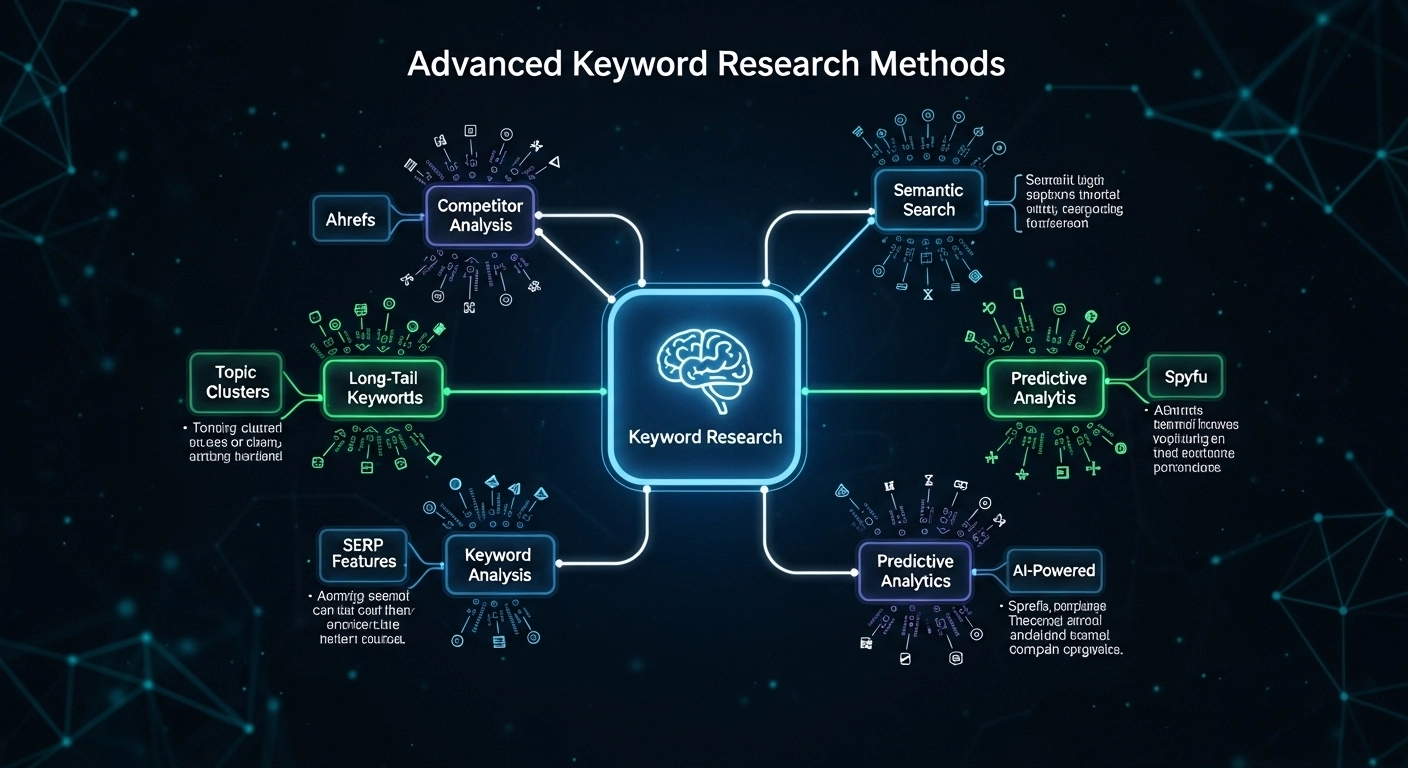
Keyword research is no longer just about finding high-volume phrases. Modern SEO requires understanding search intent, user behavior, and content gaps to identify opportunities your competitors miss.
Advanced keyword research helps you uncover hidden traffic sources, long-tail opportunities, and high-intent queries that drive real results. In this guide, you’ll learn practical methods professional SEO specialists use to discover powerful keywords and build stronger content strategies.
Why Advanced Keyword Research Matters
Basic keyword research focuses on search volume and difficulty. But advanced research goes deeper.
It helps you:
- Identify keywords with strong conversion intent
- Discover topics competitors overlook
- Build topical authority in your niche
- Capture long-tail search traffic
- Align content with Google’s search intent signals
In short, advanced research turns SEO from guessing into a data-driven strategy.
1. Analyze Search Intent Before Choosing Keywords
Every search query has a purpose. Understanding that purpose is the first step to targeting the right keyword.
There are four main search intent types:
Informational – The user wants to learn something
Example: how keyword research works
Navigational – The user wants a specific website
Example: Ahrefs keyword tool
Commercial – The user is comparing options
Example: best SEO tools for keyword research
Transactional – The user is ready to act
Example: buy SEO software
Practical Method
Search your target keyword in Google and analyze the top results:
- Are they blog posts?
- Product pages?
- Guides or tutorials?
If the results are mostly guides, Google expects informational content.
Matching intent increases your chances of ranking.
2. Use Competitor Keyword Gap Analysis
Your competitors already rank for keywords you may have missed. A keyword gap analysis reveals these opportunities.
How it works
- Enter your domain and competitor domains into an SEO tool.
- Compare ranking keywords.
- Identify keywords competitors rank for that you do not.
Example
If your site focuses on SEO education, competitors might rank for:
- SEO content brief template
- pillar page strategy
- topical authority SEO
These keywords become content opportunities for your blog.
3. Find Long-Tail Keywords With Real Search Intent
Long-tail keywords are longer phrases with lower competition and clearer intent.
Examples:
Instead of targeting
keyword research
Target
advanced keyword research methods for SEO
Instead of
SEO tips
Target
SEO tips for new websites in 2026
Long-tail queries often convert better because users know exactly what they want.
Ways to find them
- Google autocomplete suggestions
- “People Also Ask” boxes
- Forum questions
- Reddit discussions
- Niche communities
These sources reveal real questions people ask online.
4. Build Topic Clusters Instead of Single Keywords
Modern SEO favors topic authority rather than isolated pages.
A topic cluster strategy includes:
Pillar page:
Complete guide to keyword research
Cluster content:
- long-tail keyword strategy
- keyword research tools comparison
- search intent optimization
- keyword clustering methods
All pages internally link to the pillar page.
This structure signals to search engines that your website is an authority on the topic.
5. Use Keyword Clustering to Target Multiple Queries
One article can rank for dozens of related keywords.
Instead of writing separate posts for:
- keyword research process
- how to do keyword research
- keyword research steps
You can create one optimized article targeting all related phrases.
Simple clustering method
- Export keyword lists from SEO tools
- Group similar phrases together
- Create content optimized for the cluster
This increases topical coverage and ranking potential.
6. Analyze SERP Features for Ranking Opportunities
Google search results now include many features beyond traditional listings.
Examples include:
- Featured snippets
- People Also Ask boxes
- Video results
- Image packs
- Knowledge panels
If your keyword shows a featured snippet, structure your content with clear answers and lists to increase the chance of winning that position.
Example structure:
What is keyword clustering?
A short 40-50 word definition directly under the heading.
This format is snippet-friendly.
7. Identify Content Gaps Using Real User Questions
One of the most powerful advanced strategies is identifying questions your audience asks but competitors ignore.
Sources include:
- Quora discussions
- Reddit threads
- Customer support questions
- Blog comments
- YouTube comment sections
Example question:
“Is keyword research still important after Google AI updates?”
Turning questions like this into content helps you capture low-competition traffic.
8. Prioritize Keywords by Business Value
Not every keyword is worth targeting.
Professional SEO teams prioritize keywords based on:
- Search intent
- Traffic potential
- Ranking difficulty
- Conversion value
For example:
A keyword with 1,000 searches and buying intent is often more valuable than a keyword with 10,000 informational searches.
Focus on keywords that align with your business goals and audience needs.
Simple Advanced Keyword Research Workflow
Here is a simple process used by many SEO professionals:
- Start with seed keywords related to your niche
- Analyze search intent in Google results
- Collect long-tail keywords and related phrases
- Perform competitor keyword gap analysis
- Group keywords into clusters
- Build topic clusters and internal links
- Optimize content for SERP features
This workflow helps turn keyword research into a repeatable SEO system.
FAQ: Advanced Keyword Research
What is advanced keyword research?
Advanced keyword research is the process of identifying high-value search terms using deeper analysis such as search intent, keyword clustering, competitor gaps, and topic authority.
Why are long-tail keywords important?
Long-tail keywords have lower competition and clearer user intent. They often bring more targeted traffic and higher conversions.
How many keywords should one blog post target?
A well-optimized article can target 10 to 50 related keywords within a single keyword cluster.
What tools help with advanced keyword research?
Popular tools include keyword research platforms, search analytics tools, competitor analysis software, and trend analysis tools.
Is keyword research still important for SEO?
Yes. Even with AI search and algorithm updates, keyword research remains essential because it reveals what people are searching for and how they search.
Final Thoughts
Advanced keyword research is the foundation of modern SEO success. Instead of chasing random keywords, focus on search intent, topic clusters, and real user questions.
When you combine competitor analysis, long-tail keyword discovery, and strategic clustering, your content becomes easier for search engines to understand and rank.
The result is more organic traffic, stronger topical authority, and better conversions.
